The best wine opener for most people is a double-hinged waiter’s corkscrew such as the Pulltap’s, because it is compact, cheap, reliable, and works on natural corks without effort once you learn the technique. If you open bottles often or have weak grip, a lever-style opener like the Rabbit or Screwpull is easier, and a rechargeable electric opener removes nearly all the effort. Old or crumbly corks call for a two-prong Ah-So.
Our top picks



As an Amazon Associate we earn from qualifying purchases at no extra cost to you.
Quick Comparison of the Best Wine Openers
| Pick | Best for | Type and mechanism | Effort | Price range |
|---|---|---|---|---|
| Pulltap’s Double Hinged Corkscrew | Best overall | Waiter’s friend, two-step lever | Low once learned | Budget |
| Chateau Laguiole style waiter’s corkscrew | Best for gifting | Waiter’s friend, wood or horn handle | Low | Mid-range to premium |
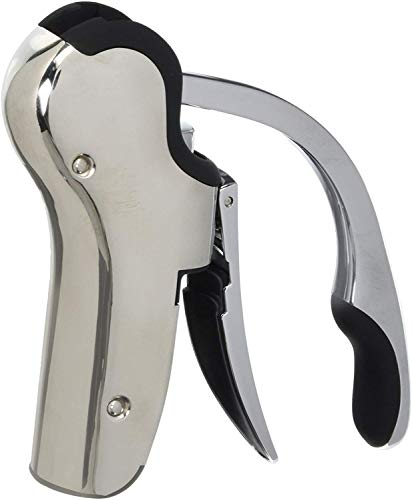
| Rabbit Lever Corkscrew | Best lever opener | Lever, one-motion pull | Very low | Mid-range |
| Screwpull Lever-style opener | Best for heavy use | Lever with extended screw | Very low | Mid-range to upper-mid |
| Rechargeable electric opener (Oster, Secura style) | Best for ease | Motorized worm, USB or base charging | Minimal | Budget to mid-range |
| Ah-So two-prong opener | Best for old corks | Twin blades slide beside the cork | Medium | Budget |
Best Overall: Pulltap’s Double Hinged Corkscrew
Pulltap’s is the best-known maker of the double-hinged waiter’s corkscrew, the tool used by most restaurant servers. It has a folding body with a foil knife, a worm (screw), and two hinged steps that rest on the bottle lip, which gives leverage in two stages. It fits in a pocket or drawer and costs little. Look for a worm with a Teflon coating and a sharp, tapered tip, which improve grip on dense corks.
Trade-off: it takes practice. Insert the worm at a slight angle and turn it straight in, or the cork can break. For anyone with limited hand strength it is harder than a lever.
Best for Gifting: Chateau Laguiole Style Waiter’s Corkscrew
Laguiole-style openers have a wood, horn, or resin handle, a stainless steel body, and a decorative bee on the spring. Real Laguiole en Aubrac and Chateau Laguiole models are produced in France, and many cheaper imitations exist. Check that the worm is long enough, ideally around 2 inches, and that the hinge is firm. They work like any other waiter’s friend and look nicer on a bar cart.
Best Lever Opener: Rabbit Lever Corkscrew
The Rabbit is a lever-style opener that clamps on the bottle neck and pulls the cork out with one motion. It is popular for its low effort and fast operation. Typically you pull the handle up to drive the screw in, then push it down to extract the cork. A built-in foil cutter and a spare worm come with many sets. The trade-off is size, since a lever opener takes drawer space, and a long plastic body can wear if dropped.
Best for Heavy Use: Screwpull Lever Style Opener
Screwpull, the brand behind the first lever corkscrew, is now sold under Le Creuset. These openers use a long Teflon-coated worm that centers and glides in without much force. They suit restaurants, wine clubs, or anyone who opens many bottles. Expect a higher price and a solid, heavy feel.
Best for Ease: Rechargeable Electric Opener
Electric openers from brands such as Oster and Secura use a rechargeable battery and a motorized screw. You place the opener on the bottle, press a button to drive the worm in, and press another to eject the cork. They are the best choice for arthritis, weak hands, or hosts who want a fast, no-effort opener. Trade-offs: batteries run out, so charge before a party, and motorized units are bulkier. The number of bottles per charge varies by model, so check the maker’s spec sheet.
Best for Old Corks: Ah-So Two-Prong Opener
An Ah-So has two flat metal blades of unequal length that you slide down the sides of the cork, then twist and pull. It does not pierce the cork, which makes it the best tool for fragile, old, or dry corks that would crumble under a screw. Trade-off: it can push the cork in if you slide too hard, and it does not work on tight, new corks.
How to Choose a Wine Opener
Match the Opener to How You Open Wine
| Situation | Best choice | Why |
|---|---|---|
| Open a bottle once a week | Waiter’s corkscrew | Small, cheap, durable |
| Open several bottles at parties | Lever or electric | Speed and low effort |
| Weak hands or arthritis | Electric | Minimal force required |
| Collect aged bottles | Ah-So plus a waiter’s corkscrew | Two tools for fragile and tight corks |
| Travel, picnic, or bar apron | Compact waiter’s corkscrew | Pocket size |
Worm Design Matters
A good worm is an open spiral (helix) rather than a solid auger, which keeps it from boring a hole through the cork. Length should be at least 2 inches for standard corks; synthetic corks and longer natural corks may need more. A non-stick coating lowers friction. Per most openers’ instructions, stop turning when the tip nears the bottom of the cork to avoid drilling through and dropping bits into the wine.
Worked Example: Cost per Bottle
Say you open 100 bottles a year and a good waiter’s corkscrew lasts 10 years. That is 1,000 openings. A tool at the budget end therefore costs a fraction of a cent per bottle, while a premium lever opener at ten times the price still costs a few cents per bottle. Because the numbers are so small, pick based on comfort and durability, not the lowest price.
Foil Cutters and Extras
A built-in foil cutter is standard on waiter’s corkscrews. Lever sets often add a separate foil cutter and spare worm. If you use an electric opener, you will need a cutter, since most do not include one.
Maintenance
- Wipe the worm after use to remove cork residue and wine.
- Check the tip for bending, and replace the worm if the spiral is damaged.
- Charge electric openers fully before long storage and avoid leaving them in a hot car.
- Keep sharp points covered or folded.
Common Mistakes
- Twisting the worm in crooked, which can tear the cork.
- Pulling a cork straight out with a lever-style opener before it has fully reached the top of its travel.
- Using a waiter’s corkscrew on a bottle held against your body, where a slip can cause injury. Rest the bottle on a stable surface.
- Choosing an opener with a short worm that cannot reach the bottom of long corks.
Frequently Asked Questions
What is the easiest wine opener to use?
Electric openers are the easiest because they require just a button press. Lever openers are the next easiest, with a simple pull-and-push motion.
What do restaurants use to open wine?
Most use a double-hinged waiter’s corkscrew, because it is quick, compact, and inexpensive. Servers can carry it in a pocket and use it with one hand.
How do I open an old, crumbly cork?
Use an Ah-So two-prong opener to slide along the cork and pull it out without piercing. If bits fall in the wine, pour through a fine strainer.
Are electric wine openers worth it?
They are worth it if you open many bottles or have limited hand strength. For occasional use, a waiter’s corkscrew is cheaper and takes less space.
How do I open a wine bottle without a corkscrew?
Options include pushing the cork into the bottle with a blunt handle or driving a screw and using pliers to pull it. These methods are messy and can damage the bottle or cork, so a proper opener is better.