The best wine chiller for most people in 2026 is a freezable gel sleeve such as the Vacu Vin Rapid Ice, which cools a bottle in about 15 minutes without ice. If you want a stick that chills and aerates at the same time, the Corkcicle Air is the common pick, and for entertaining a table of guests, an insulated bucket or marble cooler keeps bottles cold without power. The right choice depends on how fast you need the wine cold and how long it must stay that way.
Our top picks


As an Amazon Associate we earn from qualifying purchases at no extra cost to you.
Quick Comparison of Wine Chillers
| Pick | Best for | How it works | Price tier |
|---|---|---|---|
| Vacu Vin Rapid Ice | Best gel sleeve | Freeze the inner sleeve at least 6 hours; slides over the bottle; cools in about 15 minutes | Budget to mid-range |
| Corkcicle Air | Best chill stick with aerator | Freeze about 90 minutes; pour-through aerator; whites stay cold up to an hour | Mid-range |
| Vinenco 7-in-1 and similar rod kits | Best multi-tool rod set | Two rod lengths with pourer and aerator | Budget |
| Double-wall stainless bucket or cooler | Best for the table | Insulated, no power, holds ice water | Mid-range |
| Artesa marble wine cooler | Best for style | Marble chills in the freezer; keeps wine cool at the table | Mid-range |
| Cooper Cooler | Best for rapid chilling | Electric ice-water spray unit | Premium |
Specs follow maker descriptions; times depend on starting temperatures.
Best Gel Sleeve: Vacu Vin Rapid Ice
A gel sleeve slips around the bottle and keeps the wine cold for hours. The Vacu Vin design is made in the Netherlands and freezes in about six hours, after which it chills a room-temperature bottle in roughly 15 minutes. It also looks decent on a dinner table.
Trade-off: you have to remember to freeze it ahead, and it only fits standard-width bottles.
Best Chill Stick With Aerator: Corkcicle Air
The Corkcicle Air is a stainless steel rod you freeze for about 90 minutes. It drops into the bottle, and a pour-through aerator on top mixes air into the stream. It keeps whites cold for up to an hour and is easy to store in the freezer door.
Trade-off: it chills slowly compared with ice water and is not meant for a bottle at room temperature that you want cold in minutes.
Best Multi-Tool Rod Set: Vinenco and Similar Kits
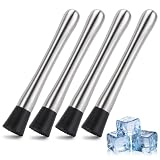
Rod kits such as the Vinenco 7-in-1 include two rod lengths with an integrated pourer and aerator, aimed at buyers who want flexible accessories at a low cost. They suit gifting and occasional use.
Trade-off: quality varies between brands, so look for food-grade stainless steel and a tight stopper.
Best for the Table: Double-Wall Stainless Bucket
An insulated double-wall bucket holds ice and water, which cools a bottle fast and then keeps it cold. It needs no freezer planning, and it holds several bottles at a party.
Trade-off: it takes ice and space, and condensation on the outside needs a coaster.
Best for Style: Artesa Marble Wine Cooler
The marble cooler is chilled in the refrigerator or freezer and holds a bottle at a pleasant temperature for a time. It adds a decorative element without ice or batteries.
Trade-off: marble is heavy and gradually warms; it is best for a bottle already cold.
Best for Rapid Chilling: Cooper Cooler
The Cooper Cooler is an electric device that sprays ice water over spinning bottles, which cools them quickly. It suits entertainers who regularly need several bottles chilled fast.
Trade-off: it needs counter space and an ice supply, and costs the most.
Ideal Serving Temperatures
Wine is often served too cold or too warm. A fridge at about 38 F is too cold for fine whites, which open up as they warm slightly. Use these general ranges as starting points.
| Wine style | Serving temperature (F) | Chilling note |
|---|---|---|
| Sparkling and Champagne | 40 to 50 | About 3 hours in the fridge or 30 minutes in an ice bucket |
| Light whites (Sauvignon Blanc, Pinot Grigio) | 45 to 50 | Fridge 2 to 3 hours, or a gel sleeve for 15 minutes |
| Full whites (Chardonnay) | 50 to 55 | Remove from fridge 20 minutes before pouring |
| Rose | 45 to 55 | Fridge or bucket |
| Light reds (Pinot Noir, Beaujolais) | 55 to 60 | Brief chill 15 to 20 minutes |
| Full reds | 60 to 65 | Room temperature is often too warm |
Worked Example: Chilling a Room-Temperature Bottle
A bottle at 70 F in a household fridge at 38 F takes about two to three hours to reach 50 F. An ice-and-water bucket cuts that to roughly 15 to 20 minutes with occasional turning, and a pre-frozen gel sleeve takes about 15 minutes. A chill stick adds a gentle drop of a few degrees. If guests arrive in 30 minutes, choose the bucket or sleeve. If you are keeping a bottle cold during dinner, use the sleeve or marble cooler.
Decision Matrix by Situation
| Situation | Best choice | Why |
|---|---|---|
| Guests arrive in 30 minutes | Ice-and-water bucket or Vacu Vin sleeve | Cools in about 15 to 20 minutes |
| Keep one bottle cold during dinner | Gel sleeve or marble cooler | Holds temperature for an hour or more |
| Picnic or patio with no power | Insulated double-wall cooler | Holds ice and needs no electricity |
| Frequent entertaining with many bottles | Cooper Cooler or a large bucket | Fast, repeatable chilling |
| Occasional glass of white | Chill stick | Compact and easy to store |
How to Choose a Wine Chiller
Speed
Ice water is fastest, followed by sleeves, then sticks. Pick based on how quickly you need the bottle cold.
Hold time
Sleeves and insulated coolers hold temperature for an hour or more. Sticks only help for a short period.
Storage and prep
Anything that requires freezer time must be planned. A bucket needs only ice.
Bottle fit
Check the diameter, since Champagne and some Bordeaux bottles are wider than standard bottles and may not fit in tight sleeves.
Steps for the Fastest Ice Bath
- Fill a bucket with equal parts ice and water. Water makes contact with the whole bottle; ice alone leaves air pockets.
- Add a generous handful of salt. Salt lowers the freezing point of the water so the bath gets colder than plain ice water.
- Submerge to the neck. The glass transfers heat across the whole surface.
- Spin or turn the bottle every few minutes. Movement prevents a warm layer forming near the glass.
- Check at 15 minutes. A room-temperature white should be near serving temperature; sparkling wine may need 25 to 30 minutes.
Ownership Realities
Gel sleeves wear at the seams and can leak if punctured. Stainless sticks last for years, but their silicone stoppers harden. Marble stains if wine spills and is left to dry. Clean everything with mild soap and dry before storing. Do not freeze an unopened sparkling wine bottle, as it can burst. Never leave wine in a freezer to chill quickly unless you set a timer.
Frequently Asked Questions
What is the fastest way to chill wine?
Put the bottle in a bucket of ice and water with a handful of salt and rotate it. It can reach serving temperature in about 15 minutes. A pre-frozen gel sleeve is about as fast.
Do wine chill sticks work?
They help keep an already cool bottle cold and chill slightly, but they are not rapid chillers. Use them to maintain temperature, not to cool a warm bottle.
Can I put wine in the freezer?
Briefly, yes, for about 20 to 30 minutes if you set a timer. Longer than that risks the bottle freezing and cracking or the cork pushing out.
Should red wine be chilled?
Light reds benefit from a short chill to around 55 to 60 F. Full-bodied reds are best slightly cooler than room temperature, around 60 to 65 F.
How long does a gel sleeve keep wine cold?
Typically one to two hours, depending on room temperature. Return the sleeve to the freezer afterwards for reuse.