Key takeaways
- A steel tape measure is one of those tools that people buy, use once or twice, and then discover was the wrong length, the wrong scale, or the wrong build for the job they actually do. The frustration is rarely…
What's inside
A steel tape measure is one of those tools that people buy, use once or twice, and then discover was the wrong length, the wrong scale, or the wrong build for the job they actually do. The frustration is rarely about the concept — it is always about the mismatch between what the product page implies and what the tape does when you pull it across a construction site, a survey plot, or a backyard fence line. A 30-foot tape that kinks on the third extension is worse than no tape at all; a 300-foot open reel that weighs too much to carry solo becomes dead inventory.
What separates a good steel tape from a forgettable one comes down to blade quality, case or frame durability, scale legibility, and whether the locking mechanism holds without slipping under tension. Beyond those fundamentals, the price spread is enormous — from a few dollars for a basic retractable unit to well over a hundred for long open-reel models designed for civil work. The trick is matching the right tier to your actual measurement range and environment. This roundup compares the specs, published materials, and owner-reported experiences across eight models that represent the range of what a buyer in 2026 will encounter on the market.
As an Amazon Associate we earn from qualifying purchases at no extra cost to you. Product prices and availability are accurate as of the date shown and are subject to change.





Quick Picks
| Product | Best For | Price |
|---|---|---|
| Komelon N6300 300ft | Long-distance survey and civil work | $115.99 |
| Komelon N6200 200ft | Fieldwork needing extended reach without maximum weight | $88.13 |
| Saysurey 328ft/100m | Dual-scale metric and imperial jobs | $66.59 |
| DEWALT Atomic 30ft | Carpenters needing pocket-compact daily carry | $19.49 |
| Crescent Lufkin ST100-07 | Construction crews wanting reliable mid-range reach | $14.25 |
| Komelon 9901 Gripper 100ft | Contractors who prefer a closed-case long tape | $17.99 |
| Lichamp 165ft | Yard, field, and engineering tasks on a budget | $19.99 |
| Mr. Pen 25ft | Homeowners and light DIY | $6.28 |
How We Picked
We narrowed this list by weighing four factors that consistently appear in owner reviews and spec comparisons across the steel tape measure category: total measurement range versus portability tradeoff, blade material and coating quality (which determines how well the tape resists kinking and whether printed graduations stay legible after repeated use), locking mechanism reliability under load, and overall value relative to the asking price. A tape that excels in one area but fails in another — a beautiful 300-foot reel that no single person can carry without a second pair of hands, for instance — gets noted rather than promoted blindly.
The 8 Best Steel Tape Measure in 2026
Komelon N6300 300-Feet Open Reel
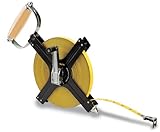
This is a working professional’s tape, built for surveyors, civil engineers, and anyone regularly measuring distances beyond what a handheld unit can reach. The metal frame open-reel design keeps the blade organized during long pulls and resists warping when dropped on uneven ground. Owners praise the smooth unwinding action and the blade’s resistance to coiling when extended across open terrain. The dual graduations remain readable at a distance, which matters when two people are working one end each. The obvious tradeoff is size and weight — carrying 300 feet of steel in a single unit demands a dedicated spot on the truck or in a harness. Skip this if your longest regular measurement stays under 150 feet; the extra reel adds bulk without benefit.
Komelon N6200 200-Feet Open Reel
Essentially the N6300’s slightly shorter sibling, the 200-foot version hits a practical middle ground for field crews who need serious reach but work in tighter spaces where a 300-footer feels excessive. The open-reel construction and metal frame carry over, giving owners a tape that lays flat and resists tangling. Blade quality and print legibility match the longer model, and the reduced weight makes solo operation more manageable. The main drawback is that it occupies a crowded price tier — you are paying a premium over budget long tapes without a dramatic jump in finish or accessories. Skip it if you are choosing between the N6200 and the Saysurey for purely cost-driven reasons and do not require Komelon’s specific frame construction.
Saysurey 328ft/100m Open Reel
For buyers who need a single tool covering both imperial and metric scales — common on jobs where plans, materials, and client specifications mix units — this tape delivers 328 feet on one side and 100 meters on the other. The open-reel design is straightforward and functional. Owners report satisfying build quality for the price bracket, noting the frame holds up through repeated site use. The dual-scale feature is the standout advantage and saves the expense of maintaining two long tapes. The limitation is brand-name recognition and the uncertainty of long-term replacement part availability compared to established tool manufacturers. Skip this if your work environment strictly uses one measurement system and the dual scale adds visual clutter you would rather avoid.
DEWALT Atomic Compact Series 30 ft
The Atomic is the tape that disappeared into tool bags and stayed there. At 30 feet with a compact housing, it is designed for carpenters, finishers, and framers who need a durable daily carry without the wrist fatigue of a full-size case. Owners consistently highlight the one-handed hook, the rubberized over-molded grip, and the blade’s stiffness that extends further than comparable compacts before kinking. The tradeoff is reach — 30 feet caps you in a single span, and anyone pulling longer measurements must relay or switch tools. The DWHT38130S is also a premium compact; it costs more than a generic 25-footer without offering more length. Skip this if your primary job is layout or rough framing where you regularly exceed 30 feet in one pull.
Crescent Lufkin ST100-07 Construction Steel Long Tape
A no-frills open-reel long tape built for construction crews that already have the budget set aside and want a dependable 100-footer without unnecessary extras. The 3/8-inch blade width is standard for this class, and the metal frame handles jobsite roughness without complaint. Owners value the simple crank mechanism and the fact that it does exactly what the specification says it will do. The Lufkin name carries weight among trade professionals who trust the manufacturer’s quality history. Its weakness is minimal — it is a basic open reel with nothing flashy about it, and the blade coating may require care to avoid rust in wet or salt-air environments. Skip this if you need dual-scale graduations or a closed-case form factor.
Komelon 9901 Gripper Closed Case Long Tape
The 9901 answers a specific complaint about open-reel long tapes: they tangle, snag on debris, and collect grime between layers of blade. By housing 100 feet of steel in a closed case, Komelon keeps the blade protected and ready to deploy cleanly each time. Owners note the gripper-style lock holds firmly and the case feels rugged enough for contractor abuse. The obvious constraint is weight and bulk relative to the tape length inside — the case adds heft that an open reel does not. It also costs more than the Crescent Lufkin at the same length. Skip this if you are price-sensitive and primarily work in dry, clean environments where blade protection is a lower priority.
Lichamp 165FT Open Reel Steel Tape
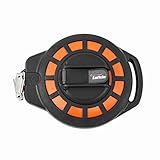
Positioned between the short construction reels and the heavy professional units, the Lichamp offers 165 feet with dual SAE and metric graduations in an open-reel format. It targets engineers, landscapers, and field technicians who need more than 100 feet without stepping up to 200 or 300. The metal frame is adequate for regular use, and owners report the blade extends smoothly without excessive coiling. The price is competitive for the length, making it an easy recommendation for budget-conscious buyers who outgrew a 100-footer but do not need a survey-grade instrument. Its limitations are typical of mid-tier products: the finish and frame welds are not premium-grade. Skip this if your work demands maximum accuracy or you are comparing it against Komelon reels for professional reliability.
Mr. Pen Retractable Tape Measure 25 ft
For homeowners, renters, and casual DIYers who need a tape a few times a year to hang shelves or measure furniture, the Mr. Pen is about as low-friction as purchasing gets. At under seven dollars, it covers a 25-foot range with clear yellow-on-black graduations and a functional lock. Owners describe it as perfectly adequate for light indoor work. The limitations are predictable at this price: the blade is thinner, it will kink more easily than a professional tape, and the case durability is modest. It is a consumable-level tool, and that is exactly what some buyers need. Skip this if you are a working tradesperson or if you regularly measure outdoors where wind, grit, and impact will stress the mechanism.
Buying Guide
Blade Width, Thickness, and Coating
The single most important physical characteristic to examine is blade construction. Wider and thicker blades stand up straighter over longer unsupported spans before kinking. A 3/8-inch blade on a 100-foot long tape is the standard; anything narrower will coil on you mid-pull. Coating quality determines whether the graduations stay legible after months of sun, rain, and abrasion. Nylon-coated or lacquered blades resist rust far better than bare stamped steel, especially on open reels where moisture gets trapped between layers. Check whether the blade is marked with a thickness specification and look for owner complaints about print fading within the first year of use.
Open Reel Versus Closed Case
Open reels are lighter and mechanically simpler, with fewer parts that can jam or break. They also allow you to visually inspect the blade for damage and to wind it back under tension without fighting a spring mechanism. The downside is contamination — dirt, grit, and moisture reach the blade between layers and accelerate wear. Closed cases protect the blade and provide a more consistent retraction, but they are heavier per foot of tape and more expensive to manufacture. If you work in muddy or sandy environments, a closed case extends the usable life of the blade. If you work on clean sites or value weight savings, an open reel is the practical choice.
Locking Mechanism and Reel Brake
A tape measure is only as good as its ability to hold a measurement while you mark and transfer it. On retractable tapes, the lock must grip the blade without crushing the coating or letting it slide when you pull with one hand. On long reels, the brake or crank lock must hold tension across 100, 200, or 300 feet of blade without slipping — a failing here causes measurement drift that accumulates along the run. Look for owner reports specifically mentioning whether the lock holds on a slope or in windy conditions, as these are the scenarios where weak mechanisms fail first. Replaceable locks or serviceable mechanisms also extend the total life of the tool.
Our Verdict
The DEWALT Atomic Compact Series is the best steel tape measure for the most people — it balances blade stiffness, pocket size, and locking reliability at a price that does not punish you for losing it on site. The budget pick goes to the Mr. Pen 25-foot for anyone whose measurement needs are truly occasional and indoor. However, if your work regularly crosses 150 feet in open terrain, the Lichamp 165-foot offers a compelling value in the long-tape tier, undercutting the Komelon N6200 by nearly seventy dollars while still delivering dual-scale graduations and an open-reel format that handles field conditions without fuss.
FAQ
What length steel tape do I actually need?
Measure the longest single span you regularly deal with and add a margin for relay work and angles. A carpenter working rooms and walls needs 25 to 30 feet. A landscaper or fence builder likely needs 100 feet minimum. Anyone laying out lots, pipelines, or roadwork should look at 200 feet and up. Buying shorter to save weight backfires when you cannot complete a measurement in one run.
Is a nylon-coated blade worth the extra cost over bare steel?
For long reels that sit in a truck bed or shed between uses, yes. Nylon coating resists rust and keeps printed graduations readable far longer than bare stamped steel. For short retractable tapes used indoors, the difference is negligible and bare steel saves a few dollars. The coating matters most where the blade gets stored under tension in a damp or dirty environment.
Can one person operate a 200-foot open reel alone?
It is physically possible but awkward and slow. The blade must be pulled, the reel braked, the hook anchored, and then the blade walked back to mark. A second person holding the far end makes the job twice as fast and considerably more accurate. If you regularly work solo, a 100-foot model in a closed case or a 150-to-165-foot reel gives you the most practical balance of reach and manageability.
Why do some long tapes show dual scales and others do not?
Dual imperial-and-metric blades are common on survey and civil engineering tools because projects often mix unit systems in specs, materials, and stakeout. Construction-focused long tapes traditionally print in a single scale to save space on a narrower blade and reduce visual clutter. If your work does not cross measurement systems, the dual scale is wasted real estate; if it does, a single-scale blade forces you to carry or convert constantly.