The best beer brewing kits for beginners are the Northern Brewer Deluxe 5-Gallon Kit for the best all-round start, the MoreBeer Premium 5-Gallon Kit for the most complete equipment package, and the Brooklyn Brew Shop 1-Gallon Beer Making Kit for small-space brewers who want a lower-commitment introduction.
The right choice depends less on the recipe and more on four practical questions: how much beer you want to make, where fermentation will happen, whether you want extract or all-grain brewing, and which supplies the kit leaves for you to purchase.
Our top picks
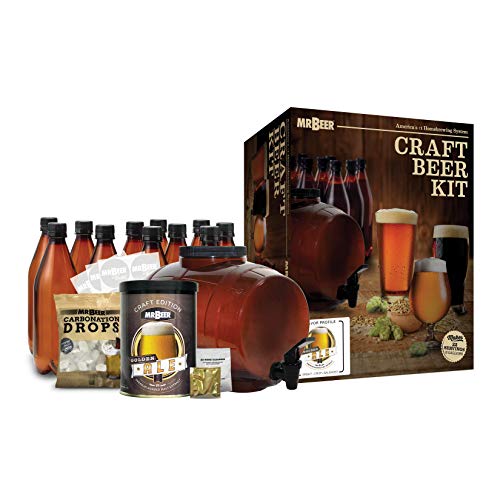 Mr. Beer
- Best beer Kit for Beginners - Our beer…
- Only Takes 30 Minutes of Your Time to…
- Includes the Best Ingredients to Get Started -…
 HIVEVINE Wine Making Kit & Mead Making
- 𝗔𝗟𝗟-𝗜𝗡-𝗢𝗡𝗘 𝗪𝗜𝗡𝗘 & 𝗠𝗘𝗔𝗗 𝗠𝗔𝗞𝗜𝗡𝗚 𝗞𝗜𝗧 Brew your…
- 𝗘𝗔𝗦𝗬 & 𝗙𝗨𝗡 𝗗𝗜𝗬 𝗕𝗥𝗘𝗪𝗜𝗡𝗚 𝗘𝗫𝗣𝗘𝗥𝗜𝗘𝗡𝗖𝗘 No complicated…
- 𝗣𝗥𝗘𝗠𝗜𝗨𝗠 & 𝗥𝗘𝗨𝗦𝗔𝗕𝗟𝗘 𝗘𝗤𝗨𝗜𝗣𝗠𝗘𝗡𝗧 Unlike cheap plastic alternatives,…

As an Amazon Associate we earn from qualifying purchases at no extra cost to you.
Best beginner beer brewing kits at a glance
| Kit | Typical batch | Brewing method | Usually included | Usually bought separately | Best for |
|---|---|---|---|---|---|
| Northern Brewer Deluxe 5-Gallon Kit | 5 gallons, about 48–55 12-ounce bottles | Extract-based | Fermenter, bottling equipment, siphon, hydrometer, capper, caps and a starter recipe | Sanitizer, bottles, ingredients, brew kettle and sometimes a thermometer | Most first-time brewers |
| MoreBeer Premium 5-Gallon Kit | 5 gallons, about 48–55 bottles | Extract-based | Bucket or carboy fermenter, airlock, bottling gear, hydrometer and basic transfer equipment | Sanitizer, bottles, ingredients and a kettle large enough for the recipe | Brewers who want a fuller equipment set |
| Brooklyn Brew Shop 1-Gallon Beer Making Kit | 1 gallon, about 10–11 bottles | All-grain | Small fermenter, airlock, thermometer and brewing accessories, depending on the version | Sanitizer, bottles, ingredients and a suitable cooking pot or straining setup | Small kitchens and experimental batches |
| Craft A Brew 1-Gallon Beer Making Kit | 1 gallon, about 10–11 bottles | Usually recipe-led and beginner-oriented | Fermentation vessel, airlock, transfer or bottling accessories and recipe materials, varying by kit | Sanitizer, bottles and occasional kitchen equipment | Gift buyers and first batches |
Kit contents change between bundles and recipe editions, so treat the table as a buying framework rather than a substitute for checking the current box contents. In particular, a “complete” kit often means complete for fermentation and bottling—not complete for cooking wort, cleaning bottles or supplying ingredients.
Our picks by brewing situation
| Your situation | Best match | Why | Main compromise |
|---|---|---|---|
| You want enough beer to share | Northern Brewer Deluxe 5-Gallon Kit | Standard 5-gallon equipment and a large range of compatible extract recipes | Requires more storage, cleaning and bottle space |
| You want the fewest missing hardware pieces | MoreBeer Premium 5-Gallon Kit | Typically includes a broader set of transfer and bottling equipment | Still may not include bottles, sanitizer or a large brew kettle |
| You have limited counter and storage space | Brooklyn Brew Shop 1-Gallon Kit | Small batches fit ordinary kitchens and finish with roughly one-fifth the bottle count | All-grain brewing adds more process steps and less margin for errors |
| You want an inexpensive gift or trial run | Craft A Brew 1-Gallon Kit | Compact format and recipe-focused presentation make the first project approachable | Small batches have a higher cost per bottle and can be less forgiving |
Northern Brewer Deluxe: the safest first purchase for most people
A 5-gallon Northern Brewer Deluxe kit is the most balanced option when the goal is to learn without immediately assembling a brewery. Extract brewing removes the need to mash grain, so a beginner can concentrate on sanitation, fermentation temperature, transferring beer and carbonation.
The usual package includes a primary fermenter, lid or stopper, airlock, siphon equipment, hydrometer, bottling wand, bottle filler, capper and caps. A recipe kit is often available as part of the bundle or as an add-on. These components address the equipment problems that most often stop a first batch: measuring fermentation progress and moving beer without excessive splashing.
Expect to supply at least no-rinse sanitizer, bottles, a large cooking pot, ingredients if no recipe kit is included, and a thermometer if the bundle omits one. A 5-gallon batch does not require a 5-gallon boil for extract brewing, but a 16- to 20-quart pot makes the process more comfortable. You also need a cool, stable place for a fermenter that can hold roughly 6 to 7 gallons of liquid and headspace.
MoreBeer Premium: best when missing accessories annoy you
MoreBeer’s Premium 5-gallon starter equipment is a strong choice for someone who wants a conventional setup with the transfer and bottling stages covered. It is particularly useful if you do not already own a siphon, hydrometer or bottle-filling equipment.
The advantage is not that the beer will automatically be better; the advantage is fewer improvised workarounds. That matters because replacing a siphon with a kitchen funnel or skipping a hydrometer makes it harder to identify stalled fermentation and increases the chance of oxidation or contamination.
Check whether the exact bundle uses a plastic bucket, glass carboy or PET fermenter. A bucket is generally easier to clean and less vulnerable to breakage. A carboy makes the beer visible but has a narrow opening, which can make cleaning and adding dry hops more awkward. Regardless of vessel, verify the kit’s volume rating and the size of the included bung or stopper.
Brooklyn Brew Shop and Craft A Brew: better for small batches
One-gallon kits are appealing because they need less storage, less boiling capacity and fewer bottles. A finished gallon produces approximately 10 to 11 standard 12-ounce bottles after trub and transfer losses. That is much easier to consume before the beer’s quality changes, and it lets you try several recipes without committing to a full-size batch.
The trade-off is process sensitivity. A small volume loses heat faster, and a small error in water volume or grain extraction has a larger effect on the final beer. Brooklyn Brew Shop’s format is also commonly associated with all-grain brewing, which teaches more about the ingredients but adds mashing, rinsing or straining and temperature control.
Craft A Brew’s one-gallon kits are attractive when the recipe and presentation matter as much as the equipment. They can make a good first project, but inspect the included list carefully: some packages emphasize fermentation and bottling while leaving the actual cooking vessel, sanitizer and bottles to the buyer.
What you still need to buy
- Sanitizer: A no-rinse brewing sanitizer is essential. Cleaning removes soil; sanitizing reduces the microorganisms that can spoil beer.
- Ingredients: Confirm whether malt extract, specialty grain, hops and yeast are included. “Equipment kit” and “recipe kit” are often separate products.
- Bottles: Plan on roughly 48–55 bottles for a 5-gallon batch or 10–11 for a 1-gallon batch. Reusable pry-off beer bottles are generally more useful than screw-top bottles.
- Cooking vessel: A 16- to 20-quart stainless-steel pot is practical for partial-volume extract brewing. All-grain 5-gallon batches may need a much larger kettle and mash equipment.
- Thermometer: A liquid-safe thermometer helps with steeping, yeast pitching and chilling. Temperature mistakes are difficult to correct after fermentation starts.
- Cleaning tools: A bottle brush, soft fermenter brush and unscented brewery cleaner save time and reduce residue.
A realistic cost-per-batch calculation
Suppose a 5-gallon beginner setup costs about $90–$160, a recipe kit costs $35–$60, sanitizer and small consumables cost $10–$20, and bottles cost $20–$40 if you buy them rather than reuse them. The first batch may therefore total approximately $155–$280 before shipping and tax.
Using 50 finished bottles, that equals about $3.10–$5.60 per bottle for the first batch. On later batches, the reusable equipment is already paid for: a $45 recipe kit plus $5–$10 of sanitizer and consumables works out to roughly $1.00–$1.10 per bottle, excluding energy and your time. A 1-gallon kit may cost less initially but often produces a higher ongoing cost per bottle because recipe ingredients are not reduced in perfect proportion.
Setup complexity and fermentation needs
Extract kits usually require boiling water with malt extract and hops, cooling the wort, transferring it to the fermenter, adding yeast and installing the airlock. Fermentation commonly takes about one to two weeks, followed by bottling and another one to two weeks of carbonation. The exact schedule depends on the yeast and recipe; use stable gravity readings rather than bubbles alone to decide whether fermentation is finished.
All-grain kits add a mash stage, commonly around 60 minutes, in which crushed grain is held in hot water to convert starches into fermentable sugars. They can teach more, but they demand closer attention to temperature, water volume and straining. For a first-ever batch, an extract 5-gallon kit is usually the simpler route unless small-batch experimentation is the primary goal.
Ownership realities: what wears out first
Plastic tubing, siphon seals, bottling-wand springs and rubber gaskets are the parts most likely to need replacement. They retain odors if scrubbed aggressively or stored wet. Replace tubing when it becomes cloudy, scratched or difficult to clean. Inspect airlock grommets and fermenter lids for a poor seal, but remember that an imperfect seal does not automatically ruin beer; sanitation and fermentation temperature matter more.
The most common beginner mistakes are bottling before fermentation is complete, under-sanitizing bottle interiors, adding hot wort to a fermenter that cannot tolerate it, and splashing finished beer during transfer. Leave headspace in the fermenter, keep fermentation within the yeast manufacturer’s recommended range, and clean equipment immediately after use.
Bottom line
Choose the Northern Brewer Deluxe 5-Gallon Kit if you want the clearest all-purpose starting point. Choose MoreBeer’s Premium kit when a broader equipment package is worth paying for. Choose Brooklyn Brew Shop or Craft A Brew in the 1-gallon format when space, variety and low batch commitment matter more than the lowest cost per bottle. Before ordering, compare the exact box contents against the short supply list above; that check is more valuable than choosing between two similarly priced starter bundles.