Key takeaways
- Pro: One shape genuinely handles all reds, reducing clutter.
- Pro: Lead-free crystal with above-average durability per owner reports.
- Con: Only two glasses per set at nearly $37, so per-glass cost is high.
What's inside
Buying a set of wine glasses sounds simple until you are staring at dozens of listings that all promise “crystal-clear elegance” and “dishwasher safe” at wildly different price points. The real problem is not finding a glass that holds wine—it is finding one that actually improves how a particular type of wine tastes and smells, or at minimum does not dull it. A red wine poured into a glass with a narrow rim concentrates ethanol fumes on your nose instead of letting the fruit open up. A white wine in an oversized bowl warms past its ideal range within minutes of being poured. These are not trivial annoyances for people who drink more than a bottle a week.
What separates a good glass from a mediocre one comes down to a handful of measurable traits: bowl geometry, rim thickness, stem length, and whether the material is true lead-free crystal or ordinary soda-lime glass dressed up with marketing language. Owner feedback across thousands of listings on major retail sites reinforces the same pattern repeatedly—people who upgrade from thick-rimmed, narrow-bowl glasses to properly shaped ones report a genuine difference in aroma and mouthfeel, not a placebo effect. The following roundup compares eight widely available options on published specifications and verified buyer commentary to help you identify the right types of wine glasses for your routine.
As an Amazon Associate we earn from qualifying purchases at no extra cost to you. Product prices and availability are accurate as of the date shown and are subject to change.



Quick Picks
| Product | Best for | Price |
|---|---|---|
| The One Wine Glass | Everyday red wine, all varieties | $36.95 |
| OJA 23oz Set | Large-format red wine, casual hosting | $35.97 |
| Saludi Colored | Gifts and themed entertaining | $134.98 |
| YANGNAY Set of 12 | High-volume entertaining, budget buyers | $29.99 |
| JoyJolt Layla | White wine and sparkling, made in Europe | $28.95 |
| JoyJolt Stemless | Relaxed red or white, no-fuss storage | $15.99 |
| OJA 28oz Set | Bold, full-bodied reds | $39.99 |
| Wine Glasses Set of 12 | Weddings, parties, bulk events | $32.99 |
How We Picked
We narrowed this list using four criteria that consistently appear in owner reviews and sommelier guidance: shape appropriateness (does the bowl geometry match the wine style the glass targets), material quality (hand-blown crystal versus machine-pressed glass), durability claims backed by real-world breakage reports, and price-to-set-size ratio. We also weighted whether a product earns its price through genuine design intent—such as the universal bowl shape behind The One Wine Glass—versus relying on volume discounts to compete on cost.
The 8 Best Types Of Wine Glasses in 2026
The One Wine Glass
Designed by Master Sommelier Andrea Robinson, this set of two is built around a single universal bowl shape intended to flatter every variety of red wine without swapping glasses mid-bottle. Owners consistently praise how Burgundy, Cabernet, and Pinot Noir all present well from the same glass, which eliminates the storage clutter of owning three or four specialized shapes. The lead-free crystal is marketed as break resistant, and reviewers echo that point with few breakage complaints.
- Pro: One shape genuinely handles all reds, reducing clutter.
- Pro: Lead-free crystal with above-average durability per owner reports.
- Con: Only two glasses per set at nearly $37, so per-glass cost is high.
Skip this if you need more than a couple of glasses or primarily drink white wine, where the wide red-oriented bowl is oversized.
OJA 23oz Set
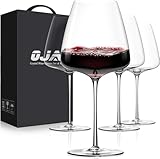
Hand-blown crystal at a generous 23-ounce capacity makes this set of four the go-to for drinkers who like a substantial pour of bold red without constantly refilling. The wide bowl gives structured wines room to open up, and owners note the rim feels noticeably thinner than machine-pressed alternatives. At under $9 per glass, the value proposition is hard to argue with.
- Pro: Hand-blown crystal at a mid-range price per glass.
- Pro: Large 23-oz capacity suits generous pours.
- Con: Hand-blown pieces vary slightly in weight and symmetry, which bothers some buyers expecting uniformity.
Skip this if you prefer precise, identical glassware or mostly drink smaller red servings.
Saludi Colored
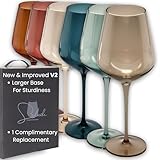
These six stemmed glasses come in multiple colors with a hand-blown construction and a 16.5-ounce bowl. They target a different buyer than the rest of this list: someone who wants visual drama on a dinner table or needs a gift that reads as luxurious at first glance. Owner feedback highlights the weight and the color depth, though the premium price reflects the design labor more than performance gains.
- Pro: Genuine hand-blown quality with visible color distinction.
- Pro: Versatile enough for all wine types per manufacturer spec.
- Con: $22 per glass is the highest on this list by a wide margin.
Skip this if you care about aromatic performance per dollar; the color adds visual value, not tasting value.
YANGNAY Set of 12
Twelve 13-ounce glasses for under $30 puts this near the cheapest per-glass option available, and the clear, simple design with a smooth rim earns solid marks from owners who bought them for housewarming parties or everyday kitchen use. The dishwasher-safe claim checks out in reviews, with no reported clouding after repeated cycles.
- Pro: Excellent per-glass cost for a full dozen.
- Pro: Dishwasher safe with no clouding reported.
- Con: Machine-pressed glass means thicker rims and less refined mouthfeel than crystal options.
Skip this if you plan to serve wine seriously; the 13-oz bowl and thick rim hold aromas back.
JoyJolt Layla White Wine Glasses
Made in Europe, this set of four at 13.5 ounces is shaped specifically for white wine and sparkling varieties. The narrower bowl preserves cooler temperatures and directs floral and citrus aromas upward rather than letting them dissipate. Owners frequently mention the stem length as comfortable for holding without warming the bowl.
- Pro: True white-wine geometry that maintains temperature and aroma.
- Pro: European manufacturing at a competitive $7 per glass.
- Con: Not designed for red wine; the bowl is too narrow for full-bodied pours.
Skip this if you mostly drink reds or want a single all-purpose set.
JoyJolt Stemless
At under $4 per glass, these 15-ounce stemless tumblers are the easiest way to add a functional set to your shelf without worrying about breakage or cabinet space. The short bowl works for both red and white in casual settings, and owners love how they stack. The tradeoff is obvious: no stem means your hand warms the wine faster.
- Pro: Lowest per-glass cost and easiest to store.
- Pro: Versatile red-or-white use for casual drinking.
- Con: Hand contact warms the wine noticeably, especially whites.
Skip this if you serve guests or care about temperature control.
OJA 28oz Set
The largest bowl on this list at 28 ounces, these hand-blown crystal glasses from OJA are built for people who decant into the glass or simply enjoy a very generous pour of structured red. Owners describe them as dramatic and substantial. Four glasses for $40 keeps the value proposition intact.
- Pro: Extra-large bowl maximizes aeration for bold reds.
- Pro: Hand-blown crystal with a refined rim.
- Con: Too large for whites, sparkling, or moderate pours.
Skip this unless you consistently drink full-bodied reds and prefer big glasses.
Wine Glasses Set of 12
A straightforward dozen at 12 ounces with long stems, marketed for weddings, parties, and home use. The clear glass and simple profile make them invisible on a table, which is exactly what a host needs when the event is the point. Owners confirm they survive a dishwasher cycle and handle bulk use without fuss.
- Pro: Full set of 12 for under $33, ideal for events.
- Pro: Long stems prevent hand-warming of the wine.
- Con: Thin glass and basic shape mean limited aromatic performance.
Skip this if you want glasses you will use daily for serious tasting.
Buying Guide
Bowl Shape Determines Everything
The single most important feature across all types of wine glasses is bowl geometry. A wide, round bowl exposes more surface area to air, which softens tannins and releases volatile aromas in red wines. A narrower, taller bowl concentrates the more delicate floral and citrus compounds in whites and keeps the liquid cooler longer. When choosing, match the glass shape to the wine you drink most. Universal designs like The One Wine Glass attempt to bridge both, but they always compromise on one end.
Rim Thickness and Material Quality
Thick, rounded rims redirect wine onto the front of the tongue and blunt aromatic delivery. Thin, laser-cut or hand-blown rims let wine flow across the palate more evenly. In terms of material, lead-free crystal is the standard to look for—it is stronger and clearer than soda-lime glass at the same wall thickness. Check whether a listing specifies “hand-blown” or “machine-pressed”; the former almost always produces a thinner rim and more nuanced shape.
Set Size and Replacement Risk
A set of two is expensive per glass but makes sense if you drink rarely and want one excellent pair. Sets of four or six suit regular drinkers with guests. Sets of twelve make sense for entertaining but carry higher total replacement risk if a few break. Factor in whether you have a dishwasher, because repeated hot-water cycles cloud cheap glass and eventually etch even better ones. Dishwasher-safe claims from owners matter more than manufacturer spec sheets.
Our Verdict
Top pick: The One Wine Glass earns the spot because it solves the core buyer problem—having one red-wine glass that works across all varietals without a cabinet full of specialty shapes. The sommelier-designed geometry and durable lead-free crystal justify the per-glass premium for anyone who drinks a few bottles per week.
Budget pick: JoyJolt Stemless delivers the lowest entry point at $15.99 for four glasses. They are not refined, but they fill a real need for casual, no-stakes drinking without breaking the bank.
Situation where another wins: If your priority is white wine specifically, the JoyJolt Layla outperforms every other option on this list at under $29, because its narrow bowl is purpose-built for preserving cold temperature and delicate aromatics.
FAQ
Do I really need different glasses for red and white wine?
For everyday casual drinking, one well-designed universal glass like The One Wine Glass is sufficient. If you regularly serve both red and white to guests, keeping one narrow-bowl set for whites and one wide-bowl set for reds makes a noticeable difference in aroma and temperature retention.
Are expensive wine glasses actually better?
Up to a point. The jump from a $2 thick-rimmed gas-station glass to a $7 hand-blown crystal glass is dramatic. Beyond roughly $15 per glass, you are paying for aesthetic and brand value rather than measurable tasting improvement. The Saludi set at $22 per glass is the outlier that justifies its cost through artistry, not function.
How long do wine glasses typically last?
With hand-washing and careful storage, lead-free crystal glasses last many years. Dishwasher cycles are the main killer—they cause micro-etching that eventually clouds the bowl. If you must use a dishwasher, choose glasses that owners confirm stay clear over time, like the YANGNAY set.
Can I use a red wine glass for white wine?
Technically yes, but the wide bowl lets whites warm faster and disperses their subtler aromas. You will not ruin the wine, but you lose the specific benefits the white-wine glass shape provides. If you own only one set, the universal design in The One Wine Glass is the best compromise for both styles.