
Our Top Picks
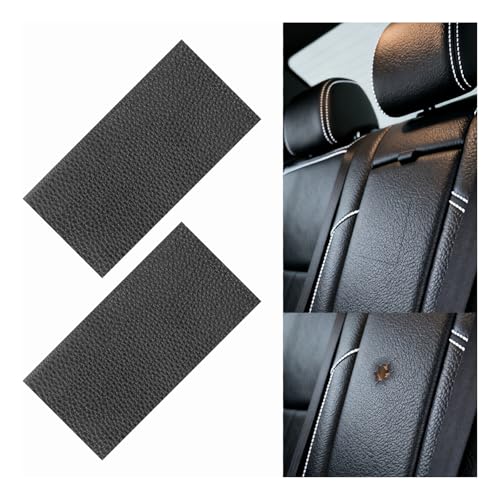 YGDMD 2PCS 8×4 Inch PU Leather Patch for7.87*3.93*0.04 inch7.87 x 3.93 x 0.04 inches0 poundsCheck on Amazon



The best upholstery repair kit for classic cars overall is the Permatex 81781 Ultra Series Vinyl and Leather Repair Kit. It is the one kit in this roundup built to rebuild a cracked or torn vinyl or leather panel with backing material and a heat-cured compound rather than simply covering the damage, which is precisely what 1960s to 1980s vinyl bucket seats, dash pads and door cards need. If your classic has a cloth, velour or tweed interior, the COCONIX Carpet & Fabric Repair Kit is the better match, because leather and vinyl compounds cure hard and glossy on woven fabric. For a ten-minute fix on a driver rather than a show car, the Besezx Leather Repair Patch Tape Kit sticks down and disappears from a few feet away. For colour-matched leather work on a car you actually care about, the COCONIX Leather & Vinyl Repair Kit for Furniture, Car Seats, Sofas & Marine is the premium choice. The rest of this guide matches kits to vinyl, leather and cloth interiors and compares colour blending, adhesive strength, patch quality and heat resistance.
Top 3 Picks
Best overall: Permatex 81781 Ultra Series Vinyl and Leather Repair Kit
This is the kit that treats a split vinyl bolster as a structural problem rather than a cosmetic one. It supplies compound, backing material and applicator tooling so you can fill a crack, rebuild the surface and re-texture the grain, then cure it with heat so the repair flexes with the seat instead of cracking off the first time someone slides in. It suits leather and vinyl interiors in any colour, and it is the sensible default if you only want to buy one kit and own it for years.
Best budget: Besezx Leather Repair Patch Tape Kit
A self-adhesive patch tape kit with no mixing, no heat and no cure time — peel, trim, press and you are finished. It is the right answer for small tears on seat bolsters, armrests, door cards and shift boots where a perfect invisible repair is not the goal and the car is used regularly. It costs the least of anything here and asks nothing of your skill level.
Best premium for colour-matched leather: COCONIX Leather & Vinyl Repair Kit (Furniture, Car Seats, Sofas & Marine)
The premium COCONIX compound kit is the one to choose when the colour has to be right rather than approximately right, and when the repair has to survive sun, heat cycling and moisture. It is aimed at leather and vinyl across automotive, furniture and marine use, which is a useful hint about how it behaves in a convertible or a car that lives outside. Buy it if you want the widest colour-mixing range and the strongest heat resistance in this list.
Quick Comparison
| Product | Best for | Key specs | Price tier |
|---|---|---|---|
| COCONIX Carpet & Fabric Repair Kit | Cloth, velour and tweed seats; burns and holes in woven fabric | Fiber-fill compound, colour blended from donor fibers, heat-set, flexible matte cure | Premium |
| Besezx Leather Repair Patch Tape Kit | Fast peel-and-stick cover on small vinyl and leather tears | Self-adhesive patch tape, no mixing, no heat, multiple finishes | Budget |
| COCONIX Black Leather & Vinyl Repair Kit | Black leather and vinyl seats, cracks and scuffs | Pre-matched black compound, heat-cured, grain texturing | Premium |
| ATG Upholstery Repair Kit | Fabric seat cushions and worn carpet | Fabric patch material plus adhesive, cut-to-size | Mid-range |
| ARCSSAI Black Leather Repair Kit | Filling cracks and scuffs on black vinyl and leather | Black compound kit, applicator, grain stamping | Mid-range |
| YGDMD 2PCS 8×4 Inch PU Leather Patch | Covering large tears on a tight budget | Two 8 × 4 in PU patches, 64 sq in total coverage, self-adhesive | Budget |
| COCONIX Leather & Vinyl Repair Kit (Furniture, Car Seats, Sofas & Marine) | Marine and heavy-use vinyl; accurate colour matching | Multi-colour compound set, heat cure, moisture- and UV-oriented formula | Premium |
| Permatex 25247 Fabric Repair Kit | Small fabric burns, fraying and pulled threads | Single-unit gel, air-dry, flexible clear finish | Budget |
| Nozerix Car Leather Repair Kit | Matching several different interior colours | 10 colour options, compound and applicator | Mid-range |
| Quadence Black Leather & Vinyl Repair Kit | A simple starter set for black trim | 5-piece set, black compound, applicator included | Budget |
| Finyl Fix Seam Stitch Repair Kit | Seam splits and stitch-line failures | Seam-specific repair system for vinyl, fabric, leather and heavy canvas | Mid-range |
| Permatex 81781 Ultra Series Vinyl and Leather Repair Kit | Full restoration of cracked and torn leather and vinyl | Compound fill plus backing fabric plus applicator tooling, heat cure | Premium |
Price tiers above are relative bands, not fixed prices — a “premium” kit here means the top of the category’s general market range, and a “budget” kit means the lowest band. Anything in the budget tier is a consumable you may replace; anything in the premium tier is closer to a tool you keep.
How We Chose
These picks were assembled from published product specifications, manufacturer documentation and well-established category knowledge about how each class of repair chemistry behaves on automotive upholstery — not from any physical evaluation. Four criteria did most of the work. First, category fit: a kit has to actually be designed for the substrate it is sold against, because a leather compound on a cloth seat or a fabric fiber fill on a vinyl bolster is a guaranteed failure regardless of price. Second, specification substance: kits that name their components, colour range, cure method and coverage were preferred over kits that describe only a benefit. Third, use case: the list is deliberately spread across show-car restoration, daily-driver patching, seam failure, carpet wear and multi-car colour matching, so that a reader can find their own situation rather than a single “winner”. Fourth, upgrade path: we looked at what a kit cannot do, so that a budget patch tape is positioned honestly as a cover-up rather than a restoration, and so a reader who outgrows it knows exactly what the next tier buys them. Colour blending range, adhesive mechanism, patch material and heat resistance were the four technical attributes compared across every entry.
1. COCONIX Carpet & Fabric Repair Kit – Best for Cloth and Velour Interiors
As an Amazon Associate we earn from qualifying purchases at no extra cost to you.

This is the kit for anyone whose classic left the factory with cloth, and that covers far more cars than most buyers assume: velour Recaros, houndstooth GTI-style inserts, wool broadcloth in 1950s saloons, tweed bench seats, and the brushed nylon that turned up in everything from British saloons to Japanese coupes. It also handles headliners, parcel shelves and carpet, which is unusual — most “upholstery” kits in this price band are leather and vinyl products with a fabric label bolted on.
Where it earns its premium tier is colour matching. Instead of asking you to pick from a colour chart and hope, this class of kit works by harvesting a small pinch of fibers from a hidden area — under the seat, behind a seam allowance, inside the cushion base — and mixing them into the compound. The repair therefore matches the seat’s current colour, including the fade it has acquired over forty years, rather than the colour it was painted in 1974. That is the single biggest reason cloth repairs go wrong, and it is the problem this kit is built around.
Key specifications
- Repair chemistry: fiber-fill compound for woven and knitted fabrics — not for vinyl, leather or plastic
- Colour method: blended at the time of repair using donor fibers from a concealed area
- Cure: heat-set with a household iron on a low synthetic setting, then trimmed flush
- Finish: matte and flexible, textured to follow the weave rather than sitting on top of it
- Coverage: enough compound for several cigarette burns or a handful of larger holes, depending on depth
- Tools supplied: applicator and spatula; a lint-free cloth and sharp scissors are the usual extras
- Not suitable for: vinyl, leather, plastic trim, or tears where the fabric is missing across a structural seam
The heat-set step is what makes the difference between a repair that survives and one that peels. Air-dried fabric fillers sit on the surface and lift at the edges within a season of hot weather; a heat-set compound is pushed into the weave and bonds to the surrounding fibers, so the repaired patch flexes with the cushion instead of cracking away from it. On a bench seat with a cigarette burn at the centre, the result is a small matte patch that reads as texture rather than as damage from more than a couple of feet away.
The limitations are real. This is not a kit for a bolster that has worn through to the foam, because there is no structural material to bond to — you need a patch and backing for that, which is where the ATG kit or a fabric patch enters the picture. It is also useless the moment your “cloth” turns out to be vinyl with a printed fabric pattern, a common trick on 1970s American cars, so check the underside of the seat before you buy.
Pros
- Matches almost any cloth colour because the pigment comes from the seat itself
- Cures flexible, so it does not go stiff or glossy on a seat you sit on
- Handles cigarette burns, rodent damage and moth holes equally well
- No colour chart to guess against, which removes the biggest source of visible failure
Cons
- Requires heat, an iron and a steady hand — the least forgiving application method here
- Completely ineffective on vinyl, leather or plastic
- Deep holes need separate backing material before filling
- Blending fibers takes patience, and a rushed mix shows as a blotch
How it compares: the nearest alternative in this list is the ATG Upholstery Repair Kit, which solves the same fabric problem with a different philosophy — ATG supplies patch material and adhesive, so it covers and reinforces a worn or holed area quickly and visibly, and it works on carpet. Choose the COCONIX fabric kit when invisibility matters and the damage is a burn or a small hole; choose ATG when the fabric is worn through over a large area and you need to add material rather than blend it. The Permatex 25247 gel kit sits below both as a single-unit touch-up for tiny burns and pulled threads.
2. Besezx Leather Repair Patch Tape Kit – Best for Fast Peel-and-Stick Vinyl Fixes
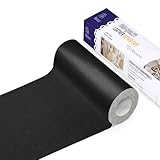
The Besezx kit is what you buy when you want the tear gone before you next drive the car, and you are honest with yourself that you are covering rather than restoring. It is a self-adhesive leather and vinyl patch tape kit — the sort of thing that lives in a glovebox and gets used on the bolster that splits a little further every month, the armrest that has cracked along its edge, or the shift boot that finally gave up. It suits a daily-driven classic, a project car in primer, or any situation where a two-inch tear on a seat you sit on daily is worth twenty minutes of your life and not a weekend.
The appeal is entirely mechanical: there is no mixing, no colour matching, no cure time and no heat. You cut the patch to a shape slightly larger than the damage, round the corners so they are less likely to catch, peel the backing and press it down onto a clean, dry, degreased surface. If you warm the patch slightly and press from the centre outward, the adhesive wets out better and the edges sit flatter.
Key specifications
- Repair type: self-adhesive patch tape for leather, vinyl and faux leather surfaces
- Application: peel and stick — no compound, no mixing, no curing, no heat required
- Finish options: supplied in multiple colours and finishes to sit close to common interior shades
- Typical use: tears and scuffs up to roughly a few inches, best on flat or gently curved panels
- Adhesive class: pressure-sensitive adhesive; bond improves with surface preparation and firm roller pressure
- Maintenance: re-press edges after hot weather; replace the patch rather than trying to re-glue it
- Not suitable for: missing material across a seam, deep cracks that need filling, or high-wear contact points like a driver’s outer bolster
Read the “not suitable for” line carefully, because it explains almost every disappointed experience with patch tape. A pressure-sensitive adhesive patch works by conforming to a surface. On a flat door card or a rear armrest it holds for years. On the outer bolster of a driver’s seat — the point where every entry and exit drags across the material — it is fighting friction and shear, and it will eventually lift at the leading edge. That is not a defect in the product; it is physics, and it is why this kit belongs in the budget tier as a stopgap and a maintenance tool rather than a restoration.
Heat is the other variable. A patch on a parcel shelf or a black seat in a car that sits outside in summer will soften, and the edges will creep. Pressing it back down while warm, or trimming any lifted lip and re-rolling, is normal upkeep in this tier.
Pros
- Fastest repair in this roundup — no cure time, drive immediately
- Lowest cost of entry, so it is easy to keep a spare set in the car
- No skill requirement and no risk of making the damage worse
- Works on curved panels, door cards and armrests where compound kits are awkward
Cons
- Covers damage rather than repairing it — the tear is still there underneath
- Edges lift on high-friction contact points such as driver’s bolsters
- Colour is a best-fit approximation, not a true blend
- Not appropriate for a car you are presenting as original or restored
How it compares: the closest alternative is the YGDMD 2PCS 8×4 Inch PU Leather Patch, which is also self-adhesive but sells on area rather than convenience — two large sheets rather than a roll of tape, which suits a big L-shaped tear. If you need the repair to be permanent and invisible, neither of these is the answer; that is the territory of the ARCSSAI Black Leather Repair Kit or, for a full rebuild, the Permatex 81781 Ultra Series. Buy Besezx for speed and low commitment; buy the others for a repair that outlives the car.
3. COCONIX Black Leather & Vinyl Repair Kit – Best for Black Leather and Vinyl Seats

If your interior is black, this kit removes the hardest part of the job. There is no colour mixing, no test patch against a colour chart, and no risk of a repair that is a shade off in sunlight — the compound is pre-matched to black leather and vinyl. That makes it the natural choice for the enormous number of classics that came with black vinyl from the factory: 1960s American coupes, British sports cars with black Ambla or vinyl trim, and the black leather seats that were the default option on most European saloons from the 1970s onward.
It is a premium-tier kit, and the premium buys you the heat-cure system rather than just a tube of filler. The process is: clean and degrease the damage, apply backing material if the vinyl has torn rather than cracked, fill with compound, texture the surface to match the grain, then apply heat so the compound fuses with the surrounding material. The heat step is what separates a repair that lasts a decade from one that flakes off within a summer.
Key specifications
- Repair type: compound fill and re-texture for leather and vinyl, pre-matched in black
- Coverage: suitable for multiple small repairs — scuffs, cracks, cat scratches, cigarette burns — rather than one large panel
- Cure: heat-activated; the compound is set with heat rather than left to air-dry
- Grain texturing: included tooling or film to press a leather or vinyl grain into the wet compound
- Finish: flexible, semi-matte, designed to match aged black vinyl rather than a fresh gloss
- Best on: seat bolsters, side panels, door cards, centre consoles, headrests
- Not suitable for: cloth or carpet, and not for colours other than black without mixing
The strength of a pre-matched black kit is consistency. Anyone who has tried to mix black by hand knows the trap: pure black compound on a forty-year-old seat looks like a bruise, because aged vinyl has gone slightly grey or brown with UV exposure. A purpose-built automotive black compound is usually formulated to sit in that range rather than at absolute zero, which is why repairs from this class of kit tend to disappear into an old seat better than a generic black filler would.
The weakness is obvious: it does one colour. If you have black seats and a tan centre console, you need a second kit. It is also not a structural kit in the way the Permatex 81781 is — for a bolster that has split all the way through, you are filling a gap rather than rebuilding a panel, and the repair will be more visible on a high-flex area.
Pros
- No colour matching required — the single biggest failure point is eliminated
- Heat-cured compound bonds and flexes far better than air-dry fillers
- Grain texturing lets you blend the repair into a leather or vinyl pattern
- Works across seats, door cards and consoles with one kit
Cons
- Black only — no use on tan, red, blue or grey interiors
- Premium price for a single-colour kit
- Heat application takes practice; too much heat scorches the surrounding vinyl
- Not designed to rebuild a torn-through bolster on its own
How it compares: the direct rival is the ARCSSAI Black Leather Repair Kit, which attacks the same black-only problem from the mid-range tier. ARCSSAI is the sensible choice if you want a black repair on a budget and are willing to accept a slightly less sophisticated cure and texturing setup. The COCONIX black kit is worth the step up if the car matters, if the damage is on a visible surface, or if you intend to do several repairs over the years — the tooling and compound quality are what you are paying for. If you need multiple colours instead of just black, the Nozerix Car Leather Repair Kit with its ten colour options is the more flexible purchase.
4. ATG Upholstery Repair Kit – Best for Carpet and Fabric Seat Patching

ATG’s kit solves a problem the compound kits in this list largely ignore: material that has worn away rather than torn. A heel pad worn through to the backing, a seat cushion edge rubbed down to the foam by forty years of denim, a carpet with a hole under the pedal — these are not repairs you can fill, because there is nothing to fill. You need to add material, adhere it, and blend it in. That is what this kit does, and it is why it belongs in the mid-range tier as a fabric-and-carpet specialist rather than a general-purpose upholstery kit.
It suits cloth interiors with wear damage rather than burn damage: bench seats with a worn driver’s side, rear cushions that have gone thin at the edges, parcel shelves with sun rot, and carpets that have been cut or burned. It also suits anyone restoring a car with original carpet they cannot replace, where a patch is the only way to keep the original material in place.
Key specifications
- Repair type: patch material plus adhesive for fabric, carpet and upholstery cloth
- Coverage: patch material is cut to size, so coverage scales with the damage rather than being fixed
- Application: cut, fit, adhere and press; no heat cure required
- Substrates: woven upholstery cloth, velour, automotive carpet and trim cloth
- Adhesive class: contact-style fabric adhesive that stays flexible in normal cabin temperature ranges
- Best on: flat and gently contoured panels — seat bases, floor carpet, parcel shelves, door card cloth
- Not suitable for: leather, vinyl, or high-stretch areas like a tight seat bolster where the patch must stretch
The technique matters more here than with a compound kit, and it is worth doing properly. Cut the patch so the grain or weave runs the same direction as the surrounding material — on a patterned cloth, a patch rotated ninety degrees is instantly visible even if the colour is perfect. Feather the edges by trimming the patch’s backing so the perimeter is thinner than the centre, which stops a hard ridge showing through. Then adhere from the centre outward, pressing firmly, and let the adhesive set fully before anyone sits on it.
Where this kit loses to the COCONIX fabric kit is invisibility. A patch is a patch: it will always be slightly detectable, because it is a separate piece of material laid on top. Where it wins is on structural wear. A blended fiber fill cannot restore thickness to a cushion that has been worn thin, but a patch can add a layer of material and take the load, which is exactly what a worn heel pad or seat edge needs.
Pros
- Handles worn-through fabric and carpet that compound fillers cannot fix
- Cut-to-size patch material means you are not limited by a fixed patch dimension
- No heat and no curing time — a straightforward cut, fit and adhere job
- Useful well beyond seats: carpet, parcel shelf, door cards and boot trim
Cons
- Visibly a patch; it will not disappear the way a colour-blended fill can
- Not suitable for leather or vinyl, so it does not replace a compound kit
- Adhesive can fail on high-stretch bolsters where the patch must flex
- Matching original cloth weave and colour is limited by what the kit supplies
How it compares: against the COCONIX Carpet & Fabric Repair Kit, the split is clear — COCONIX is for burns and holes where the surrounding fabric is intact and you want an invisible, colour-blended fill; ATG is for worn-through material where you need to add substance. Against the Permatex 25247 Fabric Repair Kit, ATG handles larger areas, while the Permatex gel is a single-unit touch-up for small burns and fraying. Many cloth-interior restorations end up using two of the three, and that is not a sign of indecision — it is a sign that the damage types differ.
5. ARCSSAI Black Leather Repair Kit – Best for Filling Cracks and Scuffs on Black Vinyl

ARCSSAI’s kit is the mid-range answer to black leather and vinyl damage, and it occupies a genuinely useful position: more capable than a patch tape, less expensive than the premium compound kits, and pre-matched to black so there is no colour mixing. It suits the owner of a black-interior classic who has a handful of specific faults — a cracked seat base, scuffed side panels, a worn patch on the centre console — and who wants to fix them properly without buying the most expensive kit on the shelf.
It is a compound kit, so the working method is fill, texture and set. You clean the damage, apply the compound in thin layers rather than one thick blob, let each layer tack up, and then press grain into the final layer. For a crack, the compound bridges the gap and locks the two edges together; for a scuff, it restores the surface layer and colour in one step.
Key specifications
- Repair type: compound fill for leather and vinyl, pre-matched in black
- Coverage: multiple small to medium repairs — cracks, scuffs, scratches, small burns
- Layers: applied in thin coats; building up is slower but far less prone to cracking later
- Texturing: grain stamping or film supplied to reproduce a leather or vinyl pattern
- Cure: air-dry and heat-assisted, depending on the layer and the depth of the damage
- Best on: seat bases, bolsters, door cards, armrests, centre consoles, headrests
- Not suitable for: cloth and carpet, and not for colours other than black
The important technique with any compound kit is thin layers. A single thick application looks fine for a week and then shrinks as it cures, leaving a sunken line exactly where the crack was — the repair telegraphs its own history. Three thin coats, each allowed to tack, produce a filled area that stays level and flexes with the seat. If the damage goes all the way through the vinyl, backing the hole from behind first makes an enormous difference to how well the fill holds.
Heat resistance in this tier is decent but not exceptional. On a black seat in a car that lives outside in a hot climate, a compound repair will soften at the surface in extreme heat, and a poorly applied one will lift at the edges. That is the main practical reason to step up to a premium kit if the car is a convertible or lives in the sun — the premium tiers are formulated with more attention to heat cycling, which is exactly the failure mode that kills cheap repairs.
Pros
- Pre-matched black removes the risk of a mismatched repair
- Mid-range price for a genuine compound fill kit, not just a patch
- Fills cracks and scuffs rather than covering them, so the surface stays flat
- Grain texturing available to blend the repair into the surrounding pattern
Cons
- Black only — no flexibility across a multi-colour interior
- Air-dry curing means longer downtime than a peel-and-stick patch
- Requires layered application; rushed single-coat work fails visibly
- Heat resistance is a step behind the premium kits in sustained high temperatures
How it compares: the nearest alternative is the COCONIX Black Leather & Vinyl Repair Kit, which does the same job at a premium price with a more complete heat-cure and texturing setup. If your black seats are a long-term project and you want the best odds of an invisible result, COCONIX is the upgrade. If you are fixing a working car and want value, ARCSSAI delivers most of the outcome for less. Against the Quadence Black Leather & Vinyl Repair Kit, ARCSSAI is the more serious tool — Quadence is a five-piece starter set for a first, low-stakes repair, while ARCSSAI is aimed at repeat use.
6. YGDMD 2PCS 8×4 Inch PU Leather Patch – Best for Large Tear Coverage on a Tight Budget

YGDMD’s kit is two self-adhesive PU leather patches, each 8 × 4 inches, which is 32 square inches per patch and 64 square inches in total. That is the largest fixed coverage in this roundup by a wide margin, and it makes this the kit to reach for when the damage is not a burn or a scratch but a proper tear — a long split along a seat base, a ripped door card, a torn headrest, or the kind of damage that happens when something sharp is carried on the back seat. It is a budget-tier product that earns its place on area rather than sophistication.
Because the patches are large and self-adhesive, the practical approach is different from a tape kit: you are cutting a shape out of a big sheet rather than unrolling a strip. That means you can cover an irregular tear with a single piece, which matters because multiple overlapping small patches always look like multiple overlapping small patches.
Key specifications
- Quantity: two patches, 8 × 4 inches each
- Total coverage: 64 square inches, the largest fixed area in this roundup
- Material: PU (polyurethane) leather-effect sheet with a self-adhesive backing
- Application: cut to shape, peel, press; no heat, no mixing, no cure time
- Adhesive class: pressure-sensitive; bond depends heavily on cleaning and firm roller pressure
- Best on: flat or gently curved panels — seat bases, door cards, headrests, armrests, boot trim
- Not suitable for: deep cracks that need filling, cloth or carpet, or high-friction bolsters
The coverage number is worth doing the arithmetic on, because it tells you whether one purchase is enough. A typical bolster tear is about 4 to 6 square inches; a long seat-base split might run 18 to 24 square inches; a torn door card can be 30 square inches or more. One YGDMD patch at 32 square inches covers the door card; the pair covers a seat base plus a door card with material to spare. Compare that to a tape kit, where you may be buying coverage in small increments and layering strips — the maths usually favours the large-format patch for anything bigger than a few inches.
The trade-off is material realism. PU leather is a synthetic sheet, and on a car with genuine leather or a heavily textured vinyl, a smooth PU patch reads as a patch under close inspection. The colour match is also approximate rather than blended. For a working car, a track car, a barn-find driver or a temporary fix while you save for a proper seat recover, that is a fair exchange at budget-tier pricing.
Pros
- 64 square inches total coverage — the largest fixed area available in this list
- Large sheets let you cover an irregular tear with one continuous piece
- No tools, no heat, no mixing, no cure time
- Lowest cost per square inch of any kit here
Cons
- PU material is visibly synthetic against genuine leather
- Approximate colour rather than a blended match
- Self-adhesive edges lift on contact points and in high heat
- Does not fill cracks or restore missing depth — it is a cover layer
How it compares: the obvious rival is the Besezx Leather Repair Patch Tape Kit, which is more convenient for small tears and less useful for large ones. Think of Besezx as the roll of tape and YGDMD as the sheet material — same adhesive philosophy, different geometry and scale. If you need the repair to be permanent rather than covered, the Permatex 81781 Ultra Series Vinyl and Leather Repair Kit is the tier above, because it rebuilds the panel with backing and compound instead of laying a sheet over it.
7. COCONIX Leather & Vinyl Repair Kit for Furniture, Car Seats, Sofas & Marine – Best for Marine-Grade and Heavy-Use Vinyl

This is the most broadly capable compound kit in the COCONIX range and the one to choose when the repair has to survive something harsher than a garage-kept interior. The listing positions it across furniture, car seats, sofas and marine applications, and that combination is a meaningful signal: marine vinyl is judged on UV exposure, moisture and constant flexing, so a formula sold into that market is usually built with more attention to heat and water resistance than a car-only product.
It suits the classic owner with a convertible, a car that lives outside, a boat-adjacent project, or a leather interior where the colour has to be matched properly across several different repairs. It also suits anyone who wants one kit that will still be useful on the house sofa and the camper van, because a multi-substrate kit that covers furniture as well as automotive trim gets used far more often than a single-purpose one.
Key specifications
- Repair type: compound fill and colour system for leather and vinyl
- Colour range: multiple base colours for mixing, rather than a single pre-matched shade
- Cure: heat-activated, which is what gives the repair its flexibility and adhesion
- Environment: formulated for use across automotive, furniture and marine vinyl, so heat and moisture resistance are prioritised
- Texturing: grain reproduction tooling to match leather, vinyl and marine upholstery patterns
- Coverage: enough compound for several medium repairs or a larger single restoration
- Not suitable for: cloth, carpet or fabric of any kind
The colour-mixing capability is the real differentiator. Pre-matched kits are fast and foolproof but limited to one shade; a mixing kit lets you hit a faded tan, a burgundy, a navy or a cream, and lets you adjust for the sun-bleached reality of a forty-year-old interior. The technique is to mix a small batch, test it on a hidden area or a scrap of similar material, let it cure, and check it in daylight before committing. That test step is the difference between a repair that vanishes and one that announces itself.
On heat resistance specifically: this is where the premium tier justifies itself. A convertible with a black interior parked outside can see surface temperatures on vinyl high enough to soften an air-dried filler. A heat-cured compound crosslinks into the surrounding material and behaves more like the original vinyl when it expands and contracts. If your car is garaged and temperate, that advantage is theoretical; if it is a sun-baked daily, it is the difference between a repair that lasts one summer and one that lasts ten.
Pros
- Multi-colour mixing covers tan, cream, burgundy and navy interiors that black-only kits cannot touch
- Heat-cured compound resists softening in high cabin temperatures
- Positioned for marine and furniture use, so moisture resistance is part of the design brief
- Grain tooling lets you reproduce texture rather than leaving a smooth patch
Cons
- Premium price, and the most expensive way to fix a single small scuff
- Colour mixing takes practice and a test patch — it is not a peel-and-stick product
- Useless on cloth or carpet, so it does not replace a fabric kit
- Heat application demands care; scorching surrounding vinyl is an easy mistake
How it compares: the nearest alternative is the COCONIX Black Leather & Vinyl Repair Kit. They use the same broad method, but the black kit is faster and cheaper for black interiors, while this one buys you colour range and a formulation tuned for harsher environments. If your interior is black and garaged, buy the black kit and save the difference. If your interior is any other colour, or the car sees real sun and weather, this is the better purchase. Against the Nozerix Car Leather Repair Kit, the COCONIX offers a more sophisticated cure and texturing system, while Nozerix’s ten colour options are easier to use out of the box.
8. Permatex 25247 Fabric Repair Kit – Best for Small Fabric Burns and Fraying
Permatex 25247 is a single-unit gel fabric repair, and it is the smallest, simplest tool in this roundup. It suits one specific job extremely well: a small burn, a frayed edge or a pulled thread in a cloth interior, where the damage is tiny, the surrounding material is intact, and you want it stabilised without a full compound-and-iron process. Permatex is a well-established automotive chemical brand, and this is the kind of utilitarian product that ends up living in a toolbox for years because it is useful for exactly one thing.
It suits the owner of a cloth-interior classic with a cigarette burn on a bench seat, a fraying seam edge, or a small hole where the fabric has parted. It also suits a quick stabilisation job — arresting a fray before it spreads into a larger tear — which is genuinely valuable on old cloth where a single loose thread can unravel a panel.
Key specifications
- Format: single-unit gel, applied directly from the container
- Repair type: fabric stabilisation and small-area fill for cloth upholstery
- Cure: air-dry; no heat tool required
- Finish: flexible when cured, so it moves with the fabric rather than cracking
- Coverage: small repairs — burns, frayed edges, pulled threads, minor holes
- Best on: flat cloth panels, seat cushions, door card fabric, headliners
- Not suitable for: leather, vinyl, carpet pile, or any repair where material is missing across a large area
The honest limitation is colour. A gel of this type stabilises and fills but does not carry a pigment matched to your seat, so on a light-coloured cloth a repair will read as a slightly different shade. That is acceptable for a fray on a seam edge or a burn in a low-visibility spot, and it is a real drawback on a light beige bench seat in a car you show. Where it shines is prevention: a fraying edge treated early stops being a tear, and that is worth more than the cosmetic perfection of a repair you would otherwise be making later.
Application is straightforward: clean the area, work the gel into the fibers









