Key takeaways
- Pro: The large bag size makes this one of the most cost-effective options per serving for multi-cat homes that go through dry food quickly.
- Pro: Seafood blend appeals to cats that grow bored of chicken-only formulas and helps rotate palatability without switching brands.
- Con: The ingredient list relies heavily on corn and wheat as caloric fillers, which means the actual meat content is lower than the flavor name suggests.
Choosing the right dry cat food means balancing your cat’s actual nutritional needs against the realities of household budgets, storage space, and picky eating habits. The market is flooded with options that look nearly identical on the shelf — similar kibble sizes, similar protein percentages listed on the bag, similar promises about coat shine and digestive health. The differences that matter are often buried in ingredient sourcing transparency, calorie density per cup, and how well a formula handles specific problems like indoor weight gain, hairball frequency, or texture aversion.
This roundup compares eight widely available dry cat food formulas that consistently appear in owner feedback discussions across forums, pet store review sections, and social media communities. We looked at published specs, ingredient lists, per-pound pricing, and recurring praise or complaints from people who actually feed these products daily. The goal is to help you narrow down which of these mainstream options fits your cat’s profile and your household constraints without paying for marketing fluff that does nothing for your pet’s health.
As an Amazon Associate we earn from qualifying purchases at no extra cost to you.




Quick Picks
| Product | Best For | Price |
|---|---|---|
| Friskies Seafood Sensations (22 lb) | Bulk feeding multiple cats | $19.36 |
| Meow Mix Original Choice (6.3 lb) | Single-cat budget feeding | $8.99 |
| Cat Chow Naturals Hairball (13 lb) | Indoor cats with hairball issues | $15.99 |
| Friskies Gravy Swirlers (22 lb) | Flavor variety at scale | $19.49 |
| Meow Mix Gravy Bursts (3 lb) | Small households, trial feeding | $5.29 |
| IAMS Proactive Health Indoor (7 lb) | Indoor weight management | $16.97 |
| Purina ONE Tender Selects (7 lb) | Salmon-first protein preference | $17.46 |
| Friskies Gravy Swirlers (3.15 lb) | Sampling before committing | $5.24 |
How We Picked
We evaluated each formula on four criteria: protein source quality as listed on the label (whole meat versus by-products versus grain filler as the primary ingredient), calorie density relative to serving size recommendations, price-per-pound efficiency at the available bag size, and frequency of owner-reported issues such as texture rejection or digestive upset. A product that scores well on specs but consistently generates complaints about palatability gets flagged, because no nutritional advantage matters if the cat will not eat the food.
The 8 Best Cat Food in 2026
Friskies Purina Seafood Sensations Dry Cat Food, 22 lb Bag
This is the volume option for households feeding two or more cats who accept seafood-flavored kibble without complaint. The 22-pound bag brings the effective per-pound cost down significantly compared to smaller packages of the same formula.
- Pro: The large bag size makes this one of the most cost-effective options per serving for multi-cat homes that go through dry food quickly.
- Pro: Seafood blend appeals to cats that grow bored of chicken-only formulas and helps rotate palatability without switching brands.
- Con: The ingredient list relies heavily on corn and wheat as caloric fillers, which means the actual meat content is lower than the flavor name suggests.
Skip this one if your cat has a grain sensitivity or if you prefer a formula where a named animal protein appears first on the label.
Meow Mix Original Choice Dry Cat Food, 6.3 Pound Bag
The classic grocery-store staple for a single cat in a tight budget scenario. At under nine dollars for over six pounds, it is the cheapest entry point on this list per unit of food purchased.
- Pro: Extremely affordable and available at virtually every mass retailer, making restocking effortless.
- Pro: Consistent texture and flavor that most cats accept without transition anxiety, which reduces food-waste during brand changes.
- Con: The ingredient profile is dominated by corn, poultry by-products, and wheat — essentially a filler-heavy formula with minimal whole-meat content.
If you have a cat with known food sensitivities or a medical diet requirement, this formula lacks the specificity to address those needs.
Purina Cat Chow Naturals Hairball, Indoor Dry Cat Food, 13 lb Bag
Designed for indoor cats that groom frequently and deposit fur into their digestive tract. The fiber blend in this formula is positioned to reduce hairball formation rather than simply managing symptoms after they appear.
- Pro: Added natural fibers (beet pulp and cellulose) support digestion of ingested hair, which owners report reduces vomiting frequency.
- Pro: The 13-pound size balances freshness against value — large enough to last a solo cat roughly two to three months without staling.
- Con: Priced higher than mainstream competitors without a visible jump in protein source quality on the label.
Cats that are not indoor or do not shed excessively do not need the elevated fiber content, which can reduce caloric efficiency for growing kittens.
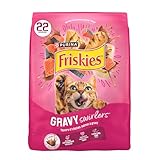
Friskies Purina Gravy Swirlers Dry Cat Food, Chicken & Salmon, 22 lb Bag
This bulk option is for owners who want a gravy-coated kibble at scale. The gravy coating adds moisture and fat on the kibble surface, which increases palatability for cats that reject plain dry food.
- Pro: The gravy coating significantly improves acceptance in cats that are texture-sensitive or accustomed to wet food only.
- Pro: At 22 pounds, the per-serving cost is competitive with plain dry options despite the added coating.
- Con: The gravy layer shortens the effective shelf life once opened, as the fats oxidize faster than uncoated kibble.
Skip if your cat is on a calorie-restricted plan — the gravy coating adds fat calories that are easy to overlook when measuring dry servings.
Meow Mix Gravy Bursts Dry Cat Food, 3 lb Bag
A small-format option for single cats or for owners testing whether a gravy-coated formula will actually get a finicky eater to finish a bowl before committing to a larger purchase.
- Pro: The three-pound bag is low-risk for cats that reject new textures, preventing wasted money on an unused large bag.
- Pro: Gravy bursts provide the moisture and fat coating that improves palatability without the expense of a full wet-food regimen.
- Con: Per-pound pricing is the highest on this list, making it impractical as a long-term staple for any household with multiple cats.
If you have more than one cat, the cost per pound makes this an inefficient choice compared to bulk alternatives from the same family of products.
IAMS Proactive Health Indoor Dry Cat Food, Chicken & Turkey, 7 lb
IAMS positions this formula around indoor cats specifically, with lower fat content and added L-carnitine to support lean body mass. Chicken and turkey are the named protein sources, which is a step up in label clarity over by-product-heavy competitors.
- Pro: Named meat proteins appear near the top of the ingredient list, making the actual protein source transparent to buyers.
- Pro: The calorie density is tuned lower than standard maintenance formulas, which supports weight management without requiring strict portion control beyond the recommended scoop.
- Con: Per-pound cost is roughly double that of Friskies or Meow Mix bulk options, so the budget gap is noticeable at restock time.
Kittens and active outdoor cats need more fat and calories than this indoor-focused formula provides, so it is the wrong choice for growing or high-energy animals.
Purina ONE Tender Selects Dry Cat Food, Salmon, 7 lb Bag
A salmon-first formula from Purina’s premium line, targeting cats that do well on fish-based protein. The tender kibble shape and size are designed for easier chewing, which matters for senior cats or those with dental sensitivity.
- Pro: Salmon is the primary protein source listed, which provides higher omega-3 fatty acid content compared to chicken-based alternatives on this list.
- Pro: The smaller, tender kibble texture is easier for cats with worn teeth or gum sensitivity to chew thoroughly.
- Con: The 7-pound bag price sits near the top of this comparison despite a protein profile that is not dramatically superior to cheaper options.
If your cat tolerates chicken well and you are optimizing for cost rather than specific omega-3 benefits, a chicken-based bulk option delivers similar results at a lower price.
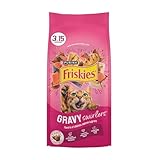
Friskies Purina Gravy Swirlers Dry Cat Food, Chicken & Salmon, 3.15 lb Bag
The trial-size version of the bulk Gravy Swirlers formula, useful for testing acceptance before purchasing a 22-pound bag or for feeding a single cat that goes through food slowly.
- Pro: Low-cost entry point to evaluate whether the gravy coating improves a particular cat’s willingness to eat dry food.
- Pro: Same formula as the large bag, so if your cat accepts it, transitioning to bulk is seamless without re-adaptation.
- Con: Per-pound cost is nearly three times the bulk version, making it a poor long-term choice once you have confirmed the cat likes it.
Purchase this only as a trial or for a very low-volume feeder — any household going through more than one small bag per month should switch to the 22-pound format immediately.
Buying Guide
Read the First Three Ingredients
Ingredient lists are ordered by weight. If the first three items are corn, wheat, or “poultry by-product meal” rather than a named whole protein, you are paying primarily for carbohydrate filler with a small protein contribution. The difference between a formula where chicken is listed first and one where corn gluten meal leads is substantial over months of feeding, particularly for cats that need lean muscle maintenance.
Match Calorie Density to Your Cat’s Activity Level
Indoor cats that do not hunt, climb, or roam expend far fewer calories than outdoor cats. Feeding an indoor cat a formula designed for high-activity animals without adjusting portions leads to steady weight gain that is difficult to reverse. Look at the kcal/cup figure on the bag and cross-reference it with your cat’s daily caloric need based on body weight and lifestyle. Overweight cats on dry food benefit more from lower-calorie indoor formulas than from arbitrary portion reduction of a standard product.
Consider Storage Size Against Freshness
A 22-pound bag of kibble can last a single cat four to six months. Fat oxidation and starch staling degrade palatability over time, which means your cat may start refusing food that tasted fine the first month. If you have one cat, a mid-size bag (7 to 13 pounds) keeps food fresher without the per-pound penalty being overwhelming. Multi-cat households get genuine savings from bulk because the turnover rate prevents staleness.
Our Verdict
The top pick for most indoor cat owners who want a defensible ingredient profile without paying a specialty-brand premium is the IAMS Proactive Health Indoor. Named protein sources, tuned calorie density, and transparent labeling put it ahead of the filler-heavy mainstream options for cats that need weight management support.
The budget pick is the Friskies Purina Seafood Sensations 22-pound bag — it is the cheapest viable option for households feeding multiple cats and needing a formula that most cats will actually eat consistently.
If your cat has already shown reluctance toward plain kibble and you have not yet confirmed whether a gravy coating will solve the problem, the Friskies Gravy Swirlers 3.15-pound bag is the lowest-cost test that lets you find out without wasting money on a large unused purchase.
FAQ
Is dry cat food sufficient as a complete diet?
Yes, provided the formula meets AAFCO nutritional adequacy statements for your cat’s life stage. Dry food contains enough moisture to sustain a cat that drinks water normally, but cats with kidney concerns or chronic dehydration benefit from supplementing with wet food or adding water to dry kibble.
Why do some cats refuse one brand and accept another with similar ingredients?
Palatability depends heavily on the fat spray applied to the kibble surface after cooking, not just the internal ingredient list. Two formulas with identical ingredient labels can taste completely different to a cat because of coating composition, kibble shape, and aroma volatility.
How long can an opened bag of dry cat food stay fresh?
Most manufacturers recommend using an opened bag within six weeks for uncoated kibble and roughly four weeks for gravy-coated varieties. The fats on the coating oxidize faster, which produces off-flavors that cats detect immediately and react to by refusing the food.
Should I rotate flavors to prevent boredom or sensitivity?
Rotation is more about maintaining palatability than preventing dietary intolerance. Cats that eat the same formula for months may develop a mild aversion to that specific smell profile. Rotating between two accepted flavors from the same brand line is simpler than switching brands entirely, which can trigger digestive upset.