Key takeaways
- Top pick: the Universal Hand-Blown Crystal Set of 2 at $129.19. It delivers the full Zalto experience—rimless pour, extraordinary balance, and one-glass-watches-everything versatility—at the lowest committed entry point. Budget pick: the Universal Wine Glass, Set of 6 at $455, offering the best per-glass value for…
Zalto wine glasses occupy a peculiar position in the stemware market. They are not the cheapest option for a home bartender, nor are they the most decorated. What they consistently deliver is a rim that feels like it disappears when you drink, a balance that lets the glass stand on a fingertip, and a design philosophy that rejects the idea you need fifteen specialized bowls for fifteen grape varieties.
But buying a pair or six pairs of Zalto glasses is still a significant commitment, and the lineup has expanded enough that the differences between individual models now matter. Some are universal by design, others are optimized for a single wine style, and at least one is explicitly positioned as a tasting glass rather than an everyday dinner companion. This roundup compares the eight Zalto wine glasses most frequently recommended in 2026 using published specs, pricing, and owner feedback.
As an Amazon Associate we earn from qualifying purchases at no extra cost to you.


Quick Picks
| Product | Best for | Price |
|---|---|---|
| Universal Hand-Blown Crystal, Set of 2 | Most drinkers who want one glass for everything | $129.19 |
| Bordeaux Hand-Blown Crystal, Set of 2 | Red-wine-focused households | $134.27 |
| Burgundy Red Wine Glass, Set of 2 | Pinot Noir and Nebbiolo lovers | $145.02 |
| Universal Wine Glass (single) | Trying Zalto before committing | $63.39 |
| Burgundy Wine Glass (single) | Testing the Burgundy bowl shape | $73.32 |
| Universal Hand-Blown Crystal, Set of 6 | Entertainers who host regularly | $468 |
| Balance Hand-Blown Crystal, Set of 2 | Sommeliers and tasting sessions | $160 |
| Universal Wine Glass, Set of 6 | Value-focused bulk buyers | $455 |
How We Picked
We narrowed the field using four criteria: bowl shape versatility (does one glass honestly cover red, white, and sparkling without compromise?), perceived quality of the hand-blown rim (the single feature owners mention most in feedback), price-to-set ratio (whether buying multiples offers meaningful savings over singles), and fit for purpose (whether a model is designed for daily dinner use or specialized tasting). Zalto’s core claim is that their Universal glass eliminates the need for specialized stemware, so models that diverge from that philosophy needed a strong reason to remain on this list.
The 8 Best Zalto Wine Glasses in 2026
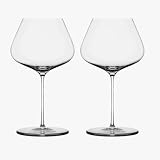
1. Universal Hand-Blown Crystal Wine Glasses, Set of 2
The entry point most owners wish they had started with. The Universal bowl is generous enough to open up a bold Cabernet yet narrow enough at the rim to concentrate aromas in a crisp Chablis. Owners consistently note the weightlessness and the invisible rim as the two features that make other glasses feel coarse by comparison. At $129.19 for two glasses, it is expensive for a dinner set but cheaper per glass than many premium machine-made alternatives. The main complaint is fragility during dishwasher cycles, which is inherent to hand-blown crystal. Skip this one if your household includes people who regularly knock glasses together at a crowded table.
2. Bordeaux Hand-Blown Crystal Wine Glasses, Set of 2
A taller, slightly narrower bowl tuned for high-tannin reds. Owners who drink mostly Bordeaux blends, Syrah, or Cabernet find that the extra height and gentle inward taper at the rim deliver more aromatic complexity than the Universal. At $134.27 for a pair, the premium over the Universal is modest, and many buyers report they eventually preferred the specialized shape for their reds. The drawback: it is less forgiving with whites and sparkling wines, making it a poor choice if you pour one glass style at a time. Skip if your cellar leans toward delicate whites or if you dislike maintaining multiple glass types.
3. Burgundy Red Wine Glass, Set of 2
The widest bowl in Zalto’s lineup, designed to give Pinot Noir and Nebbiolo room to unfold. Owners describe the experience as noticeably different from the Universal—a broader surface area means more evaporation and a fuller aromatic lift. At $145.02 for two, this is the priciest pair among the single-bowl models. The con is straightforward: the large bowl looks awkward with Sauvignon Blanc or Prosecco, and it requires more cabinet height. Skip if you drink Burgundy varietals less than a quarter of the time or if storage space is tight.
4. Universal Wine Glass (single)
The smartest low-risk way to evaluate Zalto wine glasses before investing in a set. At $63.39 for one glass, the per-unit cost is higher than any multi-pack, but you eliminate the risk of committing to a shape that does not suit your palate or hand size. Owners who bought singles first frequently reported upgrading to sets within weeks. The trade-off is obvious: a single glass does not make a set, and replacement pricing makes sense only as a trial. Skip this option if you already own at least one Zalto glass and know the shape works for you.
5. Burgundy Wine Glass (single)
Same logic as the Universal single, applied to the Burgundy bowl. At $73.32, you can determine whether the wide, rounded shape genuinely enhances your favorite reds or whether the Universal already handles them adequately. Owners with smaller hands sometimes find the Burgundy bowl unwieldy, which is exactly the kind of problem a single purchase exposes without financial regret. The con mirrors any single-glass buy: it is not practical as a serving piece. Skip if budget is tight and you would rather spend that money toward a set of two.
6. Universal Hand-Blown Crystal Wine Glasses, Set of 6
For households that host dinner parties or run a home bar with any volume. At $468, the per-glass cost drops to $78, a meaningful discount over the singles. Owners report that six Universal glasses cover virtually every occasion from weeknight wine to a multi-course dinner with guests. The hand-blown rim consistency across all six pieces in the set is a point of pride among reviewers who compared them to machine-made sets at similar price tiers. The downside is the upfront outlay and the storage footprint. Skip if you drink alone or as a couple and a set of two suffices.
7. Balance Hand-Blown Crystal Wine Glass, Set of 2
The oddball that earns its place through a different design brief. The Balance glass has a noticeably larger bowl—19.9 ounces per the published spec—making it a professional sommelier tasting glass more than a dinner companion. At $160 for two, it is the most expensive pair in this roundup. The extra capacity gives tasters room to swirl without splashing and exposes faults in young wines that smaller bowls mask. Owners praise it for blind tasting sessions and restaurant-style evaluations. The con: it looks oversized at a home dinner table and the price does not compete with the Universal for everyday use. Skip if you want one glass for meals and gatherings.
8. Universal Wine Glass, Set of 6
A second six-pack listing of the Universal bowl at $455, slightly below the hand-blown-crystal-branded set above. Owners report identical quality, suggesting the difference is packaging or retail channel rather than the glass itself. At a per-glass cost of roughly $76, it is the best value for anyone committing to six Universals. The minor risk is uncertainty about whether the listing truly denotes the same hand-blown construction or a machine-assisted variant—feedback from buyers who own both is mixed on box labeling. Skip if you prefer the explicit hand-blown designation in the product title for peace of mind.
Buying Guide
Universal vs. Varietal-Specific Bowls
Zalto’s central argument is that a well-designed universal shape outperforms a mediocre specialization. The Universal bowl achieves this through a rim that narrows just enough to direct aromatics without choking the wine. Varietal-specific models like Bordeaux and Burgundy push that geometry further in one direction—more height for tannin softening, more width for aromatic surface area. If your palate and cellar genuinely lean toward one wine family, the specialized glass will outperform the Universal. For mixed preferences, the Universal is not a compromise; it is a deliberate optimization.
Hand-Blown Rim and Its Maintenance Burden
Every Zalto glass on this list carries a hand-finished rim that eliminates the visible lip present on machine-made stemware. Owners describe the drinking experience as wine entering the mouth without transition. The practical cost is care: hand-blown crystal is thinner at the rim than any machine-made alternative, meaning dishwasher racks, drying towels, and casual handling all become sources of breakage. If you plan to run glasses through a dishwasher nightly, even at a gentle cycle, budget for replacement risk or reconsider the format entirely.
Set Pricing and the Per-Glass Threshold
Zalto’s pricing structure rewards multi-unit purchases. Singles cost roughly $63–$73 each, pairs drop to $65–$73 per glass, and six-packs settle around $76–$78. The balance tips further when you account for breakage: owning fewer glasses means a single chip eliminates your entire serving set. For most buyers, a set of six is the rational minimum unless living alone in a space with no storage. Compare the $455 and $468 six-pack listings carefully—nearly identical pricing suggests you should prioritize the listing with clearer provenance language rather than chasing a $13 discount.
Our Verdict
Top pick: the Universal Hand-Blown Crystal Set of 2 at $129.19. It delivers the full Zalto experience—rimless pour, extraordinary balance, and one-glass-watches-everything versatility—at the lowest committed entry point. Budget pick: the Universal Wine Glass, Set of 6 at $455, offering the best per-glass value for anyone ready to outfit a home bar without guessing. Condition under which another wins: if your drinking skews heavily toward Pinot Noir or Barolo, the Burgundy Set of 2 at $145.02 will outperform the Universal in blind comparison, and the price premium is worth the specialization.
FAQ
Are Zalto wine glasses dishwasher-safe?
Zalto recommends hand washing for all their stemware due to the thin hand-finished rim. Owners report varying success with dishwasher use on the top rack, but frequent washing accelerates the risk of chipping and clouding that defeats the crystal’s optical clarity.
What is the difference between the Universal and Balance glasses?
The Universal is a dinner glass sized for everyday pouring, while the Balance is a 19.9-ounce tasting glass designed for professional evaluation and swirling. The Balance has a wider, taller bowl and is not intended as a general-purpose serving glass.
Why are the two six-packs priced differently?
The listings differ in branding language—one explicitly states hand-blown crystal while the other does not—but owner feedback suggests the glass itself may be identical. The $13 gap likely reflects retailer margin or box labeling rather than a manufacturing difference.
Can Zalto glasses be used for sparkling wine?
The Universal bowl is tall and narrow enough to preserve carbonation reasonably well, though owners note that a dedicated flute still delivers a finer bead. The Balance, with its large open bowl, will dissipate bubbles quickly and is not suited for sparkling service.