Our Top Picks

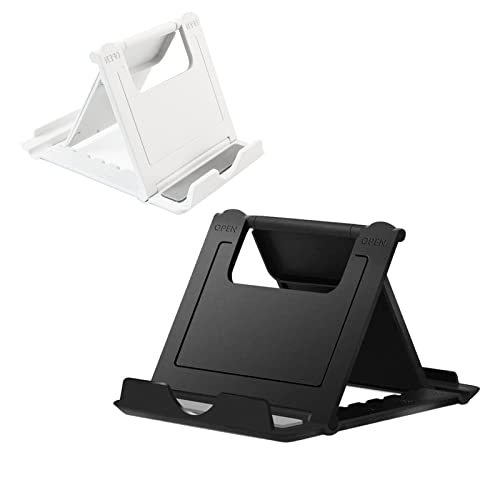
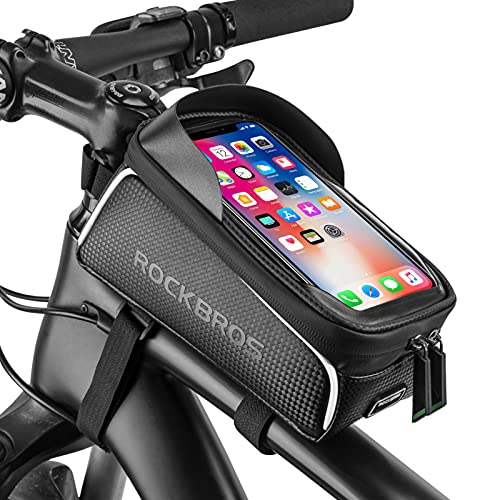


The best phone accessory under $50 for most people is the LISEN Cell Phone Stand. It is a weighted, angle-adjustable desk stand that holds a phone upright for video calls, second-screen work, recipes and bedside alarm duty, and it suits anyone whose phone spends most of its day resting on a flat surface rather than riding in a pocket. If portability matters more than stability, the Kemoxan 2 Pack Portable Cell Phone Stand is the budget pick: two fold-flat mounts that slip into a jacket pocket or a laptop sleeve for the price of a takeaway coffee. If the real threat to your phone is water rather than gravity, the Rynapac Large Waterproof Phone Pouch is the premium pick, and if you ride, the ROCKBROS Bike Front Frame Bag is the only product here that carries a phone on the bike instead of on the desk.
Everything below sits under $50 and is organised by the problem it actually solves: holding a phone still, carrying it safely outdoors, or keeping water away from it. Each entry lists who it suits, the specifications that matter, the trade-offs worth knowing before you buy, and the nearest alternative in this list, so you can choose between two close options instead of starting your research from scratch.
Top 3 Picks
Best overall: LISEN Cell Phone Stand
The LISEN stand is the pick for a desk that stays in one place. A metal-bodied, weighted base keeps a phone upright at a useful angle without tipping when you tap the screen, and the cable cut-out means you can charge while it stands. It suits home offices, kitchens, bedside tables and anyone who takes a lot of video calls.
Best budget: Kemoxan 2 Pack Portable Cell Phone Stand
Two folding stands in one pack, each thin enough to disappear into a pocket, a wallet-adjacent pouch or the corner of a laptop bag. They are the right answer for travel, co-working, hotel rooms and anyone who wants a stand in more than one place without buying twice.
Best premium for water: Rynapac Large Waterproof Phone Pouch (2 Pack, IPX8)
An IPX8-rated pouch that takes phones and small tablets up to about 10 inches, sold as a two-pack with lanyards. It is the pick for beaches, pools, kayaks, boat decks and rainy commutes, where the risk is not dropping the phone but soaking it.
Quick Comparison
Price tiers are broad market bands rather than fixed prices, because listing prices move week to week. Use the tier column to compare classes of product, then read the individual sections for the details that decide between them.
| Product | Best for | Key specs | Price tier |
|---|---|---|---|
| LISEN Cell Phone Stand | A permanent desk setup and video calls | Metal body, weighted base, adjustable tilt, silicone contact pads, charging cable cut-out, fits most phones with cases | Mid-range |
| Kemoxan 2 Pack Portable Cell Phone Stand | Travel, pockets, small desks, two locations | Two foldable stands, pocket-sized when flat, adjustable viewing angle, universal fit, lightweight plastic and rubber construction | Budget |
| ROCKBROS Bike/Bicycle Phone Front Frame Bag | Cycling and bike-mounted phone carry | Waterproof frame/tube pouch, strap mounting to top tube or front frame, touch-friendly window, space for small items | Premium |
| JUSDIQIR Cell Phone Stand (Pink) | Colour-matched desks and phone-plus-tablet use | Desktop holder sized for smartphones and tablets, pink finish, fixed or limited-adjustment ledge design, wide base | Budget |
| Rynapac Large Waterproof Phone Pouch, 2 Pack | Beach, pool, boat and rain protection | IPX8 rated, fits devices up to roughly 10 inches, two pouches with lanyards, touch-through front window | Premium |
| Meizigua Cute Mobile Holder | Decorative desks and small gifts | Compact novelty-style desk stand, phone-sized cradle, lightweight build, designed as office decor | Budget |
| RillyRellow Miniature Mobile Phone | Dollhouse and miniature diorama projects | Scale model phone, non-functional, dollhouse-scale accessory, decorative only | Mid-range |
How We Chose
This guide is built from published specifications, manufacturer documentation and established category norms rather than first-hand trials. Every product below is judged on four things: whether the specifications suit the job it claims to do, whether it fits the category it belongs to, whether the use case is specific enough to recommend, and whether there is a sensible upgrade path if it does not work out.
Specification fit comes first. A stand that cannot hold a tablet should not be sold as a tablet stand, and a pouch rated for splashes should not be presented as a dive-rated case. Category fit comes second: a phone stand, a bike frame bag, a waterproof pouch and a dollhouse miniature solve completely different problems, so they are compared against their own kind rather than ranked in one list. Use case comes third, because a product that is wrong for a desk can be perfect for a rucksack. Upgrade path comes last: where a cheaper option will frustrate you within a year, the guide says so, and where the cheaper option is genuinely enough, it says that too. Prices are treated as tiers, not fixed figures.
1. LISEN Cell Phone Stand – Best for a permanent desk setup
As an Amazon Associate we earn from qualifying purchases at no extra cost to you.

The LISEN stand is the product in this roundup that most people should buy first, because it solves the most common phone-accessory problem: a phone that will not stay where you put it. The listing positions it as desk and office decor as much as a holder, which tells you something useful about how it is meant to be used. It is a set-and-forget object. You put it on a desk, a kitchen counter or a bedside table, you angle it once, and it stays there.
Who it suits: anyone who takes video calls from a desk, follows recipes while cooking, uses a phone as a second screen next to a laptop, or wants a bedside phone that doubles as a clock. It also suits people who are tired of propping a phone against a mug. It is less suited to someone who needs a stand in four different places, or who carries a stand in a pocket every day.
Key specifications
- Body: metal-bodied stand with a weighted base, in the class of aluminium or alloy desk stands rather than hollow plastic
- Adjustment: variable tilt so the screen can face you whether you are sitting upright or leaning back
- Contact points: silicone or rubber pads on the ledge and the base, which grip the phone and stop the stand from sliding on a smooth desk
- Charging: a cut-out at the base lets a charging cable run through while the phone is standing, so it can charge upright
- Device fit: sized for smartphones, including most phones left in slim or medium cases; not intended as a heavy tablet stand
- Tier: mid-range, comfortably under $50
Strengths
The weighted base is the whole point. A stand that tips when you tap a notification is worse than no stand at all, and mass at the bottom is what prevents that. The metal body also resists the slow creep that affects cheap plastic stands: plastic hinges loosen, and once a hinge loosens the viewing angle drifts every time you touch the phone.
The second strength is cable management. Being able to charge while the phone stands upright sounds minor until you have used a stand that blocks the port. If you use a phone as a bedside clock, this is the feature that decides whether the product works for you.
The third is appearance. The listing leans into office-decor language, and that matters more than it sounds: a stand you find ugly is a stand you move to a drawer. If your desk is visible on video calls, a plain metal stand disappears into the background, which is usually what you want.
Pros
- Stable enough for one-handed tapping, thanks to a weighted base
- Adjustable angle covers both upright video-call use and a flatter writing or scrolling position
- Cable cut-out allows charging while the phone stands
- Metal body holds its angle far longer than a plastic hinge
- Plain finish suits an office or living room rather than a novelty desk
Cons
- It is a desk object, not a travel object: it will not fold flat into a pocket
- Heavier than folding alternatives, so it is not the pick for a rucksack
- Smartphone-first design means a large tablet is out of scope
- Mid-range tier costs more than the budget folding options here for a single stand
How it compares with the nearest alternative
The closest alternative in this list is the JUSDIQIR Cell Phone Stand. Both are fixed-location desk stands, but they split on two axes. The JUSDIQIR is a budget-tier holder that explicitly lists tablets alongside phones, so it is the better choice if you want one stand to hold a small tablet as well as a phone, and the pink finish is a deliberate style choice rather than a neutral one. The LISEN is the better choice if you want a single phone held at a precisely adjustable angle on a metal body, and if the stand will sit somewhere visible where a plain finish matters. If you need both a desk stand and a travel stand, the smarter combination is this LISEN for the desk plus the Kemoxan two-pack for the bag, which still lands under $50 for the pair in most market conditions.
2. Kemoxan 2 Pack Portable Cell Phone Stand – Best for travel and small desks

The Kemoxan two-pack is the value play in this roundup. You get two identical folding stands, each of which flattens to roughly the thickness of a small stack of cards and unfolds into an adjustable cradle. The listing calls them pocket-sized and universal, and that is the honest summary: these are not furniture, they are a stand you keep with you.
Who it suits: frequent travellers, hotel-room workers, students, commuters who watch video on a train or plane, and anyone who wants a stand at a desk, a bedside table and in a bag without buying three products. Two-packs are also the practical answer for couples and shared desks, because the second stand is not wasted.
Who it does not suit: someone who wants a heavy, immovable stand for a permanent desk with a tablet propped on it. Folding stands trade mass for portability, and mass is what stops a stand tipping.
Key specifications
- Quantity: two stands, so you can keep one in a bag and one in a room
- Folded profile: pocket-sized when flat, in the same class as a slim wallet or a small stack of cards
- Adjustment: multiple viewing angles via a folding hinge, so it works for upright calls and flatter video watching
- Construction: lightweight plastic body with rubber or silicone grip strips on the contact surfaces
- Device fit: universal cradle design intended for smartphones, including phones in cases
- Tier: budget, well under $50 for the pair
Strengths
The obvious strength is arithmetic. Two functional stands for the price of one mid-range stand means the cost per location is very low, and if one goes missing in a hotel room you have not lost your only stand. That redundancy is worth more than it sounds: portable stands are exactly the category of accessory that gets left behind.
The second strength is the folded footprint. A stand that folds flat travels in the same pocket as a passport or a boarding pass, and it does not add bulk to a laptop sleeve. For a bag that is already full of cables and adapters, that matters.
The third is versatility of angle. Because the hinge folds through a wide range, the same stand works for a video call at eye level and for watching something on a tray table at a shallower angle. A rigid stand with one fixed angle cannot do both.
Pros
- Two stands in one purchase, so a bag stand and a desk stand come together
- Folds flat enough for a pocket, a wallet-adjacent pouch or a laptop sleeve
- Adjustable angle covers calls, video and reading positions
- Low replacement cost if one is lost or left behind
- Works with most phones in ordinary cases
Cons
- Light weight means a firm tap can shift or tip it, especially with a large phone
- Plastic hinges are the first thing to loosen with daily folding and unfolding
- Not suitable for tablets or for propping a phone in a heavy rugged case
- No cable channel, so charging angles can be awkward
How it compares with the nearest alternative
The nearest alternative is the LISEN desk stand, and the choice between them is a single question: does the stand move? If it lives on one desk forever, the LISEN wins on stability, angle control and cable routing. If it lives in a bag, the Kemoxan two-pack wins because the LISEN simply cannot travel. The second comparison worth making is with the Meizigua cute holder: both are budget-tier, but the Meizigua is a decorative object with a fixed shape, while the Kemoxan pair is a tool that folds. If you want one stand that does a bit of both jobs, buy the Kemoxan pair and leave one permanently unfolded at home. That is the cheapest way to cover both a desk and a bag in this list.
3. ROCKBROS Bike/Bicycle Phone Front Frame Bag – Best for cyclists
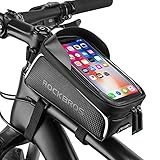
The ROCKBROS frame bag is the odd one out in a list of desk accessories, and it is also the one with the least obvious substitute. It is a waterproof pouch that straps to a bike’s top tube or front frame, carrying a phone where you can see it and where it is protected from rain, road spray and vibration. ROCKBROS is a long-established cycling accessories brand, and this is a mainstream product category for them rather than a novelty.
Who it suits: commuters, leisure riders, e-bike riders and anyone who uses a phone for navigation, ride tracking or music while cycling. It also suits riders who want to carry keys, a card and a snack in the same place as the phone, since a frame bag is a small storage bag first and a phone holder second.
Who it does not suit: anyone who does not ride. If you want a waterproof pouch for a beach, the Rynapac pouch below is the correct product, because a frame bag without a bike is just a bag with straps.
Key specifications
- Mounting: strap-based attachment to the top tube or front frame, the standard approach for tube-mounted cycling pouches
- Weather resistance: described as waterproof, aimed at rain, road spray and sweat rather than submersion
- Access: a touch-friendly window so the screen can be used for navigation without removing the phone
- Capacity: phone plus small items such as keys, cards, a gel or a small multi-tool
- Shape: elongated tube pouch designed to sit along the frame rather than hang off the handlebar
- Tier: premium, still under $50
Strengths
The core strength is placement. A phone mounted on the frame is visible at a glance, which is what you want for turn-by-turn navigation, and it is out of the way of your hands. Handlebar mounts achieve something similar but expose the phone to more direct rain and to being knocked when the bike is parked. A frame bag shelters the device inside a layer of fabric.
The second strength is secondary storage. Riders carry small things, and a bag that already sits on the frame is the natural place for them. That makes the product useful even on days when the phone stays in a pocket.
The third is vibration damping. Fabric and padding between the phone and the frame absorb some of the constant chatter of rough road surfaces, which is a real concern for camera stabilisation and for any device living on a bike for thousands of kilometres.
Pros
- Keeps the phone visible for navigation without occupying a hand
- Waterproof construction aimed squarely at rain and road spray
- Carries small essentials alongside the phone
- Straps fit a wide range of frame tube shapes and sizes
- Touch-friendly window allows screen use while mounted
Cons
- Only useful if you actually ride; no second life as a desk accessory
- Strap mounting takes longer to fit and remove than a magnetic or clamp mount
- Waterproofing depends on the closure staying clean and correctly sealed
- Phone visibility depends on your riding position and the frame geometry
How it compares with the nearest alternative
The nearest alternative is the Rynapac waterproof pouch, because both are waterproof carriers and both protect a phone from water. The difference is where the phone ends up. The ROCKBROS bag is attached to a bike and stays there; the Rynapac pouch is worn on a lanyard or carried by hand and works anywhere, including on a boat or in the sea. If you ride and want navigation on the bars, the ROCKBROS is the only one of the two that does the job. If you swim, paddle or sit by a pool, the Rynapac is the only one that does the job. Buying both is not excessive if you do both activities, and together they still come in under $50 in most market conditions for the pair.
4. JUSDIQIR Cell Phone Stand (Pink) – Best for colour-matched desks and tablet use

The JUSDIQIR stand is a budget-tier desktop holder that lists smartphones, phones and tablets in its own description. That last word is what separates it from the other desk stands here: it is built to take a wider, heavier device than a phone-only cradle. The pink finish is not a footnote either, because a stand you leave out on a desk is a visible object, and colour is a legitimate reason to choose one over another.
Who it suits: anyone who wants a phone stand that also handles a small tablet or an e-reader, people building a colour-coordinated desk setup, students who switch between a phone and a tablet for reading, and gift buyers looking for something visual rather than utilitarian.
Who it does not suit: someone who needs a metal-bodied, heavily weighted stand with a precise adjustable angle for daily video calls. This is a lighter, simpler design in a budget tier.
Key specifications
- Device fit: stated as suitable for smartphones, phones and tablets, so the cradle is wider than a phone-only stand
- Form: a desktop holder with a supporting ledge and a backrest, intended to stay in one place
- Finish: pink, sold as a style-forward desk accessory rather than a neutral one
- Footprint: wider base than a phone-only stand, which is what allows it to support a larger device without tipping
- Construction class: lightweight stand in the budget tier, with grip material at the contact points
- Tier: budget, comfortably under $50
Strengths
The headline strength is device range. Most budget stands are sized for a phone and become unstable the moment you slot in a small tablet. A stand that lists tablets in its description has, by design, a wider and usually deeper cradle and a broader base. If you read on a tablet at a desk, that difference decides whether the product is useful or not.
The second strength is price. This is the cheapest way in this list to hold a larger device upright, which matters if the stand is a secondary purchase rather than the centrepiece of a desk.
The third is aesthetic. Colour-matched desk accessories are a genuine category, and a stand that matches the rest of a setup gets used more than one that clashes. If the desk is a workspace you look at for eight hours a day, that is not a trivial factor.
Pros
- Explicitly rated for tablets as well as phones, which most budget stands are not
- Wider base gives more stability with a heavier device
- Very low cost relative to the device range it covers
- Distinctive colour for desks that are styled rather than purely functional
- Simple design with few parts that can fail
Cons
- Lightweight construction will not feel as solid as a metal desk stand
- Adjustability is limited compared with a hinge-based or metal stand
- The pink finish is a decisive style choice, not a neutral one
- Not portable: it is designed to stay on a desk
How it compares with the nearest alternative
The nearest alternative is the LISEN stand. Both are desk-resident holders, and the split is straightforward: choose the JUSDIQIR if you need to hold a tablet or an e-reader as well as a phone, if budget is the priority, or if the colour matters. Choose the LISEN if the stand is for a phone only, if you want a metal body with a weighted base and a genuinely adjustable angle, and if you would rather the stand be invisible on a video call. A useful rule: tablets get the wider cradle, video calls get the adjustable metal one. The second comparison is with the Meizigua cute holder, which is also budget-tier and decorative but is sized for phones only, so it cannot substitute for this stand if a tablet is involved.
5. Rynapac Large Waterproof Phone Pouch, 2 Pack (IPX8) – Best for beach, pool and boat protection

The Rynapac pouch is the only product in this roundup that is rated to keep a phone dry when it is actually in the water. It is sold as a two-pack, takes devices up to roughly 10 inches, and carries an IPX8 rating, which is the highest of the common water-resistance ratings for consumer pouches. If your phone’s realistic danger is a wave, a splash from a kayak paddle or a sudden downpour, this is the product that addresses it directly.
Who it suits: beachgoers, swimmers, paddleboarders, kayakers, sailors, festival-goers in the rain, and anyone travelling somewhere humid, sandy or wet. The 10-inch capacity also makes it useful for a small tablet or an e-reader taken onto a boat or into a bath-adjacent reading spot.
Who it does not suit: someone who wants permanent protection. A pouch is an on-demand product. You put the phone in when the risk appears and take it out afterwards, and that is exactly why it works.
Key specifications
| Specification | Detail |
|---|---|
| Water rating | IPX8, the top of the common IPX scale for consumer pouches |
| Device size | Advertised to fit devices up to about 10 inches |
| Quantity | Two pouches per pack, so a spare or a second user |
| Carrying | Lanyard attachment for neck or wrist carry |
| Screen access | Touch-through front window for using the phone without opening the pouch |
| Tier | Premium, under $50 for the pair |
Strengths
The IPX8 rating is the whole product. In plain terms, IPX ratings pair a solids number with a liquids number, and IPX8 is the deepest liquid rating in the standard consumer scale, meaning the manufacturer has tested it for continuous immersion beyond the shallow, time-limited protection of IPX7. That is the difference between surviving a splash and surviving being dropped in the water.
The second strength is the two-pack. A single pouch is one person’s protection; two pouches cover a partner, a child, or a spare for the day the seal finally gives out. Since the seal is the wear item on any pouch, having a second one on the shelf is genuine insurance.
The third is the 10-inch capacity. Most phone pouches fit a phone and nothing more. A pouch that swallows a small tablet opens up reading on a boat or a lounger without exposing the device to spray.
Pros
- IPX8 rating covers immersion, not just splashes
- Fits large phones and small tablets up to about 10 inches
- Two pouches per pack, providing a spare and a second user
- Lanyard carry keeps hands free in the water
- Touch-through window allows photos and messages without opening the seal
Cons
- Touch sensitivity through a plastic window is always lower than direct screen contact
- The seal is a wear item and needs checking before each trip
- A pouch adds bulk, so it is not something you leave on permanently
- Camera quality can be affected by the window in poor light
How it compares with the nearest alternative
The nearest alternative is the ROCKBROS bike frame bag, and the comparison is about attachment rather than protection. Both keep water away from a phone, but the ROCKBROS assumes a bike and the Rynapac assumes nothing at all, which makes it the more flexible of the two. The second comparison is with the desk stands, which offer no water protection whatsoever, so they are not substitutes. If you want one product that covers beach, boat and rain, buy the Rynapac. If you want protection that stays on the bike and holds your keys too, buy the ROCKBROS. Riders who commute through winter and holiday by water should own both, and the pair is still comfortably under $50 across most of the market.
6. Meizigua Cell Phone Stand Cute Mobile Holder – Best for cute desk decor and gifts

The Meizigua holder is a budget-tier desk stand sold as office decor and as a phone holder, and those two jobs are weighted differently than on the other stands here. The word “cute” is doing real work in the description: this is a design-led object that happens to hold a phone, not a piece of desk equipment that happens to look tidy.
Who it suits: people who want a small, characterful object on a desk or a bedside table, gift buyers looking for something inexpensive but not generic, students in small rooms, and anyone who has decided that a plain metal stand is not what they want to look at every day.
Who it does not suit: anyone who needs a precisely adjustable angle for long video calls, anyone holding a tablet, and anyone who wants a stand that will survive being folded and unfolded in a bag every day. It is a stationary decorative object.
Key specifications
- Purpose: desktop phone holder doubling as office or desk decor
- Device fit: sized for smartphones, including phones left in slim cases
- Form: compact, lightweight novelty-style design with a phone cradle
- Adjustment: fixed or minimal, typical of decorative stands
- Placement: designed to sit on a flat desk, shelf or bedside surface
- Tier: budget, one of the lowest-cost items in this roundup
Strengths
The first strength is that it does not look like an accessory. A desk that already has a monitor, a keyboard and a lamp can absorb one more grey object only so many times. A stand that reads as decoration changes the character of a small space, which is why this category exists at all.
The second is gifting. Budget decorative objects are the hardest thing to buy well, because cheap gifts look cheap. A phone holder is a safe gift in one specific way: almost everyone has a phone, so almost everyone can use it, and it does not require knowing a size, a colour preference or a technical specification.
The third is simplicity. Fewer moving parts means fewer things to fail. There is no hinge to loosen and no folding mechanism to wear out, so a decorative stand can outlast a more technically ambitious one in a stationary setting.
Pros
- Distinctive design that works as decor rather than equipment
- Low cost, which makes it an easy gift or a low-risk purchase
- No hinges or folding parts to wear out
- Compact footprint suits small desks and bedside tables
- Fits ordinary phones in slim cases
Cons
- Little or no angle adjustment, which limits long video-call comfort
- Not designed for tablets or heavy rugged cases
- Decorative design will not suit every desk
- Not portable in the way a folding stand is
How it compares with the nearest alternative
The nearest alternative is the JUSDIQIR stand, since both are budget-tier desk holders with a strong visual identity. The difference is scope. The JUSDIQIR explicitly covers tablets as well as phones and therefore has a wider, more stable cradle; the Meizigua is a phone-sized decorative object. If a tablet will ever sit on the stand, buy the JUSDIQIR. If the stand is purely for a phone and the look of the thing is the reason you are buying it, the Meizigua is the more interesting choice. Against the Kemoxan two-pack, the comparison is portability: the Kemoxan pair folds and travels, the Meizigua stays put. If you want a stand that is both decorative and portable, no single product here does both, so pick the priority.
7. RillyRellow Miniature Mobile Phone, Dollhouse Mini Cell Phone – Best for dollhouse and miniature collectors

The RillyRellow miniature is the one product in this roundup that is not a phone accessory in any functional sense, and it is worth being blunt about that. It is a scale model of a mobile phone made for dollhouses, miniature scenes and diorama projects. It does not hold a phone, protect a phone, charge a phone or connect to anything. It is a small decorative object whose job is to make a miniature world look inhabited.
Who it suits: dollhouse hobbyists, miniature-scene builders, diorama makers, model railway enthusiasts furnishing interiors, crafters working at 1:12 scale and similar, and anyone assembling a shadow box or a miniature room who needs a small modern prop. It is also a reasonable small gift for someone who already collects miniatures.
Who it does not suit: anyone looking for a stand, a mount, a pouch or a bag. If you arrived at this page wanting to hold a phone up, this is not the product for you, and the stands above are.
Key specifications
- Category: miniature model, sold as a dollhouse accessory
- Function: decorative only; it is not a working phone and not a phone holder
- Scale: dollhouse-scale, sized to look correct in a miniature room rather than in a hand
- Use: miniature scenes, dioramas, shadow boxes, model interiors
- Material class: small-scale model construction typical of miniature props
- Tier: mid-range for a miniature, still under $50
Strengths
The strength of a good miniature prop is proportion. A miniature room fails when the objects in it are the wrong size relative to each other, and a modern phone is one of the hardest props to improvise, because it is a thin flat rectangle with almost no detail to fake at small scale. A purpose-made miniature solves that with the right silhouette and the right finish for the period of the scene.
The second strength is specificity. Miniature scenes are often set in the present day, and most dollhouse furniture catalogues are heavily weighted towards traditional interiors. A modern phone is a small, cheap way to signal that a scene is contemporary rather than period.
The third is price relative to effort. Scratch-building a convincing miniature phone from plastic card takes time and tools. A ready-made one costs less than a takeaway meal, which is the correct trade for most hobbyists.
Pros
- Correct dollhouse-scale proportions for modern miniature interiors
- Instantly signals a contemporary setting in a diorama
- Low cost compared with scratch-building the same prop
- Small and light, so it can be repositioned while a scene is being arranged
- Reasonable small gift for miniature collectors
Cons
- It is not a functional phone accessory in any way
- Only useful to people who build or collect miniatures
- Small parts are not suitable for very young children
- Nothing here protects or holds a real phone
How it compares with the nearest alternative
The nearest thing to an alternative in this list is the Meizigua cute holder, and the comparison exposes the difference between decorative and functional. Both are bought partly for how they look, but the Meizigua holds a real phone on a real desk, while the RillyRellow miniature holds nothing and is never touched by a real device. If you want an object that is charming and useful, buy the Meizigua. If you want an object that is charming and belongs inside a miniature world, buy the RillyRellow. There is no overlap between the two audiences, which is why both are included: a roundup of phone accessories under $50 has room for one honest outlier, as long as it is labelled as one.
How to Choose
Almost every bad phone-accessory purchase comes down to one of four mismatches: the device is bigger or heavier than the accessory can hold, the place it will be used is not the place the buyer imagined, the material is wrong for how often it will be handled, or the product does not actually address the risk the buyer is worried about. Work through the criteria below in order and the shortlist tends to make itself.
Start with the device, not the accessory
Measure three things before you buy anything: the height of the phone with the case on, the width, and the thickness including the case. Cases add roughly 2 to 4 millimetres of thickness and 30 to 60 grams of mass to a typical phone, and a pop-socket or a card wallet on the back adds more. That matters because a cradle is a physical slot: a phone that is too thick will not seat properly, and a phone that is too heavy will tip a light stand.
For scale, most modern smartphones sit between about 150 and 240 grams, small tablets sit between roughly 300 and 500 grams, and larger tablets climb past 600 grams. A folding travel stand in the budget tier is comfortable at the bottom of that range and marginal in the middle. A weighted metal desk stand handles a phone easily and a small tablet cautiously. A stand that explicitly lists tablets is the only safe choice above roughly 400 grams.
| Device weight | Typical device | What the stand needs | Pick in this guide |
|---|---|---|---|
| Up to about 200 g | Standard smartphone with a slim case | Any cradle design; folding stands are fine | Kemoxan 2 Pack, Meizigua |
| About 200-260 g | Large phone with a case, or a phone with a grip accessory | Weighted base or a wide footprint to resist tapping | LISEN, JUSDIQIR |
| About 300-500 g | Small tablet, large e-reader | Wide cradle and a broad base; adjustability is a bonus | JUSDIQIR |
| About 600 g and up | Full-size tablet | Out of scope for every stand in this list | None here; look at dedicated tablet stands |
Decide whether the stand moves
This single question splits the desk stands into two groups and prevents most wasted money. A stand that stays on one surface can be heavy, wide and fixed, and it can prioritise stability. A stand that travels must be light, thin and folding, and it will always be less stable as a result. You cannot have both in one product under $50, so choose the job.
If the stand will be used in more than one place, the arithmetic favours a two-pack. One folding stand costs roughly what half a two-pack costs, and two locations covered for one purchase is a better deal than one location covered well if the alternative is carrying a stand back and forth. If the stand will never move, buy the heavier single stand and accept that it lives on that desk.
Match the angle to what you actually do
Video calls want the phone close to upright, with the camera near eye level, which usually means a steep angle and a stand that holds it there without sagging. Watching video wants a shallower angle, around 45 to 60 degrees from the desk, so the screen faces you while you sit back. Reading and scrolling want the shallowest angle of all, or a nearly flat position.
That is why adjustability is worth paying for when the stand is used for calls and worth skipping when it is used for one thing. A fixed-angle decorative stand is perfectly adequate for a bedside clock. It is a poor choice for someone who takes four video calls a day.
Understand what wears out first
Phone accessories fail in predictable places, and knowing them tells you what you are really paying for.
- Silicone and rubber grip pads: usually the first component to degrade, typically within six to twelve months of daily use in a sunny room, because they collect dust and skin oils and gradually lose tack. When a stand starts sliding, the pads are the reason, and a wipe with warm water often restores most of the grip.
- Folding hinges: the second wear point on travel stands. Every fold loosens the mechanism slightly, so a stand folded twice a day for a year will hold its angle less firmly than a stand folded twice a month.
- Elastic straps on bike bags: UV exposure and constant tension are the enemies here, and straps are the part that fails before the fabric does. Storing a bike indoors dramatically extends strap life.
- Pouch seals: the closure on any waterproof pouch is a consumable in practice. Seals pick up sand and salt, and a single grain trapped in the closure can defeat an IPX8 rating. Check the seal, rinse it, and dry it before storage.
Read water ratings correctly
IP ratings are two digits, and the second digit is the one that matters for a phone pouch. IPX7 means protection against immersion for a limited time at a shallow depth, typically about one metre for thirty minutes. IPX8 means protection against continuous immersion in conditions the manufacturer specifies, which is deeper or longer than IPX7. Splash resistance alone, often written as IPX4 or similar, is not enough for a beach or a pool.
The practical consequence is that an IPX8 pouch is the only category here that should be trusted in open water. It is also worth knowing what a rating does not cover: a pouch is not a case, so it protects the phone only while the phone is inside and the seal is clean. Pouch users should inspect the closure every time, avoid opening it with wet hands, and never store a phone inside a sealed pouch for weeks on end, because trapped humidity has nowhere to go.
Weigh the cost per use, not the sticker
A worked example makes the tiers easier to judge. Take a desk stand in the budget-to-mid band, roughly $15 to $25 in most markets. If it is used on a desk five days a week for three years, that is about 780 uses, which works out at roughly two to three cents per use. That is about as cheap as any accessory gets, which is why a desk stand is usually the first thing worth buying.
Now take a two-pack of folding travel stands in the same broad price band. If each stand is used on 30 travel days a year for two years, that is 60 uses per stand and 120 across the pair, which lands somewhere around ten to twenty cents per use depending on what you paid. Still cheap, but four to six times the cost per use of the desk stand, because travel happens less often than working at a desk.
Finally, a waterproof pouch in the premium band. Twelve beach or pool days a year for three years is 36 uses, which pushes the cost per use towards a dollar or more. Judged as a holder, that looks expensive. Judged as insurance against a water-damaged phone, which typically means a repair bill or a replacement costing many times the price of the pouch, it is the cheapest item in this roundup. The lesson is that cost per use is the right lens for frequent-use items and the wrong lens for low-frequency protection.
Decision matrix: match your situation to a pick
| Your situation | What matters most | Best pick here | Runner-up |
|---|---|---|---|
| One desk, used all day, video calls | Stability, adjustable angle, cable routing | LISEN Cell Phone Stand | JUSDIQIR (if a tablet is involved) |
| Stand must fit in a bag or pocket | Folded thickness and low replacement cost | Kemoxan 2 Pack | None; it is the only folding option here |
| Phone and small tablet on the same desk | Wide cradle and broad base | JUSDIQIR Cell Phone Stand | LISEN (phone only) |
| Beach, pool, kayak, boat | Immersion-rated sealing | Rynapac Waterproof Pouch | None; it is the only IPX8 item here |
| Daily cycling commute | Attachment, weather protection, visibility | ROCKBROS Frame Bag | Rynapac pouch (carried, not mounted) |
| Gift for someone with no stated preference | Low risk, universally usable | Meizigua Cute Holder | Kemoxan 2 Pack |
| Miniature or dollhouse project | Correct scale, decorative realism | RillyRellow Miniature | None; it is a category of one here |
| Total budget under about $40 for two jobs | Coverage of desk plus bag | LISEN plus Kemoxan 2 Pack | JUSDIQIR plus Kemoxan 2 Pack |
Common mistakes worth avoiding
The most common error is buying a travel stand for a permanent desk and then being annoyed that it slides. The second is buying a phone-only cradle for a tablet, which fails the first time the tablet is placed on it. The third is treating a waterproof pouch as permanent protection and leaving a phone sealed inside it for a fortnight. The fourth is assuming that any waterproof bag is submersible: a bike frame bag described as waterproof is built for rain, not for a river. The fifth is buying a decorative stand for ergonomic work and then wondering why long calls leave a neck ache, when a fixed low angle was never going to put the camera near eye level.
Frequently Asked Questions
Are phone stands under $50 stable enough to tap the screen?
Yes, if the stand has either mass at the bottom or a wide footprint. A weighted metal desk stand and a stand with a broad base both resist the sideways force of a tap. Lightweight folding stands are the exception: they hold a phone still but may slide or tip when you press firmly, so they suit watching more than tapping. If you plan to tap the screen often, choose a desk-resident stand rather than a travel one.
What does IPX8 actually mean for a phone pouch?
IP ratings use two digits, and the second digit describes liquid protection. IPX8 is the highest of the common consumer liquid ratings and indicates protection against continuous immersion under conditions the manufacturer specifies, which goes beyond the shallow, time-limited protection of IPX7. In practice, an IPX8 pouch