The Short Answer
The best Cangshan knives for most home kitchens are the TC Series and the Helena line: TC balances Swedish Sandvik 14C28N steel, good edge retention, and mid-range pricing, while Helena gives you a full European-style triple-riveted handle at a lower cost. For a lighter, Japanese-style feel, the Kita series with VG-10 Damascus is the premium pick — just budget more and sharpen on whetstones, not pull-throughs.
Cangshan’s Steel and Line Lineup at a Glance
Cangshan sells several distinct lines, and they differ mainly in three things: steel, handle geometry, and blade grind. Knowing the steel matters because it dictates hardness (HRC), edge retention, and how forgiving the blade is to abuse.
Our top picks
 Cangshan Sanford Series 1027150 German Steel 12-Piece
- Patented design features a unique angled bolster that…
- Forged bolster and high-alloy German steel blade that…
- Meticulously precise ULTRA6 heat treatment ensures the knives…
 Cangshan HELENA Series German Steel Forged Knife
- Slim, ergonomic handles are designed for the most…
- Handcrafted, full-tang knives forged from tight-grained, German X50CrMoV15…
- Each blade goes through our proprietary ULTRA6 heat…
 Cangshan KITA Series 6-Inch Chef's Knife with
- The 6-inch Chef’s Knife is one of the…
- Exceptionally sharp and striking in design, the full-tang…
- The lightweight and durable octagonal handle made of…
| Product | Key specs | |
|---|---|---|
| Cangshan Sanford Series 1027150 German Steel 12-Piece | Patented design features a unique angled bolster that… Forged bolster and high-alloy German steel blade that… Meticulously precise ULTRA6 heat treatment ensures the knives… | Check price |
| Cangshan HELENA Series German Steel Forged Knife | Slim, ergonomic handles are designed for the most… Handcrafted, full-tang knives forged from tight-grained, German X50CrMoV15… Each blade goes through our proprietary ULTRA6 heat… | Check price |
| Cangshan KITA Series 6-Inch Chef's Knife with | The 6-inch Chef’s Knife is one of the… Exceptionally sharp and striking in design, the full-tang… The lightweight and durable octagonal handle made of… | Check price |
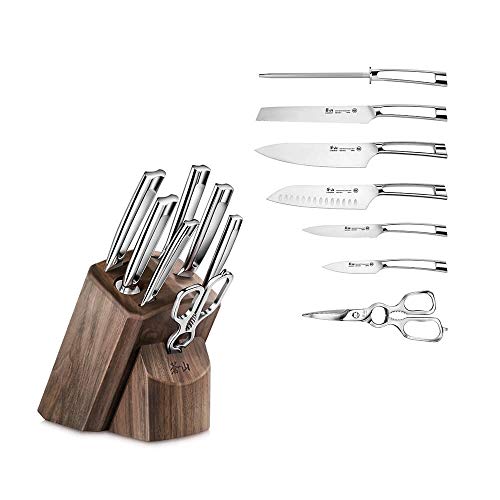 Cangshan N1 Series 1022612 German Steel Forged | Hand crafted full tang knives forged from fine… Each blade goes through an (ultra6) stage heat… Includes 8" chef's, 8" bread, 8" honing steel… | Check price |
As an Amazon Associate we earn from qualifying purchases at no extra cost to you.
| Line | Steel | Hardness (HRC) | Handle Style | Typical Chef’s Knife Weight | Approx. Price Range (8″ chef’s) |
|---|---|---|---|---|---|
| TC Series | Swedish Sandvik 14C28N | ~59–61 | Slim polymer/wood options, refined bolster | ~7–8 oz | $60–$100 |
| Helena Series | German X50CrMoV15 | ~56–58 | Full-tang triple-riveted, heavier bolster | ~8–9 oz | $45–$80 |
| N1 Series | German X50CrMoV15 | ~56–58 | Minimalist hollow metal handle | ~7 oz | $50–$90 |
| Kita Series | Japanese VG-10 (Damascus clad) | ~60–62 | Ash wood, Japanese-influenced | ~6–7 oz | $120–$200 |
| Thomas Keller Signature | German high-carbon stainless | ~58 | Ergonomic polymer, chef-approved geometry | ~7–8 oz | $90–$150 |
The practical takeaway: X50CrMoV15 (Helena, N1) is tough, stain-resistant, and easy to hone, but needs sharpening more often. Sandvik 14C28N (TC) is the sweet spot — harder, holds an edge longer, still sharpens easily at home. VG-10 (Kita) holds the longest edge but chips more easily if you twist the blade in dense squash or hit bone.
Match the Blade Shape to the Task
Steel sets the maintenance burden; blade shape sets what the knife actually does well. Here’s how common prep tasks map to Cangshan’s blade shapes:
- Daily chopping, slicing, mincing: an 8″ chef’s knife (gyuto-style in Kita, Western profile in Helena). The Western curve suits rocking cuts; the flatter Kita profile suits push-cutting vegetables cleanly.
- Breaking down poultry and trimming meat: a 6″ boning knife or a flexible fillet knife. Cangshan’s boning knives use the same line steels, so a TC boning knife will stay sharper through cartilage work.
- Bread, tomatoes, citrus: a 9″–10″ serrated bread knife. Serrated edges matter more than steel here — you sharpen them rarely and with a rod, not stones.
- Detail work (hulling, peeling, garnishes): a 3.5″ paring knife. Don’t overspend here; a Helena paring knife performs nearly identically to a premium one for short tasks.
- Heavy vegetable prep and cleaver work: a 7″ santoku or Chinese-style vegetable cleaver. The flat santoku edge excels at shredding cabbage and slicing peppers fast.
Handle Comfort Is the Hidden Decision Factor
Weight distribution changes how a knife feels after 30 minutes of prep. The N1’s hollow metal handle is light and hygienic but can feel slippery with wet hands and fatigues some grips. The Helena’s riveted handle is comfortable for larger hands and pinch-grip users. Kita’s ash handle is beautiful but is the least forgiving of dishwashers and soaking — treat it like wood furniture.
Decision Matrix: Which Line Fits Your Kitchen?
| Your Situation | Recommended Line | Why |
|---|---|---|
| First serious knife set, under $150 total | Helena 3-piece (chef’s, serrated, paring) | Tough German steel forgives abuse; easy sharpening |
| Cooks 4+ nights a week, hones regularly | TC Series | Longer edge life; slimmer blade glides through dense veg |
| Small kitchen, minimal drawer space | N1 with magnetic strip | Slim profile, no block needed, easy to sanitize |
| Knife enthusiast, owns whetstones | Kita | VG-10 rewards skilled sharpening with a razor edge |
| Prefers proven chef-designed geometry | Thomas Keller Signature | Refined balance and edge geometry from a working-kitchen perspective |
Edge Retention and Sharpening: What Ownership Looks Like
A realistic maintenance schedule looks like this:
- Honing rod (every 2–4 uses): realigns the edge on Helena and N1 knives. On TC and Kita, honing does less because harder steel doesn’t roll — skip to stropping or light stone work instead.
- Whetstone sharpening (every 2–4 months for daily cooks): X50CrMoV15 sharpens quickly at 1000 grit; 14C28N needs a 1000/3000 combo; VG-10 benefits from finishing at 4000–6000 for a polished edge.
- What wears first: wood handles on Kita dull and dry without occasional mineral oil; polymer and riveted handles last essentially forever. Blades don’t “wear out” — they get slowly reprofiled over years of sharpening.
- Common mistakes: dishwashing (dulls edges via banging against racks and degrades wood handles), cutting on glass or stone boards, and using a pull-through sharpener on VG-10, which can microchip the thin edge.
Cost Per Year: A Quick Calculation
Take a TC Series 8″ chef’s knife at roughly $80. With weekly use, honing, and a sharpening every quarter, a 10+ year lifespan is realistic — about $8 per year, plus a $30–$50 whetstone purchase once. A Helena equivalent at ~$60 lands around $6 per year with slightly more frequent sharpening. Kita at ~$160 runs ~$16 per year, but only makes sense if you’ll actually maintain a harder edge at home — otherwise you’re paying for edge retention you never get to enjoy.
Our Picks by Prep Task
- Best all-rounder: TC Series 8″ chef’s knife — the best balance of edge life, weight, and price in the catalog.
- Best budget daily driver: Helena 8″ chef’s — forgiving steel, comfortable grip, lowest cost of entry.
- Best for vegetable-heavy cooking: TC or Kita santoku — flat edge, thin grind, fast board work.
- Best for meat prep: TC boning knife — harder steel holds up against cartilage.
- Best premium upgrade: Kita 8″ gyuto — if you sharpen on stones and want the sharpest long-lived edge Cangshan makes.
- Best minimalist option: N1 Series — for small kitchens and cooks who sanitize aggressively.
Frequently Asked Questions
Are Cangshan knives forged or stamped?
Most Cangshan lines are forged, full-tang construction — the Helena, N1, and TC series all feature forged blades, which contributes to their balance and durability compared with stamped budget knives.
Can Cangshan knives go in the dishwasher?
Technically the all-metal N1 survives it, but no Cangshan knife should be dishwashed routinely. Detergent and rack contact dull edges fast, and any wood-handled line (Kita, some TC variants) will degrade visibly.
How does Cangshan compare to Wüsthof or Shun?
Cangshan sits a tier below those brands on price while offering comparable steel grades. X50CrMoV15 is the same steel family Wüsthof uses; Kita’s VG-10 is the same core steel as many Shun lines. The main differences are finishing refinement and brand heritage, not raw cutting performance.
What sharpening angle should I use?
Western lines (Helena, N1, TC, Thomas Keller) come around 16–18° per side; maintain at ~15–17°. Kita’s Japanese grind is closer to 12–15° per side — don’t sharpen it at 20°, or you’ll thicken the edge and lose its advantage.
Bottom line: pick Helena or N1 for budget and toughness, TC for the best value-to-edge-life ratio, and Kita only if you’re willing to maintain a harder Japanese edge. For most home cooks, a TC chef’s knife plus a Helena paring knife covers 95% of kitchen tasks for well under $150.