Key takeaways
- Descale regularly following the manufacturer’s manual, especially with hard water; mineral buildup slows brewing and cools water.
- Wash removable parts after use and let the machine air dry; leftover oils turn rancid and taste bitter.
- Never operate the machine without water, and unplug it when not in use if the manual advises it.
- Use paper filters or a permanent filter matching the basket shape the maker specifies; the wrong shape can overflow.
- Grind just before brewing with a medium grind; pre-ground coffee goes stale quickly.
- Check that the carafe lid is on correctly before starting a cycle to avoid spills.
For most households, a certified, no-frills brewer such as the Technivorm Moccamaster or the Breville Precision Brewer gives the best cup, while a programmable 12 to 14 cup machine from Cuisinart or Ninja suits big families and office-style batches on a smaller budget. The right drip coffee maker depends on how much you brew, how much counter space you can spare, and whether you care more about flavor control or convenience.
Our top picks



As an Amazon Associate we earn from qualifying purchases at no extra cost to you.
Drip Coffee Makers at a Glance
| Model | Best for | Key stated features | Limits |
|---|---|---|---|
| Technivorm Moccamaster KBGV Select | Flavor-focused daily drinkers | The maker lists hand-built assembly, a copper heating element and a thermal carafe; Specialty Coffee Association (SCA) certification is widely noted | Premium tier, no timer, manual operation |
| Breville Precision Brewer | Tinkerers who want control | The maker lists adjustable brew temperature, flow-rate options and a thermal carafe; SCA-certified according to reviewers | Larger footprint, more settings to learn |
| Ninja Programmable XL 14-Cup | Large households | Programmable timer, large carafe, brew-strength options per the maker | Glass carafe, plastic-heavy build |
| Cuisinart 14-Cup Programmable | Budget-minded families | 24-hour programming, auto shut-off and a brew-pause feature are listed by the maker | Hot plate can over-cook coffee left standing |
| OXO Brew 9-Cup | Small kitchens that want quality | Rainmaker-style shower head, SCA-certified per the maker, optional programming | Smaller capacity |
| Bonavita Connoisseur | Simple, reliable brewing | Preinfusion mode and a thermal or glass carafe depending on version | No timer on some versions |
What Actually Matters in a Drip Machine
Brew temperature and water distribution
Coffee extracts best when the water reaches roughly the mid-90s Celsius range during brewing. The SCA publishes a certification standard that tests brew temperature and brew time, and several machines in this guide carry that certification. Reviewers from outlets such as Wirecutter and Serious Eats have repeatedly noted that cheaper machines often under-heat the water, which produces sour, thin coffee. A wide shower head that wets all the grounds evenly also helps avoid channeling, where water rushes through one spot.
Carafe type
Glass carafes sit on a hot plate that keeps coffee warm but continues cooking it, so flavor can turn bitter after a short while. Thermal (double-wall stainless) carafes hold temperature without a heating element and are usually the better choice if you drink your coffee slowly. The trade-off is that thermal carafes are harder to see into and can be more awkward to clean.
Capacity and real cup sizes
Makers define a cup as roughly 5 ounces, not the 8 to 12 ounces most mugs hold. A machine labeled 12 cups therefore makes about 60 ounces, which is five or six large mugs. Choose by mug count rather than the cup label, and remember that brewing far below the stated capacity can affect flavor on some models.
Programmability and convenience
A timer lets you wake to fresh coffee, which many buyers value more than any specification. Auto shut-off after a set period is common on mid-range machines and is a reasonable safety feature to look for. Machines without a timer, such as several Moccamaster and Bonavita versions, trade convenience for simplicity and long-term durability.
Top Picks by Buyer Type
Technivorm Moccamaster KBGV Select: for the flavor-first buyer
The Moccamaster is the machine most coffee professionals mention first. Reviewers report quick brewing, often around six minutes for a full carafe, and consistent temperature thanks to the copper element the maker describes. It has a very simple interface, a few colorful finish options, and a long warranty from the manufacturer. It sits at the premium end of the market, has no programmable timer, and the carafe pours more slowly than some rivals, but many owners treat it as a buy-once appliance.
Breville Precision Brewer: for experimenters
Breville lists a range of controls, including water temperature adjustment, a bloom time setting, and choice of flow rate for different filter styles. A “gold” setting follows SCA brewing recommendations according to the maker. If you like to adjust coffee-to-water ratios and compare results, this is the most flexible machine here. The cost is a larger body, a more complicated menu, and a higher price tier than a basic machine.
OXO Brew 9-Cup: for small kitchens
OXO designed this machine to fit more compactly than most while keeping a stainless thermal carafe. The maker highlights an SCA certification and a multi-hole shower head. It is a good fit for couples or small households that brew once or twice a day. Capacity tops out around nine cups, so it will not stretch to a crowded brunch.
Ninja Programmable XL 14-Cup: for big batches
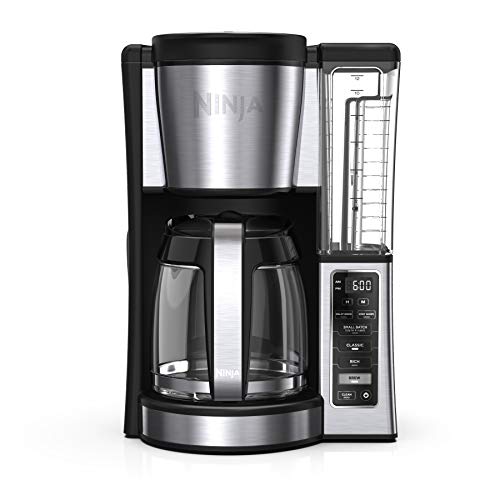
Ninja positions this machine around a large brew size, a programmable timer, and options for brew strength. Reviewers generally find the coffee acceptable for the price tier, though not as nuanced as the certified models. It suits households that regularly pour six or more mugs and want a mid-range tool with timer and shut-off features.
Cuisinart 14-Cup Programmable: for the budget tier
Cuisinart has sold this style of machine for years, and the maker lists a 24-hour timer, brew-pause so you can pour mid-cycle, and automatic shut-off. It is a dependable budget choice, but a glass carafe on a hot plate means coffee left sitting will taste stewed. Pour into a thermos if you will not finish the pot quickly.
Bonavita Connoisseur: for simplicity
The Connoisseur is a compact one-button design that reviewers praise for its preinfusion step and consistent brew temperature. It lacks the extras of larger machines, and carafe choice varies by version, so check which one you are buying before you order.
Pick X If You Want…
| If you want… | Pick | Why |
|---|---|---|
| The best flavor with minimal fuss | Technivorm Moccamaster | Consistent heat and a durable, repairable design |
| Control over temperature and flow | Breville Precision Brewer | Multiple adjustable settings |
| A compact certified brewer | OXO Brew 9-Cup | Smaller footprint with thermal carafe |
| Large batches with a timer | Ninja XL or Cuisinart 14-Cup | Capacity and programmability at a lower tier |
| A simple, reliable pot | Bonavita Connoisseur | One-button operation |
Budget Tiers Explained
Budget tier: Basic programmable machines with glass carafes. Expect acceptable coffee, a hot plate that continues heating, and shorter lifespans. They are ideal for dorm rooms, guest rooms and anyone who just wants caffeine.
Mid-range tier: Machines such as the Ninja XL or Bonavita-style brewers, often with better temperature control, thermal options and thoughtful design. This is where most buyers find the best balance of value and quality.
Premium tier: Moccamaster, Breville Precision and similar machines. You pay for tested brew temperature, better build quality and, in the Moccamaster’s case, serviceability.
Care, Cleaning and Safety Notes
- Descale regularly following the manufacturer’s manual, especially with hard water; mineral buildup slows brewing and cools water.
- Wash removable parts after use and let the machine air dry; leftover oils turn rancid and taste bitter.
- Never operate the machine without water, and unplug it when not in use if the manual advises it.
- Use paper filters or a permanent filter matching the basket shape the maker specifies; the wrong shape can overflow.
- Grind just before brewing with a medium grind; pre-ground coffee goes stale quickly.
- Check that the carafe lid is on correctly before starting a cycle to avoid spills.
Alternatives to Consider
- Pour-over setup (Hario V60, Kalita Wave): inexpensive, offers the most control, but demands attention and a gooseneck kettle.
- Single-serve brewers: convenient for one person, though pods add waste and ongoing cost.
- French press or AeroPress: no paper filters or electricity needed in many cases, with a different, fuller cup profile.
Frequently Asked Questions
Is an expensive drip coffee maker worth it?
If you drink coffee daily and care about flavor, certified machines can noticeably improve the cup because they hit proper brewing temperature. Casual drinkers may be satisfied with a mid-range model. Consider how long you plan to keep the machine, since premium options tend to last longer.
What does SCA certification mean?
The Specialty Coffee Association tests home brewers for factors such as brew temperature range and brew time. A certified machine meets the standard the SCA publishes. It does not guarantee a great cup if you use stale beans or the wrong grind.
Glass or thermal carafe?
Thermal carafes keep coffee hot without a heating plate, so flavor holds up longer. Glass carafes are easier to see into and clean but depend on a hot plate that can overcook coffee. Pick thermal if you sip slowly through the morning.
How often should I descale?
Follow the manufacturer’s manual, which commonly suggests every one to three months depending on water hardness. Hard-water homes need it more often. Signs it is overdue include slow brewing, louder operation and lukewarm coffee.
Why does my coffee taste bitter or sour?
Bitter coffee usually points to over-extraction from too fine a grind, old oils in the machine, or coffee left on a hot plate. Sour coffee suggests under-extraction from too coarse a grind or water that is too cool. Adjusting grind size and cleaning the machine solves most cases.
How much coffee should I use per pot?
A common starting point is roughly one to two tablespoons of ground coffee per 6 ounces of water, adjusted to taste. Many reviewers suggest weighing coffee for consistency. Check your machine’s manual for the maker’s guidance on the cup size it uses.
More from Amazon
Programs that pair well with the guide above. Offers and eligibility are set by Amazon and may change.
Set up recurring deliveries of everyday items on eligible products. Terms and savings are set by Amazon.
Explore Subscribe & SaveCollect the home and kitchen items you want in one registry that guests can shop from.
Create a wedding registryFree shipping on eligible items, Prime Video and more. Eligible new members can start with a free trial.
Start a Prime free trialAudiobooks and podcasts to listen to on the go. Eligible new members can start with a free trial.
Try Audible freeAs an Amazon Associate we earn from qualifying purchases.