Key takeaways
- Drywall (plasterboard): The paper face can be damaged by too much moisture. Work in short passes, avoid soaking, and let the wall dry afterwards.
- Plaster: Generally more tolerant of steam than drywall, but still needs time to dry before painting or papering.
- Painted or unsealed surfaces: Steam can lift loose paint. Test a small area first.
- Older homes: Wallpaper or paint on older walls may contain materials that need special handling. If you suspect lead paint or asbestos-containing materials, stop and consult a qualified professional before scraping or steaming.
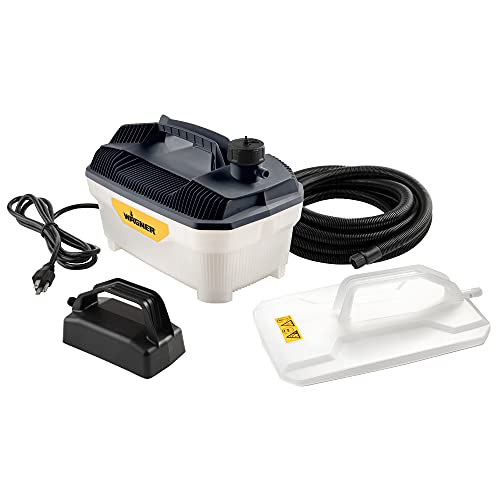
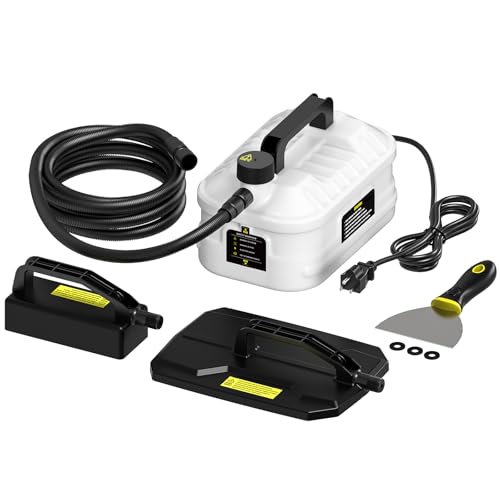
For a typical single-room wallpaper removal job, a mid-sized plate steamer such as the Wagner 725 suits most homeowners, a smaller or older model like the Wagner 715 fits a one-off small project on a tighter budget, and a larger tank unit such as the Earlex SteamMaster makes sense for big or repeat jobs where you would rather not refill every hour. Reviewers also point out that steam generators sold mainly for bending wood are a poor match if wallpaper is your only goal. This guide explains what separates the options and how to use any of them safely.
Our top picks


As an Amazon Associate we earn from qualifying purchases at no extra cost to you.
Wallpaper Steamers at a Glance
| Model | Best for | Key stated specs | Limits |
|---|---|---|---|
| Wagner 725 | Whole-room jobs for homeowners | Two steam plates listed; reviewers cite roughly two hours of run time and a 12 ft hose | Plastic body; tank must be refilled for very large projects |
| Wagner 715 | Small rooms, tight budgets | Reviewers cite about 70 minutes of run time | Older and smaller; shorter between refills |
| Earlex SteamMaster | Large jobs and contractors | Reviewers cite around a 1.9 gallon (7.5 litre) tank, up to three hours of steam and a 16 ft hose | Heavier and bulkier; more than a small project needs |
| Earlex SS125 (UK) | UK buyers on a budget | Reviewers list 2,000 W, 4 litre tank and about 70 minutes of steam | Sold mainly in the UK market |
| Earlex steam generator (wood-bending type) | Woodworking first, occasional wallpaper | Built primarily to generate steam for bending | Reviewers say a dedicated wallpaper steamer is better for removal alone |
Family Handyman and several other outlets name the Wagner 725 as a leading choice and the Earlex SteamMaster for heavy-duty use. Many roundups on this topic are affiliate-driven, so compare the makers’ own specifications as well.
How a Wallpaper Steamer Works
A steamer boils water in a tank and sends the steam through a hose to a plate. When you hold the plate against the wall, the steam penetrates the paper and softens the paste behind it, so the paper can be scraped or peeled away. Steamers are particularly helpful on vinyl, foil, textured and multi-layer papers that do not come off with water and a sponge. Before steaming, scoring the surface lightly with a scoring tool lets steam through to the adhesive. Always follow the maker’s instructions on scoring, because aggressive scoring on some wall surfaces can cause damage.
What to Look For
Tank size and run time
Run time drives how often you must stop, let the unit cool slightly, and refill. A small tank may last around an hour, which is fine for one room but frustrating for a whole house. Larger tanks cut interruptions but add weight. Compare the maker-stated run time, and remember that real run time depends on how continuously the steam is used.
Plate size and shape
Larger plates cover more wall per pass, while small plates reach corners and awkward spots. Some kits include two plates for this reason. A plate with a moulded handle and a heat guard is more comfortable to use for long stretches.
Hose length
A longer hose lets you cover more wall without moving the base. A hose around 12 ft is common on homeowner models, and some heavy-duty units go longer. Keep the base on a stable surface and the hose free of kinks, otherwise steam output and pressure suffer.
Weight and handling
The base is usually positioned on the floor, so weight matters most when carrying it between rooms or upstairs. A full tank on a larger unit can be quite heavy, so plan to fill it where you use it where possible.
Heat-up time and automatic features
Heat-up time varies, and the maker states it in the manual. Look for the features the maker lists, such as a safety cap on the tank and a built-in cut-off if the unit runs low on water. Do not assume a feature exists unless it is stated in the product documentation.
Surface and Wall Compatibility
- Drywall (plasterboard): The paper face can be damaged by too much moisture. Work in short passes, avoid soaking, and let the wall dry afterwards.
- Plaster: Generally more tolerant of steam than drywall, but still needs time to dry before painting or papering.
- Painted or unsealed surfaces: Steam can lift loose paint. Test a small area first.
- Older homes: Wallpaper or paint on older walls may contain materials that need special handling. If you suspect lead paint or asbestos-containing materials, stop and consult a qualified professional before scraping or steaming.
Safety Notes
Steam causes burns quickly. Wear long sleeves, gloves and closed shoes, and keep children and pets out of the room. Never point the plate at yourself or another person, and do not touch the plate or the hose connection while hot. Fill and refill only when the unit is switched off and unplugged, and follow the maker’s guidance on cooling time before opening the tank. Keep the power cord, hose and any extension cord away from wet floors and standing water. If a power outlet is near the wall you are steaming, keep it dry and consult an electrician if you have concerns about moisture near sockets and switches. Switch off power at the breaker for the room if the maker or an electrician advises it.
Budget Tiers
| Tier | Typical choices | Trade-off |
|---|---|---|
| Budget | Wagner 715, BLACK+DECKER, Goplus, KITLUCK and IRONMAX are mentioned by reviewers as lower-cost options | Shorter run time and smaller tanks; consistency varies by model |
| Mid-range | Wagner 725 | Balanced run time and plate options for most homes |
| Premium | Earlex SteamMaster | Larger tank and longer hose, but heavier and more than most households need |
Pick X If You Want Y
| If you … | Pick | Reason |
|---|---|---|
| Are stripping one or two rooms | Wagner 725 | Reviewers call it a balance of performance and value |
| Have a small bathroom or hallway | Wagner 715 | Cheaper, shorter run time is enough for small areas |
| Are working on a whole house or for clients | Earlex SteamMaster | Larger tank, long hose, long run time |
| Live in the UK | Earlex SS125 | Reviewers rate it as good value locally |
| Own a steam generator for wood bending | Use it only if needed | Dedicated wallpaper steamers are better suited |
Practical Tips for Better Results
- Clear the room, remove outlet covers carefully (with power off) and protect floors with plastic sheeting and towels along the skirting.
- Score the paper if it is vinyl or heavily painted, following the manual.
- Hold the plate on one section for the time the maker suggests, then peel with a wide scraper held at a shallow angle to avoid gouging the wall.
- Work from the top down so the steam rises through paper you have not yet removed.
- Wipe off leftover paste once the paper is gone and let the wall dry fully before painting or hanging new paper.
Alternatives
- Rented steamers: Reviewers note that larger Earlex units can be rented from hardware stores, a good option for a single big job.
- Wallpaper stripping solutions: A spray or liquid applied after scoring can work on older paper without steam, though it needs time to soak in.
- Household steam cleaners: Some people use these with a wallpaper attachment, but check the maker’s manual to see whether such use is permitted.
- Professional removal: For historic plaster or suspected hazardous materials, hiring a qualified contractor is the safer path.
Frequently Asked Questions
Which wallpaper steamer is best for most homeowners?
Reviewers most often point to the Wagner 725 for general home use. It has two plates listed and enough run time for a room or two. If your project is small, the older Wagner 715 may be enough.
Can a steamer damage drywall?
Yes, if you hold steam in one place for too long or let the wall become saturated, the paper face can soften and tear. Use short passes, avoid pressing hard with scrapers, and let the wall dry afterwards. If the wall is already damaged, repair it before painting.
Do I need to score the wallpaper first?
For vinyl, painted or coated papers, scoring lets steam reach the paste. Strippable papers may not need it. Follow the steamer maker’s instructions and use light pressure so you do not cut into the wall surface.
How long does a tank of water last?
It depends on the model. Makers and reviewers list roughly 70 minutes for smaller units and up to two to three hours for larger ones. Refill only after switching off and unplugging, then allow the unit to cool as the manual directs.
Is it safe to steam near electrical outlets?
Take care. Keep steam away from sockets and switches, switch off power to the room if the manual or an electrician advises it, and keep cords off wet floors. If you are unsure, ask a licensed electrician.
Should I buy or rent a steamer?
If you only strip one or two rooms, renting a large unit or buying a budget model can both make sense. If you expect several redecorating projects, a mid-range homeowner model that you can store and reuse is usually more economical over time.
More from Amazon
Programs that pair well with the guide above. Offers and eligibility are set by Amazon and may change.
Set up recurring deliveries of everyday items on eligible products. Terms and savings are set by Amazon.
Explore Subscribe & SaveCollect the home and kitchen items you want in one registry that guests can shop from.
Create a wedding registryFree shipping on eligible items, Prime Video and more. Eligible new members can start with a free trial.
Start a Prime free trialAudiobooks and podcasts to listen to on the go. Eligible new members can start with a free trial.
Try Audible freeAs an Amazon Associate we earn from qualifying purchases.