Key takeaways
- Filtration: Look for filters certified to relevant NSF/ANSI standards, and read what contaminants the certification covers. Replace cartridges on the maker’s schedule.
- Temperature options: Hot, cold and ambient outputs are common; check hot-water safety features such as child-safety locks on the hot tap, which many offices want.
- Self-cleaning: Ozone or UV cycles are offered by Avalon and Brio models respectively. Manufacturers still recommend periodic manual cleaning and filter changes.
- Dispensing: Check tap height for tall bottles and tumblers, plus a drip tray that is easy to remove.
- Materials: Stainless steel exteriors resist fingerprints and wear better in busy areas.
- Power and drain: Confirm the voltage and outlet needs, and whether a drain is required.
For most offices, a plumbed-in bottleless dispenser with hot, cold and room-temperature water, such as the Avalon A5 or a Brio self-cleaning model, is the practical pick because it avoids heavy jugs and delivery logistics; a bottle-loading unit like a Primo suits small teams without a nearby water line. The right size depends mainly on headcount, since makers and reviewers suggest roughly one full-size dispenser per 20 to 25 people.
Our top picks

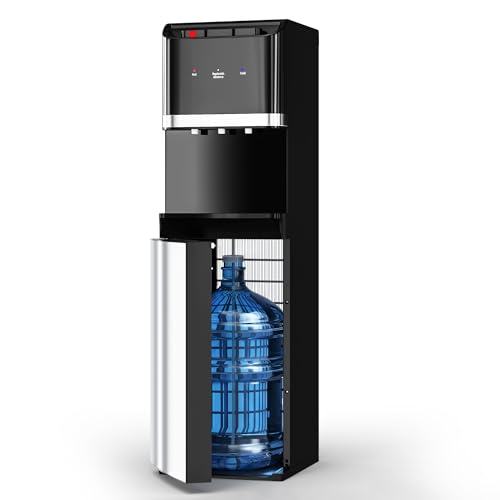

As an Amazon Associate we earn from qualifying purchases at no extra cost to you.
At a Glance: Office Water Dispensers Compared
| Model | Best for | Key stated points | Limits |
|---|---|---|---|
| Avalon A5 (floor, bottleless) | General office use, up to about 20 to 25 people | Stainless steel; hot, cold and room-temperature; dual filtration; ozone self-cleaning cycle reported by reviewers | Needs water line; reviewers say cold may occasionally overcool |
| Brio 520UV (floor, bottleless) | Offices wanting UV self-cleaning | The maker lists UV sanitizing and an extra filter set; one reviewer found hot-water recovery comparable to the Avalon | One reviewer reports the cold function can be more prone to freezing or failure |
| Brio Moderna RO | Premium offices wanting reverse osmosis | Runner-up in a roundup; reverse-osmosis filtration | Higher cost tier; RO systems waste some water |
| Avalon A9 / A12 (countertop) | Small offices, about 10 to 15 daily users | Smaller footprint than floor models | Lower throughput for larger teams |
| Primo (bottom-loading) | Small to medium offices without plumbing | Takes 3- and 5-gallon bottles; suggested for small teams | Not bottleless; requires bottle delivery or purchase and lifting |
The source material for office water dispenser rankings is mostly affiliate-style roundups, and their per-unit claims differ, so check the maker’s capacity and certification sheets for your exact model.
Bottleless or Bottled?
Point-of-use (bottleless)
Bottleless dispensers connect to the building’s cold water supply and filter the water on site. They eliminate lifting 40-pound bottles, delivery schedules and storage space, and they never “run out” the way a jug does. The costs are installation (a water line and possibly a nearby outlet), periodic filter replacements and the need to follow the maker’s sanitization advice. Many models include self-cleaning cycles using ozone or UV light, though these do not eliminate the need for routine maintenance.
Bottle-loading
Bottled units are simple, move easily and need no plumbing. However, the water supply depends on bottle delivery, staff must change the bottles, and spare bottles take space. They suit small offices, temporary spaces or leased premises where plumbing changes are not allowed.
Sizing for Your Headcount
Dispenser output is measured in how quickly it chills and heats water and how much cold and hot capacity it holds. Reviewers suggest about one floor-standing bottleless dispenser per 20 to 25 users. A smaller countertop model like the Avalon A9 is described as suited to about 10 to 15 daily users. In larger offices, two units in different areas reduce lines and downtime, and a commercial-grade point-of-use cooler with higher stated output may be more appropriate.
Peak demand matters: morning and lunch rushes strain hot water supplies. If many staff drink tea or instant meals, check the stated hot-water capacity and recovery time on the spec sheet.
Features and Specifications to Check
- Filtration: Look for filters certified to relevant NSF/ANSI standards, and read what contaminants the certification covers. Replace cartridges on the maker’s schedule.
- Temperature options: Hot, cold and ambient outputs are common; check hot-water safety features such as child-safety locks on the hot tap, which many offices want.
- Self-cleaning: Ozone or UV cycles are offered by Avalon and Brio models respectively. Manufacturers still recommend periodic manual cleaning and filter changes.
- Dispensing: Check tap height for tall bottles and tumblers, plus a drip tray that is easy to remove.
- Materials: Stainless steel exteriors resist fingerprints and wear better in busy areas.
- Power and drain: Confirm the voltage and outlet needs, and whether a drain is required.
Installation and Maintenance Notes
Bottleless dispensers need a cold-water line, usually via a saddle valve or a dedicated fitting. Have a qualified plumber install it if you are not experienced, and an electrician if new outlets are needed. If you lease the space, check with the landlord first. Place the unit on a level surface with the clearance listed in the manual, away from heat and direct sun.
Maintenance includes replacing filters on schedule, cleaning the drip tray and spout, and sanitizing according to the maker’s guidance. Hot water can scald, so keep any safety lock enabled and position the unit away from areas where children or visitors might be unsupervised. If you notice odd taste, leaks or electrical issues, unplug the unit and contact the manufacturer or a technician.
Running Costs and Day-to-Day Use
Beyond the purchase tier, think about what the dispenser costs to keep running. Plumbed-in units consume electricity to keep water hot and cold continuously, so look for any energy-saving or sleep mode the maker lists, and consider switching the hot tank off overnight if the manual allows it. Filter cartridges are the main recurring item, and a model that ships with a spare set, as the maker lists for the Brio 520UV, spreads that cost. Bottle-loading units trade filter costs for the ongoing price of bottles and the time staff spend swapping them.
Think also about who will own maintenance. A short written schedule for filter changes, drip tray cleaning and any sanitizing cycle, assigned to a named person or the facilities provider, keeps the dispenser from becoming a neglected appliance. Many office managers also place a small sign explaining the hot-water lock so visitors use it correctly. If your office hosts clients, a stainless steel exterior and a tidy drip tray also make a better impression than a stained plastic unit.
Budget Tiers
Budget
Bottle-loading Primo-style dispensers and some countertop point-of-use models sit here. They suit small teams and offices that cannot plumb a unit in.
Mid-range
The Avalon A5 and similar plumbed-in floor models are the mainstream choice, offering hot and cold water with built-in filtration and self-cleaning.
Premium
Brio’s reverse-osmosis and UV self-cleaning models and commercial-grade point-of-use coolers occupy the top tier. They suit larger offices or those wanting enhanced filtration.
Pick X If… Decision Table
| Pick this | If you… |
|---|---|
| Avalon A5 | need a dependable plumbed-in floor unit for roughly 20 to 25 people |
| Brio 520UV | prefer UV self-cleaning and an included spare filter set |
| Brio Moderna RO | want reverse-osmosis filtration and can accept a premium tier |
| Avalon A9 or A12 | have a small team of about 10 to 15 and limited floor space |
| Primo bottom-loading | lack a water line and are comfortable managing bottles |
| Two units or a commercial cooler | serve a large office or a busy break area |
Water Quality and Compliance Notes
Water quality depends on local supply and on how well the filters are maintained. Filtration certifications tell you which contaminants a cartridge is tested for, so read them rather than relying on marketing terms. If your building has known water-quality concerns, such as lead pipes, consult your local water utility or a qualified professional, and do not rely on a dispenser as a sole treatment. For regulated workplaces, check any local health or workplace rules on drinking water access.
Alternatives
- Under-sink filtration with a dedicated faucet: Saves floor space but needs plumbing work.
- Hot water dispensers or boilers: Good for tea-heavy offices, usually paired with a separate cold water source.
- Refrigerator water dispensers: Fine for tiny offices but not designed for high demand.
- Delivered-bottle service with a separate cooler: Reasonable when plumbing is not possible and a provider supplies maintenance.
Frequently Asked Questions
How many people can one office water dispenser serve?
Reviewers suggest about one full-size dispenser per 20 to 25 people, and a countertop model for around 10 to 15 daily users. Peak usage and hot water demand can change the answer. In large offices, two units spread across areas often work better than one.
Is a bottleless water dispenser worth it?
For offices with a nearby water line, bottleless units remove bottle handling and delivery tasks. They need installation and regular filter changes, which add maintenance. If plumbing is not allowed, a bottle-loading model may be simpler.
What is the difference between ozone and UV self-cleaning?
Avalon models use ozone, and Brio models use UV light, to help keep the water path clean between manual cleanings. Both are described by makers as sanitizing aids rather than replacements for filter changes and routine cleaning. Follow the manual for each.
How often do the filters need replacing?
The schedule depends on the model, the filter type and the local water. Makers typically specify intervals in months or gallons in the manual. Replacing on time maintains taste and filtration performance.
Are hot water taps on dispensers safe for the workplace?
Most dispensers include a child-safety or lock feature on the hot tap, and offices should enable it if appropriate. Hot water can scald, so place units where spills are unlikely and follow the manual’s safety guidance.
Do I need a plumber to install a bottleless dispenser?
Often yes, or at least a qualified person who can safely connect to the cold water line. If the unit needs new outlets or drains, an electrician or plumber should handle them. Check your lease and local codes first.
More from Amazon
Programs that pair well with the guide above. Offers and eligibility are set by Amazon and may change.
Set up recurring deliveries of everyday items on eligible products. Terms and savings are set by Amazon.
Explore Subscribe & SaveCollect the home and kitchen items you want in one registry that guests can shop from.
Create a wedding registryFree shipping on eligible items, Prime Video and more. Eligible new members can start with a free trial.
Start a Prime free trialAudiobooks and podcasts to listen to on the go. Eligible new members can start with a free trial.
Try Audible freeAs an Amazon Associate we earn from qualifying purchases.