Key takeaways
- Budget: Generic 4×7 nets with angle settings. Fine for casual use, but expect shorter lifespans.
- Mid-range: Champion Sports Deluxe, Apex Professional and similar steel-framed models.
- Premium: Brine rebounders and the All Ball Pro Stinger X for heavy, long-term use.
For most solo players, a 4×7 foot angled rebounder with a rigid frame and a tight net is the practical choice, the Champion Sports Deluxe Rebounder suits those who want a dampened, steel-framed unit with a long track record, and the All Ball Pro Stinger style of rebounder suits players who want passes returned fast. The right pick depends on your yard, your skill level, and whether you want a return that mimics a live pass or a softer, controllable one.
Our top picks



As an Amazon Associate we earn from qualifying purchases at no extra cost to you.
Lacrosse Rebounders at a Glance
| Rebounder | Best for | Key stated features | Limits |
|---|---|---|---|
| Champion Sports Deluxe Rebounder | Home, school and team drills | Maker lists a 3 by 4 foot target area, dampened rebound surface, adjustable steel frame and 48 hooked springs | Smaller target; dampened return is slower than game speed |
| All Ball Pro Stinger X | Fast, game-like returns | Reviewer Stringers Society reports passes return at roughly 95 percent of their original speed | Faster returns demand better reflexes; not for beginners |
| Brine Lax Wall Rebounder | Durable, versatile practice | Lacrosse Bootcamp praises its durability | Upper mid-range tier |
| Apex Professional 4×7 | Larger rebounder with adjustable angles | Lax Equipment Guide ranks it best overall | Takes more storage space |
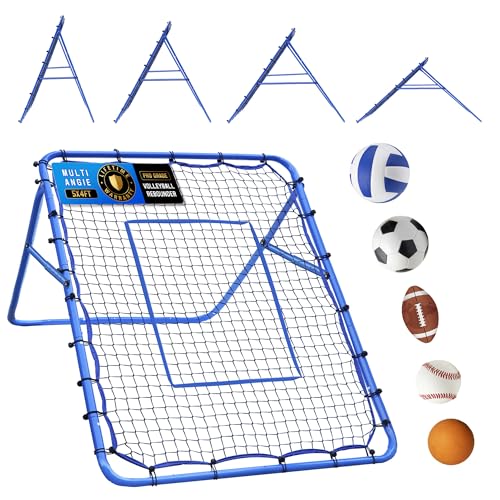
| Budget 4×7 nets (for example ZEALFEEL) | Casual players and kids on a budget | Multiple angle settings, lightweight | Reviewers warn that very cheap nets can wear out quickly |
What a Rebounder Does for a Solo Player
A rebounder replaces a wall or a practice partner. Throw the ball at the net, catch the return, and repeat. Done consistently it builds stick handling, quick hands and catching skills. A good unit stays put, returns the ball predictably and does not hurt your hands or your fence.
Features That Matter
Size and target area
Larger nets, such as the 4×7 foot designs, are more forgiving because stray throws still get a bounce. Smaller targets, like the 3×4 foot area on the Champion Sports Deluxe, force more accuracy but take up less room. If your space is limited, pick a unit that folds or breaks down.
Rebound speed
Reviewers split rebounders into dampened and fast types. Stringers Society notes that dampened models from brands such as STX, EZGoal, Champion and Gladiator return the ball more slowly, while the Stinger returns passes at nearly their original speed. Beginners may prefer a slower return; advanced players tend to want a faster one.
Angle adjustment
Multi-angle designs let you practice ground balls, bounce passes and chest-high catches. Several budget 4×7 nets list multiple angle settings, and the Apex Professional is highlighted for adjustability.
Frame and stability
Steel frames resist bending and hold the net taut. Check that the legs or stakes keep the unit steady on grass or turf, and that no sharp edges poke out. Follow the maker’s assembly instructions carefully.
Net quality
The net and springs wear first. Look for tight knots, solid springs and replaceable parts. One guide advises that a decent home-use net falls in the budget to mid-range tier and warns against the very cheapest models.
Champion Sports Deluxe Rebounder
This is a frequent name on rebounder lists. The maker describes it as suitable for solo or team practice, with a dampened surface, adjustable steel frame and 48 hooked springs. One review site credits it with a long durability record. The dampened return is easier to control, but advanced players may outgrow it.
All Ball Pro Stinger X
Stringers Society names it best overall, noting its fast return. If your goal is to simulate game passes, a faster rebounder is useful. The downside is that it demands more of your hands and can be frustrating for beginners.
Brine and Apex Options
Brine is a long-established lacrosse brand, and Lacrosse Bootcamp praises the Brine Lax Wall Rebounder for durability and versatility. The Apex Professional 4×7 is ranked best overall by Lax Equipment Guide and offers a larger target. Both are in the upper mid-range tier.
Budget Tiers
- Budget: Generic 4×7 nets with angle settings. Fine for casual use, but expect shorter lifespans.
- Mid-range: Champion Sports Deluxe, Apex Professional and similar steel-framed models.
- Premium: Brine rebounders and the All Ball Pro Stinger X for heavy, long-term use.
Pick X If… Decision Table
| Pick this | If your situation is |
|---|---|
| Champion Sports Deluxe | You want a dampened, steel-framed unit for beginners or teams |
| All Ball Pro Stinger X | You want fast, game-like returns |
| Brine Lax Wall Rebounder | You want a durable, brand-name rebounder |
| Apex Professional 4×7 | You want a big target with adjustable angles |
| Budget 4×7 net | You need a low-cost option for casual practice |
Setup, Safety and Care
- Place the rebounder on level ground away from windows, vehicles and walkways.
- Check that stakes or weights keep the frame from tipping.
- Wear gloves and, for younger players, appropriate protective gear per league rules.
- Inspect springs, net and joints regularly, and replace worn parts as the maker allows.
- Store dry and out of direct sun when not in use to extend the life of the net.
Alternatives to Consider
- Brick or concrete wall: Free and fast but hard on sticks and unforgiving on bad throws.
- Goal with target pockets: Better for shooting accuracy than for passing.
- Partner passing: Best for live-game feel but requires a second person.
Building a Solo Practice Routine
A rebounder is most useful when paired with a plan. Start each session with simple two-handed and one-handed catches at close range, then move back as your hands warm up. Mix in ground balls by lowering the angle, and add quick-stick passes where you catch and release in one motion. Beginners often get more from short, focused sessions than from long ones where form fades; stop when your catches get sloppy.
Think about where you will use the unit. On grass, stakes or weights help keep a lighter frame from tipping when a hard pass hits it. On a driveway or turf, make sure the feet do not slide. Keep the area behind and around the rebounder clear so that missed passes do not roll into a street or a neighbor’s property, and consider a backstop net for errant throws. Younger players should practice with supervision and the protective gear their league requires.
Rebounder size also interacts with age. A younger player with a short throw benefits from a smaller, lower-angled unit that returns the ball predictably, while older players tend to want a larger target and a faster return so that the drill resembles real passes. If you share the unit with a sibling or teammate, an adjustable frame is more useful than a fixed one. If you play both field and box lacrosse, remember that ball weight and bounce can differ, so use the ball type the maker lists for the rebounder.
Frequently Asked Questions
What size lacrosse rebounder should I buy?
A 4×7 foot rebounder is a common choice because it gives a forgiving target. If space is tight, a smaller one like the 3×4 foot Champion Sports unit works, though it demands more accuracy.
Is a dampened or fast rebounder better?
Dampened rebounders return the ball more slowly and are easier for beginners. Fast rebounders such as the Stinger return passes near their original speed and suit advanced players.
Can I use a rebounder on a lawn?
Yes, if the frame is stable and the legs or stakes are secure. Follow the maker’s assembly instructions and avoid soft ground that lets the unit tip.
How long does a rebounder last?
It depends on build quality and use. Reviewers warn that very cheap nets can wear out fast, while steel-framed models like the Champion Sports Deluxe are credited with long service lives. Replace worn springs and nets when the maker offers parts.
Can a rebounder replace a practice partner?
It is excellent for repetitions of catching and throwing, but it cannot reproduce a live defender or a teammate’s movement. Use it alongside team practice rather than instead of it.
How should I store a rebounder?
Fold or disassemble it if the design allows, keep it dry and out of constant sun, and store it away from sharp objects. This protects the net and springs.
More from Amazon
Programs that pair well with the guide above. Offers and eligibility are set by Amazon and may change.
Set up recurring deliveries of everyday items on eligible products. Terms and savings are set by Amazon.
Explore Subscribe & SaveCollect the home and kitchen items you want in one registry that guests can shop from.
Create a wedding registryFree shipping on eligible items, Prime Video and more. Eligible new members can start with a free trial.
Start a Prime free trialAudiobooks and podcasts to listen to on the go. Eligible new members can start with a free trial.
Try Audible freeAs an Amazon Associate we earn from qualifying purchases.