Our Top Picks


Short answer: if you want one jar that handles sandwiches, snacking, and a drink garnish without compromise, Grillo’s 32 fl oz refrigerated dill pickles are the best overall pick — a fresh, never-heat-treated brine with a snap that survives the trip from jar to plate. It suits households that finish a jar every two to three weeks and want a large-format jar with a classic garlic-and-dill profile. If your priority is the lowest cost per serving, the 365 by Whole Foods Market Organic Kosher Dill 24 oz jar is the value leader. If you want the tangiest, most traditionally fermented pickle in the case, Bubbies Spicy Kosher Dill is the premium choice. Everything below breaks down crunch, brine acidity, spice level, cucumber cut, jar size, refrigeration rules, and real cost per serving so you can match a jar to how you actually eat pickles.
Top 3 Picks
Best overall: Grillo’s Pickles, 32 fl oz. The 32-ounce jar is the sweet spot of size, price tier, and cut flexibility. Grillo’s is sold refrigerated and never heat-processed, so the cucumber keeps more of its original structure than a shelf-stable jar, and the brine carries visible garlic, dill, and grape leaves. It is the jar to buy if you want one product that works on a burger, on a charcuterie board, and eaten over the sink.
Best budget: 365 by Whole Foods Market Organic Kosher Dill Pickles, Reduced Sodium, 24 oz. Organic certification at a store-brand price tier is unusual in the refrigerated set. The reduced-sodium brine is noticeably less salty than a deli-style dill but keeps enough acid to stay firmly in “pickle” territory rather than drifting toward “cucumber in salt water.” Best for anyone eating pickles daily who does not want to pay premium prices for the habit.
Best premium: Bubbies Spicy Kosher Dill. Bubbies ferments in a salt brine rather than a vinegar brine, which produces a rounder, less sharp tang and a livelier, slightly effervescent jar. The spicy version layers in heat without turning the pickle into a novelty. Best for people who already like kimchi, sauerkraut, and other fermented foods and want a pickle with that same depth.
Quick Comparison
| Product | Best for | Key specs | Price tier |
|---|---|---|---|
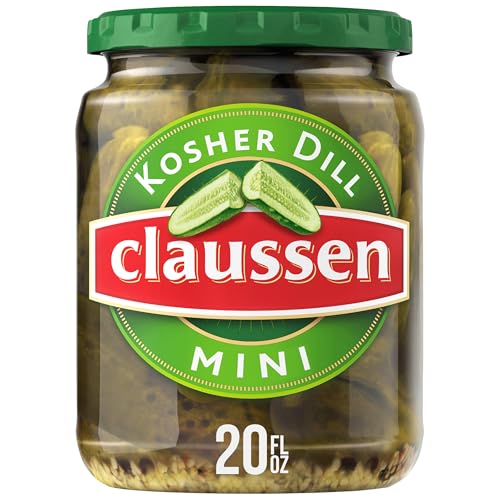
| Claussen Mini Pickles, Dill | Snacking, platters, lunchboxes | 20 fl oz jar; small whole cucumbers; always refrigerated; cold-packed, never heat-processed; dill and garlic brine | Budget |
| Dietz & Watson Kosher Pickles | Deli sandwiches, big-household volume | 32 oz jar; kosher dill; deli-style brine; refrigerated deli-case product | Mid-range |
| 365 by Whole Foods Market Organic Kosher Dill, Reduced Sodium | Everyday value, lower-sodium diets | 24 oz jar; organic; reduced-sodium brine (at least 25% less sodium than the standard version per label rules); kosher dill | Budget |
| Josh’s Pickles Dill Lovers Pack (3 jars) | Dill purists who want cut variety | 3-jar pack; whole and sliced formats; regular and hotter styles per the listing; small-batch refrigerated | Premium |
| Bubbies Spicy Kosher Dill | Fermented-food fans, spicy pickle lovers | Naturally fermented salt brine; no preservatives; no added sugar; gluten-free; spicy dill profile; always refrigerated | Premium |
| Josh’s Pickles Variety Starter Pack (6 jars) | Finding your favorite style without committing | 6-jar pack; mixed cuts and flavor profiles; small-batch refrigerated | Premium |
| Vlasic Kosher Dill Spears | Pantry backup, budget spear volume | 16 fl oz jar; spears; shelf-stable jar that should be refrigerated after opening; classic dill brine | Mid-range |
| Grillo’s Pickles, 32 fl oz | All-purpose jar, sandwiches and garnishes | 32 fl oz jar; refrigerated and never heat-processed; brine with garlic, dill, and grape leaves | Mid-range |
| Grillo’s Classic Dill Pickle Chips, 16 fl oz | Burgers, sandwiches, fast prep | 16 fl oz jar; pre-cut chips; refrigerated fresh brine; same garlic-dill family as the large jar | Budget |
How We Chose
This roundup is built from product listings, brand-published ingredient and storage information, and the physical realities of how pickled cucumbers behave in a jar — not from tasting sessions. The selection criteria started with refrigeration status, because a refrigerated pickle and a shelf-stable pickle are different products with different texture ceilings. From there, each candidate was judged on cut (whole, spear, chip), brine style (vinegar-forward versus salt-fermented), jar size in fluid ounces, spice level, and how many servings that jar realistically yields. Price tier was assigned by comparing the format against the category’s general market ranges rather than by quoting a daily price, since refrigerated pickle prices swing with promotions and regional distribution.
We also weighted category fit and upgrade path. A jar that only works as a burger topping is a different purchase than a jar that works as a burger topping, a snack, and a garnish, and the picks are organized so that a first-time buyer can start at a budget tier and move up only if the crunch or the brine style actually matters to them. Finally, we filtered for products that are genuinely distinct from one another, so the list covers small-format snacking, deli volume, fermented styles, spicy styles, and pre-cut chips instead of stacking five near-identical dill spears.
1. Claussen Mini Pickles – Best for Snacking and Party Platters
As an Amazon Associate we earn from qualifying purchases at no extra cost to you.

Claussen’s mini pickles are the smallest format on this list, and that is the entire point. Each cucumber is a whole, bite-sized pickle roughly the length of a thumb, which means no cutting, no juice running down your wrist from a half-eaten spear, and no plate setup required. The 20 fl oz jar is built for grazing: set it next to a cheese board with a fork and it disappears. It suits anyone who eats pickles as a snack rather than as an ingredient, and anyone feeding a group where people want one pickle, not a commitment to a whole spear.
Claussen is one of the brands that made the refrigerated pickle aisle what it is. These are cold-packed and sold from the refrigerated case, never heat-processed in the jar, which is why the cucumber reads firm rather than spongy. The brine is a straightforward dill-and-garlic profile — bright, salty, and acidic without any heat. If you are someone who finds shelf-stable pickles mushy but does not want to think hard about it, this is the low-effort entry point.
Key specs
- Jar size: 20 fl oz
- Cucumber style: whole mini cucumbers, bite-sized
- Brine: dill and garlic, vinegar-based, cold-packed
- Heat level: none
- Refrigeration: required at all times; sold refrigerated
- Realistic yield: roughly 12 to 16 servings per jar depending on how generously you pour
Strengths. The mini format solves a problem no other jar on this list solves. A 20-ounce jar of minis gives you individually portioned pickles, which is ideal for lunchboxes, appetizer boards, and anyone who dislikes the mess of cutting a spear. The brine is also one of the more forgiving on this list for reuse — it makes a decent base for a quick marinade or a dirty martini-style garnish, because the dill and garlic are clean rather than muddied with sugar. Because the cucumbers are small and intact, they hold their structure longer after the jar is opened than a chip or a spear will.
Pros
- Bite-sized whole pickles mean zero prep and zero mess
- Reliable crunch thanks to cold-packed, refrigerated production
- Small jar fits tight fridge space, including door shelves
- No heat, so it works for kids and for anyone who dislikes spicy food
- Brine is clean enough to reuse in dressings and marinades
Cons
- Highest cost per ounce of the budget-tier options because you are paying for small, uniform cucumbers
- 20 fl oz disappears fast if you use pickles as an ingredient rather than a snack
- No spice and no fermented complexity — this is a one-note jar
- Not the right format for burgers, where a flat chip or a long spear works better
How it compares. The nearest alternative is Grillo’s Classic Dill Pickle Chips, 16 fl oz. Both are budget-tier, refrigerated, and no-heat. The difference is geometry and use case: Claussen minis are for eating whole and out of hand, while Grillo’s chips are pre-cut rounds designed to lie flat on a sandwich. If you buy pickles to snack on, take the minis. If you buy them to top a burger, take the chips. The next step up in this list for snackers who want more complexity is Bubbies Spicy Kosher Dill, which trades the mini format for fermented depth and heat.
2. Dietz & Watson Kosher Pickles – Best for Deli-Style Sandwiches
Dietz & Watson is a deli-counter brand first, and its 32 oz kosher pickle jar reads like something that came off a sandwich station rather than a supermarket shelf. This is the jar for someone who wants a big, salty, garlicky dill pickle alongside a pastrami sandwich, or who goes through enough pickles that a 20-ounce jar is a rounding error. The 32-ounce format is the practical size for a household of three or more, or for one person who eats a pickle most days.
The flavor profile is deli-style kosher dill: assertive salt, a strong garlic backbone, and enough acid to cut through rich meat. It is not a subtle pickle. If you have ever eaten at a deli where the pickle on the plate is almost as important as the sandwich, this is the category of pickle being imitated. Because it is sold from the refrigerated case, you get the firmer bite that cold-chain pickles are known for.
Key specs
- Jar size: 32 oz
- Cucumber style: whole or spear format depending on the specific variant selected
- Brine: kosher dill, garlic-forward, vinegar-based
- Heat level: none to mild
- Refrigeration: sold refrigerated; keep refrigerated
- Realistic yield: roughly 18 to 24 servings per jar
Strengths. Volume and flavor intensity are the two reasons to buy this jar. At 32 ounces it is one of the larger single jars here, which drops your cost per serving meaningfully compared with the 16- and 20-ounce options. The garlic-forward brine is the most “deli” tasting on this list outside of the premium tier, and it holds up against strong flavors — smoked meat, sharp mustard, aged cheese — where a delicate dill would vanish. The jar also does double duty as a brine source: the salty, garlicky liquid is well suited to marinating chicken or potatoes before roasting, though it is too salty to use undiluted as a dressing.
Pros
- 32 oz gives the best volume-per-jar in the mid-range tier
- Bold garlic and salt profile stands up to deli meat and strong cheese
- Refrigerated production keeps the bite firm
- Brine is genuinely useful as a marinade base
- Straightforward, familiar flavor with no surprises
Cons
- High sodium compared with the reduced-sodium options on this list
- Large jar takes real shelf space and is heavy to handle when full
- Garlic intensity can overwhelm lighter dishes like fish or mild cheese
- Not a fermented pickle, so it lacks the complexity Bubbies offers
- Flavor is one-dimensional if you like variety across a week
How it compares. The closest competitor is Grillo’s 32 fl oz jar, which matches it on size and price tier. The split is brine personality: Dietz & Watson is saltier and more aggressively garlicky, closer to a classic New York deli pickle, while Grillo’s reads fresher and more herbal thanks to its visible dill and grape leaves. If you want the pickle that tastes most like a deli, buy Dietz & Watson. If you want the pickle that tastes most like a cucumber that was recently brined, buy Grillo’s. Against the 365 by Whole Foods Market 24 oz jar, Dietz & Watson wins on volume and intensity but loses on sodium and on organic certification.
3. 365 by Whole Foods Market Organic Kosher Dill – Best Budget Jar for Everyday Eating

This is the jar for people who eat pickles often enough that cost per serving actually matters. The 365 by Whole Foods Market Organic Kosher Dill comes in a 24 oz jar at a store-brand price tier, with organic certification and a reduced-sodium brine — a combination that is hard to find at this price point. It suits daily eaters, households watching sodium intake, and anyone who wants an organic option without paying the premium-tier markup that small-batch brands charge.
The trade-off for the lower sodium is a brine that tastes less aggressively salty and more purely acidic. That is not a flaw, but it is a difference you will notice if you are coming from a deli-style dill. The cucumber itself stays crisp because the product is refrigerated rather than shelf-stable, and the kosher dill profile keeps the garlic and dill notes that define the style. For a pickle that goes on a sandwich every day of the week, this is the sensible buy.
Key specs
- Jar size: 24 oz
- Cucumber style: whole or spear depending on variant
- Brine: reduced sodium — under U.S. labeling rules, “reduced sodium” means at least 25% less sodium than the brand’s standard version
- Certification: organic
- Heat level: none
- Refrigeration: keep refrigerated
- Realistic yield: roughly 14 to 18 servings per jar
Strengths. The value proposition is the headline. Organic certification at a budget price tier is uncommon in the refrigerated pickle case, and 24 ounces is a genuinely useful middle size — big enough to last a week or two for one person, small enough that the jar fits on a crowded shelf. The reduced-sodium brine is a real advantage for anyone who eats pickles daily and would rather not take in 300-plus milligrams of sodium per spear. Because the brine is less salty, the acid and the dill come forward more, which some people prefer; it reads cleaner and brighter on a salad or a grain bowl where a heavy deli brine would dominate.
Pros
- Organic certification at a budget price tier
- At least 25% less sodium than a standard version by label definition
- 24 oz is a flexible middle size for one or two people
- Brighter, more acidic profile works well in salads and bowls
- Refrigerated production keeps the cucumber firm
Cons
- Less salty, so it can taste flat next to a rich deli sandwich
- 24 oz is smaller than the 32 oz jars in the mid-range tier
- Not fermented, so no depth or effervescence
- Organic certification does not change the crunch — this is still a vinegar-brined pickle
- Availability depends on store distribution, which varies by region
How it compares. Against Claussen Mini Pickles, this jar is the better buy for volume and for sodium, while Claussen wins on snackability and on the convenience of whole mini cucumbers. Against Dietz & Watson’s 32 oz jar, the 365 jar gives up 8 ounces and a lot of salt but gains organic certification and a lower sodium load. The decision is simple: if you want the cheapest per-serving pickle that still tastes like a proper dill, buy this one. If you want the boldest deli flavor, step up to Dietz & Watson. If you want fermentation, skip both and go to Bubbies.
4. Josh’s Pickles Dill Lovers Pack – Best for Dill Purists Who Want Cut Variety

The Dill Lovers Pack is a three-jar set built around a single idea: you like dill, and you want it in more than one shape. The listing describes whole and sliced formats across the jars, with regular and hotter styles represented, which means the pack functions as a small tasting flight rather than a single commitment. It suits someone who already knows they like dill pickles and wants to figure out whether they prefer whole, sliced, or a spicier brine before buying a large jar of any one of them.
Josh’s Pickles is a small-batch, refrigerated brand, which puts it in the premium tier alongside Bubbies. The practical consequence of small-batch production is that jars vary a little more between batches, and the brine tends to be simpler — fewer stabilizers, more emphasis on the cucumber and the aromatics. If you have been buying mass-market pickles for years and want to know what the fuss about fresh refrigerated pickles is, a multi-jar pack like this is a lower-risk way to find out than committing to a single 32-ounce jar.
Key specs
- Pack size: 3 jars
- Cucumber styles: whole and sliced formats per the listing
- Flavor range: regular and hotter styles represented in the pack
- Brine: dill-forward, refrigerated
- Refrigeration: required at all times
- Realistic yield: roughly 30 to 45 total servings across three jars, depending on jar size
Strengths. Variety is the whole value here. A single jar forces you to live with one cut and one heat level for weeks; a three-jar pack lets you keep a whole pickle for snacking, a sliced jar for sandwiches, and a hotter jar for burgers and Bloody Marys, all at once. That is a genuinely different way to buy pickles, and it solves the common problem of a jar going soft and unloved at the back of the fridge because it only worked for one use. Small-batch refrigerated production also means the crunch is the priority rather than shelf stability.
Pros
- Three jars cover snacking, sandwich, and spicy use cases simultaneously
- Whole and sliced formats in one purchase
- Regular and hotter options let you calibrate heat without buying a whole jar of spice
- Small-batch refrigerated production favors texture
- Good gift or introduction to the brand
Cons
- Premium price tier, so cost per serving is well above the budget jars
- Three open jars at once means more fridge space and faster quality decline
- If you already know you only want plain dill spears, the variety is wasted
- Small-batch availability can be inconsistent
- You cannot scale up a single favorite cut without buying the full pack again
How it compares. The obvious alternative is the Josh’s Pickles Variety Starter Pack with six jars, which covers even more ground for a higher outlay. The Dill Lovers Pack is the better choice if you already know dill is your flavor and you only need cut and heat variety; the six-jar pack is better if you are still deciding whether you even like dill. Against Bubbies Spicy Kosher Dill, the Dill Lovers Pack gives you more formats but less depth — Bubbies is fermented, which is a fundamentally different tang. Buy Josh’s for variety, Bubbies for character.
5. Bubbies Spicy Kosher Dill Pickles – Best Premium Fermented Pickle

Bubbies makes the most different-tasting pickle on this list, and that is its entire reason to exist. Instead of a vinegar brine, Bubbies uses a natural fermentation — cucumbers sit in a salt brine with garlic, dill, and spices, and the acidity develops over time rather than being poured in from a jug. The result is a rounder, less sharply sour tang with a slightly effervescent quality, and a cucumber that tastes alive rather than preserved. The spicy version adds heat on top of that base. It suits anyone who already enjoys kimchi, sauerkraut, or other fermented foods and finds conventional pickles one-dimensional.
The label notes on the listing are worth reading carefully: no preservatives, no added sugar, gluten-free. Those are the markers of a fermentation-forward product rather than a formulated one. If you have never had a fermented pickle, expect the first bite to taste unfamiliar — less vinegar-sharp, more savory, with a funk that is intentional. By the third pickle, most people find conventional jars taste flat by comparison.
Key specs
- Production method: naturally fermented in a salt brine
- Free-from: no preservatives, no added sugar, gluten-free per the listing
- Flavor: spicy kosher dill
- Heat level: moderate — enough to register clearly, not a novelty hot pickle
- Refrigeration: required at all times; fermentation continues slowly in the fridge
- Realistic yield: roughly 15 to 20 servings per jar depending on format
Strengths. Flavor complexity is the reason to pay premium prices. A fermented pickle tastes like something that happened over time, and it pairs with food in ways a vinegar pickle does not — it works next to sharp cheddar, on a charcuterie board, chopped into a grain salad, or alongside rich braised meat. The spice is integrated rather than painted on, so it warms without overwhelming the dill and garlic. The no-added-sugar and no-preservative formulation also appeals to anyone reading labels carefully. Because fermentation keeps working in the jar, the brine gets progressively tangier as you work through it, which means the last pickles taste different from the first.
Pros
- Genuinely distinct fermented flavor, not just a saltier dill
- No preservatives, no added sugar, gluten-free
- Spice is layered into the brine rather than added at the end
- Excellent on charcuterie boards and with aged cheese
- Brine is a strong candidate for reuse in dressings and marinades
Cons
- Premium price tier with the highest cost per serving on this list
- Fermented funk is polarizing — some people never get past it
- The jar can build pressure and fizz; expect a little brine release when you open it
- Brine cloudiness is normal but can look alarming if you are used to clear vinegar brine
- Not the pickle for someone who wants a conventional, sharp deli dill
How it compares. Against Josh’s Pickles Dill Lovers Pack, the choice is depth versus breadth. Josh’s gives you three jars and multiple cuts; Bubbies gives you one jar of something you cannot get anywhere else on this list. Against Dietz & Watson, the contrast is starkest: Dietz & Watson is the sharpest, saltiest conventional dill here, while Bubbies is the softest-edged and most complex. If you are buying pickles as a snack, either works. If you are buying them as a food, buy Bubbies.
6. Josh’s Pickles Variety Starter Pack – Best for Finding Your Favorite Style

The Variety Starter Pack is a six-jar set from Josh’s Pickles that spreads across the brand’s range of cuts and flavor profiles. Where the Dill Lovers Pack assumes you already know you want dill, this pack assumes you do not yet know what you want — and that is a legitimate position to be in. Refrigerated pickles vary enormously by cut and brine, and the fastest way to learn your own preference is to have several open at once. It suits new buyers, gift-givers, and anyone who has been buying the same supermarket jar for a decade out of habit.
Six jars is a lot of pickle. Be realistic about consumption: for a single person, six open jars will not all be eaten at peak crunch, and the last two will be noticeably softer than the first two. This pack makes the most sense for a household of three or more, for someone who hosts regularly, or for a buyer who plans to give two or three jars away. Treated as a sampler rather than a supply, it is excellent value in the premium tier.
Key specs
- Pack size: 6 jars
- Cucumber styles: mixed cuts across the range
- Flavor range: multiple brine and heat profiles
- Brine: refrigerated, small-batch
- Refrigeration: required at all times
- Realistic yield: roughly 60 to 90 total servings across six jars
Strengths. This is the most efficient way to answer the question “which pickle do I actually like?” You get to compare cuts side by side in the same week, under the same fridge conditions, which is the only fair comparison. The pack also solves gifting: a six-jar set splits naturally into two or three gifts without looking stingy. And because the jars are smaller formats from a small-batch producer, the crunch ceiling is high — you are sampling the premium end of the category rather than the mass-market end.
Pros
- Widest variety of any product on this list
- Ideal for identifying your preferred cut and heat level
- Splits easily into gifts
- Small-batch refrigerated quality across every jar
- Best per-jar value in the Josh’s Pickles range
Cons
- Six jars require serious fridge real estate
- Jars opened early will soften before you reach the last ones
- Premium price tier means a large single outlay
- Overkill for a one- or two-person household
- If one style turns out to be a dud, you own a whole jar of it
How it compares. Against the three-jar Dill Lovers Pack, this is the broader, more exploratory purchase — six jars, more styles, higher outlay, more waste risk. Choose the six-jar pack if you are new to refrigerated pickles or buying for a crowd; choose the three-jar pack if dill is settled and you only need format variety. Against a single 32 oz Grillo’s jar, the trade is straightforward: Grillo’s gives you more ounces of one very good pickle for less money, while this pack gives you six chances to find a better one. Buy Grillo’s if you already know what you like; buy this if you do not.
7. Vlasic Kosher Dill Spears – Best for Pantry Backup and Budget Spears

Vlasic is the most widely distributed pickle brand in the United States, and this 16 oz jar of kosher dill spears is its most familiar format. The important distinction is that this is a shelf-stable jar rather than a refrigerated one: it lives in the grocery aisle, not the cold case, and you refrigerate it after opening. That makes it the odd one out on this list, and also the most practical one for a specific job — keeping a jar in the pantry so you are never out of pickles. It suits households that want a cheap, always-available spear for sandwiches and do not want to dedicate fridge space to an unopened jar.
The flavor is the classic mass-market kosher dill: salty, tangy, moderately garlicky, and consistent from jar to jar. Spears are the most versatile cut for sandwiches because they fit lengthwise in a bun and can be sliced crosswise into chips in seconds. At 16 ounces, this is the smallest jar here after the Grillo’s chips, so it is also the right size for someone who wants pickles occasionally rather than daily.
Key specs
- Jar size: 16 oz
- Cucumber style: spears (quarter-cut lengthwise)
- Brine: kosher dill, vinegar-based
- Storage: shelf-stable before opening; refrigerate after opening
- Heat level: none
- Realistic yield: roughly 9 to 12 servings per jar
Strengths. Availability and price are the two advantages. You can buy this jar almost anywhere, at almost any time, for less than most refrigerated competitors, and it does not need cold space until you open it. That combination makes it the best “backup” pickle on this list — the jar you keep in the pantry for the night you realize you have nothing to put on a sandwich. Spears are also the most flexible cut for a small household, since one spear can become three chips with a knife. The brine is consistent and familiar, which matters if you are buying for people who do not want surprises.
Pros
- Shelf-stable before opening, so no fridge space is wasted
- Widely available and reliably cheap per jar
- Spears are the most versatile cut for sandwiches
- Consistent, familiar kosher dill flavor
- Small 16 oz size suits occasional pickle eaters
Cons
- Heat processing means the texture ceiling is lower than a refrigerated pickle
- 16 oz is the smallest jar here after the chip format, so cost per serving rises
- Flavor is simpler and saltier than the refrigerated and fermented options
- Crunch declines faster after opening than a cold-packed jar
- Not the jar to buy if texture is your top priority
How it compares. Against Grillo’s Classic Dill Pickle Chips, both are budget-tier and small-format, but they occupy different roles. Vlasic is the pantry backup: shelf-stable, always available, cheap, and adequate. Grillo’s chips are the fresh option: refrigerated, never heat-processed, and noticeably crisper, at a slightly higher cost per ounce. If you care about crunch, pay the small premium for Grillo’s. If you care about never running out, keep Vlasic in the cupboard. Against Dietz & Watson’s 32 oz jar, Vlasic loses badly on volume and texture but wins on shelf stability and on the fact that you can store it outside the fridge.
8. Grillo’s Pickles, 32 fl oz – Best Overall Refrigerated Pickle

The 32 fl oz Grillo’s jar is the best overall refrigerated pickle for most households, and the reasoning is not complicated. It is the largest jar on this list, it sits in the mid-range price tier, it is sold refrigerated and never heat-processed, and its brine includes garlic, dill, and grape leaves — the grape leaf being a traditional addition that contributes tannins to the brine, which is one of the reasons Grillo’s pickles stay firm. It suits anyone who wants one jar that handles sandwiches, snacking, garnishes, and cooking without being the wrong shape or the wrong flavor for any of them.
Grillo’s started as a farmers-market operation, and the product still reads that way: the brine is cloudy and full of visible aromatics rather than clear and uniform, and the cucumber tastes like a cucumber. If you have only ever eaten shelf-stable pickles, the first Grillo’s spear is the clearest demonstration of what the refrigerated category is actually for. The 32-ounce size means you are not rationing, which matters because the pickle is good enough that you will go through it faster than you expect.
Key specs
- Jar size: 32 fl oz
- Cucumber style: depends on the variant selected — the brand’s core dill recipe is offered in different cuts
- Brine: fresh, refrigerated, with garlic, dill, and grape leaves
- Production: never heat-processed
- Heat level: none in the core dill recipe; hotter variants exist in the line
- Refrigeration: required at all times
- Realistic yield: roughly 18 to 24 servings per jar
Strengths. The combination of size, price tier, and quality is what makes this the default recommendation. At 32 ounces it delivers one of the lowest costs per serving in the refrigerated category while still being a fresh, never-heated product — most jars that reach this size are shelf-stable, and most fresh jars are 16 to 24 ounces. The grape leaf and visible aromatics are not marketing decoration; tannins from grape leaves are a long-standing technique for keeping pickled cucumbers firm, and the effect is real in the bite. The brine is also unusually versatile: it is good enough to drink, which means it works in Bloody Marys, marinades, potato salad, and deviled egg filling without needing adjustment.
Pros
- 32 oz at a mid-range tier is the best size-to-price ratio in the fresh category
- Never heat-processed, so the crunch ceiling is high
- Grape leaves and visible aromatics support firmness and flavor
- Versatile enough to cover sandwiches, snacking, and cocktails
- Brine is clean and reusable across many recipes
Cons
- Large jar takes up significant fridge shelf space
- Brine cloudiness and sediment can surprise first-time buyers
- No fermented complexity, so it will not satisfy Bubbies fans
- Not the cheapest per ounce once you account for the premium over store-brand
- Distribution varies, so the exact cut available may differ by store
How it compares. Against Dietz & Watson’s 32 oz jar, this is the fresher, more herbal, less salty pickle; Dietz & Watson is the more aggressively deli-style one. Against the 365 by Whole Foods Market 24 oz jar, Grillo’s costs more per ounce but gives you 8 more ounces, a firmer bite, and a more complex brine. Against Bubbies, Grillo’s is the conventional vinegar-brined pickle done very well, while Bubbies is a different food entirely. For a single-jar purchase with no other constraints, this is the one to buy.
9. Grillo’s Classic Dill Pickle Chips – Best for Burgers and Sandwiches

The 16 fl oz chip jar takes everything that makes the Grillo’s large jar good and solves its one practical weakness: you have to cut it. Pre-cut chips are the fastest pickle format in existence — open, fork out two, done — and they lie flat, which is what you actually want on a burger or a fried chicken sandwich. At a budget price tier and a 16-ounce size, it suits small households, single people, and anyone whose primary pickle use is sandwich assembly rather than snacking.
The trade-off is texture. Cutting a cucumber exposes more surface area to the brine, and a chip is thinner than a spear or a whole pickle, so the crunch window after opening is shorter. That is true of every chip on the market, not just this one, and it is the main reason to buy a 16-ounce chip jar rather than a 32-ounce one: you will finish it before the texture fades. It shares the same garlic-dill brine family as the larger Grillo’s jar, so the flavor profile is consistent across the brand.
Key specs
- Jar size: 16 fl oz
- Cucumber style: pre-cut chips (rounds)
- Brine: refrigerated, garlic and dill
- Production: never heat-processed
- Heat level: none
- Refrigeration: required at all times
- Realistic yield: roughly 9 to 12 servings per jar
Strengths. Convenience is the entire argument, and it is a strong one. Chips require no knife, no cutting board, and no judgment about thickness — they are uniform, which means every burger gets the same coverage. The 16-ounce size is the correct size for a chip jar because it gets finished before the texture drops off. The budget price tier makes it the cheapest way to get into the Grillo’s brine, and the flavor is the same clean garlic-dill profile as the large jar, so you are not downgrading the taste, only the format. For a burger night or a sandwich-heavy week, this is the jar that disappears fastest for good reason.
Pros
- Zero prep — chips go straight from jar to sandwich
- Uniform thickness gives even coverage on burgers
- Budget price tier makes it the cheapest entry to a fresh refrigerated brine
- 16 oz size is right-sized to be finished before texture fades
- Same brine family as the brand’s large jar, so flavor is consistent
Cons
- Shorter crunch window than whole pickles or spears because of the cut surface area
- 16 oz is small; heavy users will need two jars
- Chips are less useful for snacking out of hand than a whole pickle
- Not suitable for recipes that call for spears or whole pickles
- Premium over store-brand chips is still real
How it compares. Against the Grillo’s 32 fl oz jar, this is the convenience-versus-value trade: the large jar gives you roughly twice the pickle for less per ounce, but you supply the knife. Against Vlasic Kosher Dill Spears, both are budget-tier and small-format, but Grillo’s chips are refrigerated and never heat-processed while Vlasic is shelf-stable, so the crunch gap is noticeable. Buy the chips if you want speed; buy the 32-ounce jar if you want value; buy Vlasic if you want a jar that lives in the pantry.
How to Choose
Refrigerated pickles are not a single product category. They split along four axes that determine everything about how the jar performs: whether the cucumber was heat-processed, what the brine is made of, how the cucumber was cut, and how big the jar is. Get those four right and the brand choice almost makes itself.
Start with refrigeration status, because it sets the texture ceiling
There are two genuinely different products in the pickle aisle. Shelf-stable jars are heat-processed so they can sit at room temperature for months; the heat softens the cucumber’s pectin, and no amount of refrigeration after opening will restore the original snap. Refrigerated jars are cold-packed and never heated, which preserves the cucumber’s cell structure and produces a firmer, more cucumber-like bite. If crunch is the reason you are buying pickles, this is the only decision that matters. Everything else is preference.
The practical consequence: if you are comparing two jars and one is shelf-stable, the shelf-stable one has to win on price, convenience, or availability by a wide margin to be worth it. Vlasic Kosher Dill Spears is on this list precisely because those margins can be wide enough — a jar that lives in the pantry is a jar you always have.
Understand what the brine is doing
Vinegar brines produce sharp, bright, clean acidity. They are predictable, they keep well, and they taste the way most people expect a pickle to taste. Salt-fermented brines — the Bubbies approach — produce acidity through fermentation rather than by adding vinegar, which yields a rounder, more savory, less piercing tang and a slightly effervescent jar. Neither is better; they are different foods.
Two label terms worth knowing. First, “reduced sodium” in the United States means at least 25% less sodium than the brand’s standard version of the same product — it is a regulated comparison, not a vague marketing phrase, so a reduced-sodium jar is meaningfully different from the standard one. Second, “naturally fermented” means the acidity developed through microbial fermentation in a salt brine rather than from added acid. If a jar says naturally fermented and lists no vinegar, you are getting a fermented pickle. If it says naturally fermented but lists vinegar high in the ingredients, the fermentation is a minor contributor.
On acidity itself, most commercial pickled cucumbers land in a pH range of roughly 3.2 to 4.0, with the sharper-tasting jars sitting at the low end. You cannot easily read pH off a label, so use the ingredient order instead: a brine listing vinegar first or second will taste sharper than one where vinegar appears later. Fermented jars will taste less acidic overall even though they are still safely acidic.
Match the cut to the job
Cut determines both convenience and crunch retention, and the two pull in opposite directions.
| Cut | Typical size | Best use | Crunch retention after opening |
|---|---|---|---|
| Whole (mini) | Roughly 1–2 inches | Snacking, platters, lunchboxes | Longest — minimal cut surface |
| Whole (full size) | Roughly 3–5 inches | Eating out of hand, pickling brine reuse | Longest |
| Spears | Quarter-cut, full length | Sandwiches, slicing into chips | Long |
| Chips | Roughly 1/8–1/4 inch rounds | Burgers, sandwiches, fast assembly | Shortest — maximum cut surface |
The rule behind the table is surface area. Every cut edge exposes cucumber flesh to the brine and to oxygen, and both accelerate softening. A whole mini pickle has almost no exposed interior. A chip is nothing but exposed interior. That is why a chip jar should always be smaller than a spear jar: you need to finish it faster.
Size the jar to your consumption rate
Jar size is where most buyers make their only real mistake. A 32-ounce jar is excellent value per ounce and a bad purchase if you eat four pickles a month, because the second half of the jar will be noticeably softer than the first. Peak crunch for a refrigerated pickle generally falls within the first one to two weeks after opening, with a gradual decline after that. The pickle stays safe to eat far longer, but it stops being the pickle you paid for.
As a rough guide, assume about one ounce per serving — roughly one spear, three to four chips, or two minis. That puts a 16-ounce jar at about 9 to 12 servings, a 20-ounce jar at 12 to 16, a 24-ounce jar at 14 to 18, and a 32-ounce jar at 18 to 24.
Worked calculation: cost per serving
Prices move constantly, so treat the figures below as illustrative market ranges rather than quotes