Our Top Picks


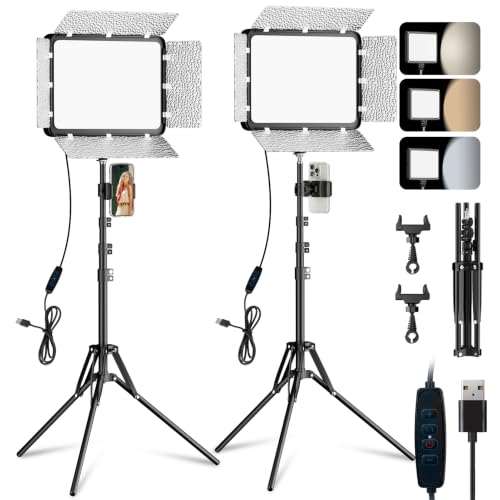

The best video light for most YouTube creators is the NiceVeedi 2-Pack LED Video Light Kit — a two-head, 2,800–6,500K dimmable set with tripod stands that covers a key light and a fill light in a single purchase and shifts between warm indoor and daylight looks without gels. It suits creators who film in one room, at a desk or against a wall, and who want to be lit properly within five minutes of unboxing. If you film on the move or in borrowed spaces, the ALTSON 60 LED portable selfie light is the smarter buy: it clips to a phone, runs on its own battery and disappears into a jacket pocket. If your room is dark, large, or your subject sits several metres from the camera, the Torjim 12-Inch 30W kit delivers the most usable output here. The comparison below runs every pick through the same six filters: brightness, colour accuracy, colour temperature control, power options, mounting flexibility and the room sizes each light can realistically cover.
Top 3 Picks
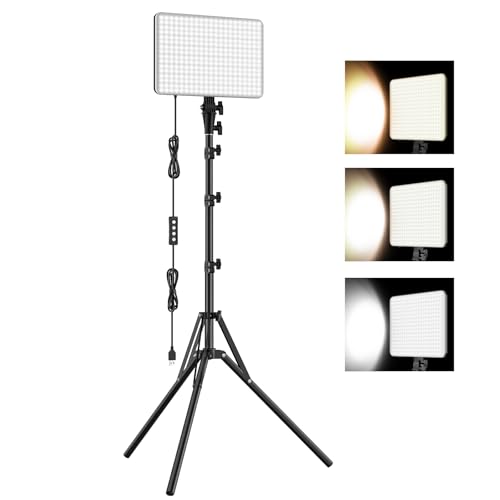
Best overall: NiceVeedi 2-Pack LED Video Light Kit
A matched pair of dimmable bi-colour panels with tripod stands, covering 2,800–6,500K so the same kit handles tungsten-lit living rooms and window-lit desks. Two heads mean a proper key-and-fill setup rather than a single flat light, which is the single biggest visible upgrade for a talking-head channel. It is the pick for anyone filming regularly in one fixed space who wants a repeatable look.
Best budget: ALTSON 60 LED Portable Selfie Light
A rechargeable clip-on light with a camera tripod adapter, which means it works as a phone light, a webcam light and an on-camera fill light. It will not light a room, but it fixes the specific problem most new creators have — a face that is two stops darker than the background. Best for vloggers, travellers and anyone who films in different rooms every week.
Best for high-output key lighting: Torjim 12-Inch 30W Video Light Kit
The most powerful panel in this roundup at 30W across a 12-inch face, which translates into usable output at distances where smaller panels fall off. Choose it if your filming room is large, has dark walls, or you want to light two people at once from a single key position. It suits creators moving from phone clips to a fixed studio corner with a camera on a tripod.
Quick Comparison
Every product below appears in the deep-dive sections that follow. Price tiers are deliberately broad — budget, mid-range and premium — because listed prices move constantly with promotions and bundle variants.
| Product | Best for | Key specs (as stated in the listing, plus class-typical detail) | Price tier |
|---|---|---|---|
| NiceVeedi 2-Pack LED Video Light Kit | Most creators filming in one room | 2 panel lights; 2,800–6,500K dimmable bi-colour; tripod stands; phone holder class mounting | Premium |
| Torjim 12-Inch Video Light Kit (30W) | High-output key light, large rooms | 12 in panel; 30W rated; kit with stand; diffusion class panel face | Premium |
| Anautin 1-Pack LED Video Lighting Kit | Solo creator in a small room | 15W; 1,700 lux rating; 2,500–8,500K dimmable; tripod stand | Mid-range |
| Canal Toys DIY Ring Light with Green Screen | Phone-first beginners wanting effects | Ring light with multicolour modes; pop-up green screen; phone mount tripod | Budget |
| EMART 2-Pack 15W LED Video Light Kit | Two-camera and interview setups | 2 × 15W (30W total); barndoors for spill control; phone holder | Mid-range |
| UBeesize 2-Pack LED Video Light Kit | Desk-based talking-head channels | 2 lights; tripod stands; phone holder; dimmable panel class | Premium |
| Torjim RGB Photography Video Lighting | Creative colour looks | RGB with 16 colour lighting modes; bi-colour white range class; adjustable tripod stand | Mid-range |
| ALTSON 60 LED Portable Selfie Light | Travel, vlogging, webcam fill | 60 LEDs; rechargeable; clip plus camera tripod adapter; multi-temperature modes class | Budget |
| UBeesize LED Video Light Kit (2 pcs) | First two-light setup on a budget | 2 dimmable continuous lights; adjustable tripod stands; portable panel class | Mid-range |
| ULANZI VL49 RGB Video Light | On-camera fill and accents | Pocket-size RGB panel; 3 cold shoe mounts plus 1/4 in screw; rechargeable battery class | Budget |
| Yeaki Vlogging Kit (71 in) | Smartphone vlogging all-in-one | 71 in selfie stick tripod; LED light; wireless remote; microphone | Budget |
| HUOMU Vlogging Kit for iPhone/Android | Premium phone creator bundle | Magnetic wireless microphone; LED light; tripod system; phone-mount class | Premium |
How We Chose
Selection started from the categories that actually solve creator lighting problems rather than from popularity: matched two-light kits for fixed studios, single high-output panels for key lighting, portable clip-on lights for run-and-gun work, RGB panels for creative looks, and bundle kits for creators who film entirely on a phone. Within those categories, each product was assessed against six published criteria — stated brightness or wattage, colour accuracy claims where the listing makes them, colour temperature range, power source, mounting hardware and the realistic room size the light can cover.
The next filter was upgrade path. A light that cannot be moved to a second position, dimmed smoothly, or attached to a stand with a standard 1/4-inch thread becomes a dead end, so products were ranked higher when their mounting and power choices matched what a creator would buy next. Category fit came next: a ring light with a green screen is excellent for one job and poor for another, so it is judged only against that job. Finally, brand consistency mattered — manufacturers that appear across several price tiers in this list, such as Torjim and UBeesize, were evaluated on the specific product named, not on reputation. Everything here is based on listing information and established facts about lighting equipment; no product was tested, measured or handled.
1. NiceVeedi 2-Pack LED Video Light Kit – Best for Most YouTube Creators
As an Amazon Associate we earn from qualifying purchases at no extra cost to you.

The NiceVeedi kit is the closest thing to a default answer in this roundup because it solves the problem that causes most amateur footage to look amateur: a single light source directly on axis, producing a flat face and a hard shadow on the wall behind. Two lights let you place one at roughly 45 degrees off the camera as a key and a second, dimmer light on the opposite side as fill, which drops shadow contrast without erasing it. The 2,800–6,500K range means you can match a warm desk lamp or an overcast window without colour-correcting in the edit.
Key specs
- Pack: two LED panel lights with tripod stands — the minimum for key plus fill
- Colour temperature: 2,800–6,500K, continuously adjustable, so one kit spans tungsten-warm to daylight-cool
- Dimming: dimmable output across the range, which is what lets you set a fill light to roughly half the key
- Brightness: panel class rather than a stated lumen figure — expect it to light a seated subject cleanly at roughly 0.5–1 m and to fall off noticeably beyond about 2 m
- Mounting: tripod stands included, plus the phone-holder mounting that is standard in this kit category
- Power: mains-powered class, with many kits in this format also accepting USB power banks — worth confirming on the listing for your variant
Strengths
The matched pair is the real value. Buying two identical lights at once means identical colour rendering and identical dimming behaviour, so the key and fill stay consistent when you adjust them; mismatched lights are a common reason footage looks slightly off even when exposure is correct. The Kelvin range is wide enough to be genuinely useful rather than a token setting, and the tripod stands remove the need to buy mounting hardware immediately. For a desk or small-room setup, the whole rig stores in a cupboard and sets up in a few minutes.
Pros
- Two matched lights cover key and fill in one purchase
- 2,800–6,500K covers warm interiors and daylight without gels
- Tripod stands included — no separate mounting spend
- Fast, repeatable setup for a fixed filming spot
- Adjustable dimming makes fill control easy
Cons
- Panel-class output, not a high-wattage key light — large or dark rooms will need more
- Included tripods are typically lightweight and wobble if knocked
- No barndoors or honeycomb, so spill on background walls needs managing
- No RGB colour modes if you want stylised looks
How it compares
The nearest alternative is the UBeesize 2-Pack LED Video Light Kit, which follows the same two-light philosophy. The difference is control: NiceVeedi’s stated 2,800–6,500K bi-colour range is the deciding feature, because it lets you fix colour in-camera rather than in post, while a basic dimmable two-light kit leaves white balance as an editing job. If you already know you shoot in one place and want the least fuss, the NiceVeedi is the pick. If you need more raw output, step up to the Torjim 12-inch 30W instead.
2. Torjim 12-Inch Video Light Kit – Best for High-Output Key Lighting

Wattage is not the same thing as brightness, but at a given panel size it is a reliable proxy for how far the light can throw usable output. The Torjim 12-inch kit is rated 30W across a 12-inch face, which puts it in a different class from the 15W panels in this list. That matters in one specific scenario: when the light cannot be close to the subject. If your camera is on a tripod two metres back and the light has to sit behind it, a 15W panel runs out of headroom, while a 30W panel still has dimming left in reserve.
Key specs
- Panel size: 12 inches — a large face relative to clip-on lights, which spreads the source and softens shadow edges
- Power rating: 30W, the highest stated figure in this roundup
- Kit form: supplied with a stand, so it is usable out of the box
- Brightness class: a diffused 30W panel of this size typically sits in the low-thousands lux class at close range and stays usable at 1–2 m, which is where 15W panels start to struggle
- Mounting: standard stand mounting with the 1/4-inch thread class used across the category
- Best room size: medium to large — roughly 12 × 14 ft and up, or any room where the subject sits more than 1.5 m from the light
Strengths
The larger face is the quiet advantage. A 12-inch diffused panel is a broader source than a pocket light, so the shadow transition under the nose and jaw is softer at the same distance — the effect most people try to buy with a softbox. Combined with the 30W rating, that makes this the most flexible single light here for a two-person setup, since one panel can serve as a shared key at a wider distance. It is also the natural upgrade for a creator whose current 15W kit is already running at full power with the dimmer wide open.
Pros
- Highest stated output in this roundup at 30W
- Large 12-inch face gives softer shadow edges
- Usable at greater subject distances than 15W panels
- Suitable for lighting two people from one position
- Clear upgrade path if you have outgrown a starter kit
Cons
- Premium tier — the most expensive approach if you only need a desk light
- Bigger and heavier to store and move than clip-on lights
- A single head means no matched fill light unless you buy a second
- Overkill for a small room where the light can sit 60 cm from your face
How it compares
Against the Anautin 15W single light, the Torjim roughly doubles the stated wattage and roughly doubles the panel face, which is why it wins the distance argument. Against the NiceVeedi two-pack, the trade-off reverses: the Torjim gives you more output from one position, while the NiceVeedi gives you two matched heads and a wider Kelvin range for the same premium tier. Choose the Torjim when light quantity is the constraint; choose the NiceVeedi when light placement is.
3. Anautin 1-Pack LED Video Lighting Kit – Best for Solo Creators in Small Rooms
The Anautin kit is built around one number that most listings in this category hide: 1,700 lux. Lux is a measure of illumination at a distance, and while the listing’s reference distance matters, a stated lux figure is more informative than an unqualified wattage claim because it describes what the light actually delivers rather than what it consumes. Pair that with the widest colour temperature range here — 2,500–8,500K — and you have a single light designed for creators who need one well-judged source rather than two average ones.
Key specs
- Power: 15W rated
- Brightness: 1,700 lux stated — a useful reference point, though the distance at which it is measured is worth checking
- Colour temperature: 2,500–8,500K dimmable, the broadest range in this roundup, extending past daylight into cooler, clinical looks
- Pack: single light with tripod stand
- Mounting: tripod stand included; standard thread class for swapping onto a taller stand later
- Best room size: small — roughly 8 × 10 ft, or a desk against a wall, where the light sits 0.5–1 m from the subject
Strengths
One light, correctly placed, beats two lights placed badly, and this kit makes that argument well. At a 45-degree angle and slightly above eye level, a 15W panel at close range produces a clean, directional look with a soft shadow falling away from the camera — the classic interview framing. The 8,500K upper limit is unusual and useful if you want a cool, tech-styled look or need to balance against cool-white office lighting. Because it is a single light, the setup is trivial: stand, angle, dim, shoot.
Pros
- Stated 1,700 lux gives a concrete brightness reference
- 2,500–8,500K range covers warm, neutral, daylight and cool looks
- Single-light simplicity — fastest setup of the mid-range options
- Lowest-cost way to get genuine colour temperature control
- Tripod stand included
Cons
- One light means hard shadows unless you bounce or add fill
- 15W limits usable distance — it is a close-range light
- No RGB modes for creative effects
- No barndoors for controlling background spill
How it compares
The direct comparison is with the EMART 2-Pack, which costs a similar mid-range amount but splits its 30W across two heads. Two 15W lights give you a key and fill; one 15W light gives you a key only, plus a wider Kelvin range. If your room is small and you can place the light close, Anautin’s single-source approach is cleaner and the colour control is better. If you film in a slightly larger space or want softer, flatter lighting for product shots, the EMART pair is more versatile.
4. Canal Toys DIY Ring Light with Green Screen – Best Budget Starter for Phone-First Creators

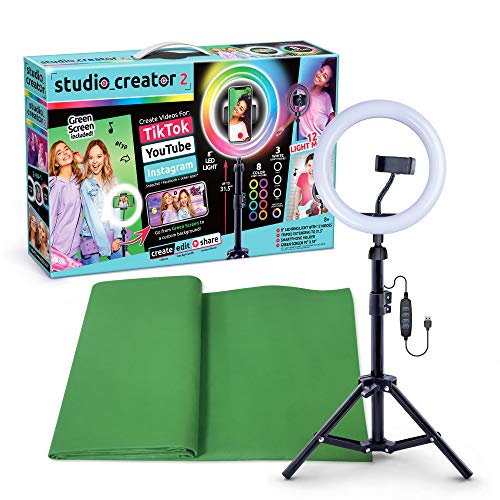
This is the only product in the list that is a system rather than a lamp: a multicoloured ring light, a green screen and a phone-mount tripod, sold together for a budget-tier price. That combination targets one specific creator — the phone-first beginner who wants to appear in front of a background they can replace. Judged as a lighting instrument it is limited; judged as a starter kit that removes three separate purchase decisions, it is unusually efficient.
Key specs
- Light type: ring light with multicolour modes — ring shape gives the even, shadowless look associated with beauty and talking-head content
- Included: green screen backdrop and phone mount tripod
- Colour temperature control: multicoloured modes rather than a calibrated Kelvin dial — treat colour as decorative, not as a white-balance tool
- Mounting: phone mount on the tripod, with the light positioned around the phone lens
- Power: USB-powered class, typically from a wall adapter or power bank
- Best room size: very small — a desk or a corner, with the subject roughly 0.5–1 m from the ring
Strengths
The green screen is the standout inclusion. Chroma keying is normally the most expensive part of a beginner setup, because a usable backdrop costs more than the light, and the pop-up format stores flat. Ring lighting also has a real optical benefit: because the source surrounds the lens, shadows fall behind the subject and the face is evenly lit, which flatters beginners who have not learned to control contrast. Adding the phone mount means the entire rig — light, camera position and background — is one object to move.
Pros
- Three essentials in one budget purchase: light, backdrop, phone mount
- Ring format produces even, near-shadowless face lighting
- Green screen enables background replacement without a studio
- Compact and storable; sets up on a desk
- Lowest barrier to entry for phone-first creators
Cons
- No true colour temperature control — multicolour modes are for effect, not accuracy
- Low output; will not compete with window light or a bright room
- Green screen is small and needs even lighting to key cleanly
- Ring catchlights in the eyes are distinctive and not to everyone’s taste
- Limited upgrade path — this is a starting point, not a foundation
How it compares
Against the ALTSON 60 LED portable light, the difference is intent. The ALTSON is a better lamp — more portable, battery-powered, usable as a webcam or on-camera fill — but it gives you no background solution. The Canal Toys kit is a weaker lamp attached to a complete beginner workflow. If you plan to film reactions, gaming content or anything with an on-screen background, the green screen wins the comparison outright. If you film in front of a real room, buy the ALTSON.
5. EMART 2-Pack 15W LED Video Light Kit – Best for Two-Camera and Interview Setups
Barndoors are the reason to look at this kit. They are hinged flaps that clip onto the front of a light and let you cut the beam so it hits the subject and not the wall behind them, and they are rare at this price. Combined with two 15W heads and a phone holder, the EMART pair is aimed at creators who shoot interviews, two-person conversations or multi-camera setups where controlling where the light lands is more important than raw output.
Key specs
- Pack: two 15W LED panels — 30W total across the kit
- Beam control: barndoors on each head, which is the differentiator versus other mid-range pairs
- Mounting: phone holder included alongside stand mounting
- Placement class: two heads support classic key-and-fill or a cross-lit interview look
- Brightness class: 15W per head is close-range output — plan on the lights sitting 0.5–1.5 m from the subject
- Best room size: small to medium, roughly 10 × 12 ft, where two lights can cover two people
Strengths
Two lights and barndoors together give you something a single bright panel cannot: directional control over both sides of a frame. Set one light as a key at 45 degrees and the second as a slightly dimmer fill on the opposite side, then use the barndoors to stop both from splashing onto the background wall — the single most common reason amateur footage looks like it was shot in a living room rather than a studio. The phone holder also makes it workable for a phone-based two-person podcast shot without extra hardware.
Pros
- Barndoors allow real spill control at a mid-range price
- Two matched 15W heads cover key and fill
- Suits interviews and two-person framing
- Phone holder included
- Noticeably better background separation than a bare panel
Cons
- 15W per head limits distance and large-room use
- Barndoors add bulk and can be knocked out of position
- No RGB or effects modes
- Colour temperature control depends on the variant — confirm the range on the listing
How it compares
Against the UBeesize two-light kit, the EMART’s advantage is beam shaping and the UBeesize’s advantage is generally build refinement and stand quality. If your background is close behind you — a wall within a metre — barndoors will change your footage more than any other feature at this price, making EMART the better choice. If you shoot against a distant background where spill matters less, save the complexity and take the simpler pair.
6. UBeesize 2-Pack LED Video Light Kit – Best for Desk-Based Talking-Head Channels

UBeesize appears three times in this roundup, which says something about how the brand covers the category: it sells the same idea at several levels of finish. This premium-tier two-pack is the most complete of those offerings — two lights, two tripod stands and a phone holder — and it is designed for the most common YouTube format of all: one person, seated, talking to a camera at desk height.
Key specs
- Pack: two LED lights with tripod stands
- Mounting: tripod stands plus a phone holder, so phone and camera shooting both work
- Control: dimmable panel class — smooth output adjustment for setting fill below key
- Placement class: stands are desk-to-standing height, which lets you put the key slightly above eye level
- Brightness class: mid-power panel output, best at 0.5–1.5 m from the subject
- Best room size: small to medium — a desk, a spare room or a corner where the lights can live set up
Strengths
The value here is the completeness of the kit and the fact that the stands are included and matched. Getting a key light above eye level is the single most flattering change you can make to a talking-head setup, and it requires a stand tall enough to clear your eyeline — something clip-on lights cannot do. Two lights then let you dial in fill so the shadow side of the face does not go black. For creators who film in the same chair every week, this is a set-and-forget rig: mark the floor positions, and every future shoot starts from a known good setup.
Pros
- Two lights plus two stands — a complete desk studio
- Stand height allows key lighting above eye level
- Phone holder supports both phone and camera workflows
- Dimmable for controlled key-to-fill ratio
- Repeatable, markable positions for consistent weekly output
Cons
- Premium tier pricing for a mid-power output class
- No barndoors, so wall spill needs managing with distance and angle
- No RGB effects
- Not portable in any practical sense — this is a fixed rig
How it compares
The choice between this and the cheaper UBeesize two-light kit is essentially about stands and refinement rather than about light. If both are dimmable panel pairs, the premium version buys better mounting and a more finished kit; the mid-range version buys the same core capability for less. Against the NiceVeedi two-pack, the deciding factor is colour temperature: NiceVeedi’s stated 2,800–6,500K control is the feature this kit does not advertise, and it is worth more than nicer stands if you shoot at different times of day.
7. Torjim RGB Photography Video Lighting – Best for Creative Colour Looks

White light is the default, but colour is a genre. RGB panels exist for creators who want a magenta rim behind the shoulder, a teal wash on a back wall, or a gaming-style two-tone look. The Torjim RGB light offers 16 colour lighting modes with an adjustable tripod stand, putting effect lighting in the mid-range rather than the specialist price bracket.
Key specs
- Colour: RGB with 16 colour lighting modes
- White light: bi-colour white range class alongside the RGB modes — the practical requirement for using one light for both normal and stylised shots
- Mounting: adjustable tripod stand included
- Control: dimmable across modes
- Placement class: best used as a background or accent light at 1–2 m, or as a close key for stylised shots
- Best room size: small to medium; RGB wash effects read best against a wall within 1.5 m
Strengths
Colour lighting is the cheapest way to make a plain room look designed, and it works because colour separates the subject from the background even when everything is in focus and the aperture is modest. A single RGB panel placed behind the subject and aimed at the wall creates a gradient that no amount of white light reproduces. Because this unit also covers white light, it can double as a normal key for straightforward videos, which means one purchase serves two content styles rather than one.
Pros
- 16 colour modes enable stylised backgrounds and rim lighting
- White-light capability means it is not a single-purpose light
- Adjustable tripod stand included
- Mid-range price for effect lighting that usually costs more
- Strong upgrade for creators whose white-light footage already looks correct
Cons
- Colour modes are not a substitute for accurate white light when colour accuracy is critical
- RGB panels generally trade some white-light output for colour capability
- Effect lighting adds setup time and can look dated if overdone
- Single head — no matched pair for a full key-and-fill look
How it compares
Against the ULANZI VL49 RGB, the difference is scale and mounting philosophy. The ULANZI is a pocket panel that mounts on a camera or a cold shoe; the Torjim RGB is a stand-mounted light that can wash a wall. If you want a colour accent behind you, the Torjim’s stand and larger face are the right tools. If you want a colour accent on the camera itself, or in a bag, the ULANZI is the better buy at a lower tier.
8. ALTSON 60 LED Portable Selfie Light – Best for Travel and Run-and-Gun

Portability is a genuine specification, not a compromise. The ALTSON light is a 60-LED rechargeable panel with a clip and a camera tripod adapter, which means it can attach to a phone, sit on a small tripod, or stand in for a webcam light during a video call. For creators who film in different rooms, at other people’s desks, or outdoors at dusk, this is the most useful object in the roundup.
Key specs
- LED count: 60 LEDs across the panel face
- Power: rechargeable internal battery — no cable, no wall socket required
- Mounting: clip plus camera tripod adapter, giving two mounting options in one accessory
- Colour temperature: multi-temperature modes class — typically a small set of presets rather than a continuous dial
- Runtime class: pocket panels of this type generally run for roughly 1–3 hours depending on brightness; dimming to half output is the standard way to extend a session
- Best room size: any size — it lights a face, not a room
Strengths
The clip is the feature that earns its place. Clipping the light to the top of a phone puts the source directly above the lens, which produces even, front-facing illumination with no shadow on the background — ideal for spontaneous filming where you have no time to position a stand. The tripod adapter converts it into a desk light for calls and streams. And because it charges over USB, it lives in a bag without needing to be packed with an adapter, which is exactly why it survives trips where a full kit gets left at home.
Pros
- Battery powered — usable anywhere without mains power
- Clips to a phone and mounts on a tripod
- Doubles as a webcam and video-conference light
- Smallest and lightest option here
- Budget tier — the cheapest useful upgrade for dark footage
Cons
- Lights one face at close range only; no room coverage
- Preset colour temperatures rather than continuous control
- Battery runtime limits long shoots — bring a power bank
- Clip mounting is inherently less stable than a stand
- Front-on placement gives flat lighting with little shape
How it compares
Against the ULANZI VL49 RGB, both are pocket lights, but they aim at different jobs: the ALTSON clips to a phone and prioritises a clean face light, while the ULANZI mounts on a camera and prioritises colour effects and multi-position mounting. If your problem is a dark face on a phone vlog, the ALTSON solves it. If your problem is flat, colourless footage from a camera, the ULANZI is the more interesting tool.
9. UBeesize LED Video Light Kit (2 pcs) – Best First Two-Light Setup

This is the entry point to proper two-light filming: two dimmable continuous lights with adjustable tripod stands, packaged as a portable kit. It is the setup most creators should buy before they buy anything more expensive, because it establishes the habit that matters — a key light and a fill light, positioned deliberately — rather than because it produces the brightest output.
Key specs
- Pack: two dimmable continuous LED lights
- Mounting: adjustable tripod stands included, so both lights can be raised to eye level or above
- Control: dimmable output on both heads for setting a key-to-fill ratio
- Portability: collapsible stands and light panels in the portable class
- Brightness class: close-range panels — plan on 0.5–1.5 m subject distance
- Best room size: small to medium; a desk, bedroom corner or small office
Strengths
Two adjustable stands change what is possible. Putting a light at 45 degrees and slightly above eye level gives the face shape and a natural shadow under the jaw; adding the second light at roughly half power on the opposite side lifts the shadow without removing it. That two-light pattern is the foundation of almost every interview look you have ever seen, and it is achievable here at a mid-range price. The adjustable stands also mean the kit grows with you: raise them, angle them, and the same lights serve a seated or standing shot.
Pros
- Two lights and two stands — the correct foundation for a channel
- Dimmable heads allow a proper key-to-fill ratio
- Adjustable stand height supports above-eye-level lighting
- Portable enough to move between rooms
- Mid-range price for a complete two-light pattern
Cons
- Limited colour temperature control compared with bi-colour kits
- Panel output is modest — not for large or dark rooms
- No barndoors or beam shaping
- Upgrade path tops out quickly if you later need more output
How it compares
Against the premium UBeesize two-pack, this version trades kit refinement for cost while keeping the essential capability — two dimmable lights on stands. If your budget is tight and your room is small, the mid-range kit is the sensible purchase and the premium version is not worth the stretch. Against the NiceVeedi pair, the difference again comes down to colour temperature control, which is the one feature worth paying extra for if you shoot at varying times of day.
10. ULANZI VL49 RGB Video Light – Best On-Camera Fill Light

The VL49 is the smallest light here and one of the most versatile, because of how it mounts: three cold shoe mounts and a 1/4-inch screw mean it can sit on top of a camera, on the side of a cage, or on a small tripod, and it can carry other accessories on top of itself. It is an RGB panel, so it is equally at home as a colour accent behind a subject as it is as a fill light on the camera.
Key specs
- Form factor: pocket-size RGB LED panel
- Mounting: three cold shoe mounts plus a 1/4-inch screw — the most flexible mounting arrangement in this roundup
- Colour: full RGB colour mixing plus white light, with dimming
- Power: built-in rechargeable battery class, charged over USB
- Runtime class: pocket panels of this type typically manage one to a few hours depending on brightness and colour mix
- Best room size: not room lighting — this is a face light, an accent light or a background colour pop
Strengths
Stackability is the quiet advantage. Because the panel has cold shoes on multiple faces, you can mount it on a camera and still attach a microphone or a second light to it, which keeps a rig compact. As a colour light it is genuinely useful: placed low and behind a subject and aimed at the wall, it creates a coloured gradient that separates the person from the background. And its size means it is always in the bag, which is the only property that matters for a light you did not plan to use.
Pros
- Three cold shoe mounts plus 1/4-inch screw — exceptional mounting flexibility
- RGB colour plus white light in a pocket-sized body
- Rechargeable and USB charged
- Works as camera fill, accent or background colour
- Budget tier for a feature-dense light
Cons
- Very low output — cannot serve as a key light for a room
- Small face produces relatively hard shadows when used alone
- Battery runtime is the limiting factor on longer shoots
- Needs a stand or clamp accessory to be used off-camera
How it compares
Against the ALTSON portable light, the VL49 gives up the phone clip and some raw face-lighting punch in exchange for colour control and camera mounting. Against the Torjim RGB stand light, it is smaller and cheaper but cannot wash a wall from across a room. Think of it as the accessory light that makes a two-light setup into a three-light setup — the colour accent that turns correct footage into designed footage.
11. Yeaki Vlogging Kit (71 in) – Best All-in-One Kit for Smartphone Vlogging
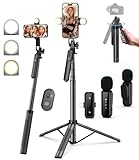
Some creators do not want a lighting rig; they want one purchase that makes phone video work. The Yeaki kit bundles a 71-inch selfie stick tripod, an LED light, a wireless remote and a microphone. The 71-inch height is the notable number: it is tall enough to stand on the floor and hold a phone at eye level or above, which is the difference between a flattering angle and a chin-level shot.
Key specs
- Tripod: 71-inch selfie stick tripod, tall enough for standing shots at eye level
- Lighting: LED light included for close-range face illumination
- Audio: microphone included, addressing the weak point of phone recording
- Control: wireless remote for starting and stopping recording without touching the phone
- Compatibility: iPhone and Android phone mounting class
- Best room size: any — it is a personal kit rather than room lighting
Strengths
The bundling is genuinely smart, because it solves the three problems that ruin beginner phone video at once: bad angle (fixed by the tall tripod), bad light (fixed by the LED) and bad audio (fixed by the microphone). The wireless remote matters more than it sounds — recording without touching the phone removes the shake and the arm movement at the start of every take. For creators who film alone, that is worth more than any single component in the kit.
Pros
- 71-inch tripod enables standing, eye-level framing
- Light, microphone and remote included in one purchase
- Addresses angle, light and audio together
- Budget tier — cheaper than buying the parts separately
- Works with both iPhone and Android
Cons
- Included light is a face light, not a room light
- Bundled microphones are usually the weakest component in kits of this type
- Selfie-stick tripods are less stable than dedicated video tripods
- Limited upgrade path — components are not designed to be expanded
How it compares
Against the HUOMU vlogging kit, this is the value option: same all-in-one philosophy, lower tier, simpler audio. If you want the best possible phone audio and are willing to pay premium tier for a magnetic wireless microphone, the HUOMU kit is the stronger system. If you want to start filming this weekend with one box and one purchase, the Yeaki kit is the pragmatic choice.
12. HUOMU Vlogging Kit for iPhone/Android – Best Premium Starter Bundle for Phone Creators

This kit takes the same all-in-one idea as the Yeaki bundle and moves it upmarket, with the headline feature being a magnetic wireless microphone. Audio is where phone video fails most often, and a wireless microphone that attaches magnetically to a collar or lapel removes the cable problem that makes most cheap clip-on mics awkward. Add an LED light and a tripod system and you have a complete phone studio in one box.
Key specs
- Audio: magnetic wireless microphone — attaches without a cable run to the phone
- Lighting: LED video light included for close-range face illumination
- Support: tripod system for stable phone framing
- Compatibility: iPhone and Android
- Target use: TikTok, YouTube and video recording starter setups
- Best room size: any — a personal kit rather than room lighting
Strengths
The magnetic microphone is the reason to choose this over cheaper bundles. Wireless audio removes the rustle and cable noise that plague wired lavaliers, and the magnetic mount means you can reposition the mic in seconds between takes rather than re-clipping it inside a shirt. For creators filming outdoors or moving around a room, that reliability is the difference between usable and unusable audio. Pairing that with an included light means the two most common quality failures in phone video — bad sound and dark footage — are addressed by one purchase.
Pros
- Magnetic wireless microphone removes cable noise and clutter
- LED light included for close-range illumination
- Tripod system provides stable framing
- Complete kit for creators starting a phone-first channel
- Works with both major phone platforms
Cons
- Premium tier — the most expensive way to buy a phone starter kit
- Included light remains a face light, not a room light
- Bundle components cannot easily be upgraded individually
- Overkill if you already own a microphone or a tripod
How it compares
Against the Yeaki kit, the comparison is straightforward: HUOMU wins on audio and on the convenience of a magnetic wireless mic, while Yeaki wins on price and on the 71-inch tripod height. Against the ALTSON portable light, the two are complementary rather than competing — the HUOMU kit handles sound and support, the ALTSON handles light that travels. If your channel is phone-first and audio quality is holding you back, the premium bundle is the better single purchase.
How to Choose
Lighting purchases go wrong in predictable ways, and almost all of them come from buying on brightness alone. Six variables decide whether a light will actually improve your footage.
1. Brightness: think in lux and distance, not watts
Watts describe power consumption; lux describes illumination at a distance; lumens describe total output. A 15W panel and a 30W panel of the same design differ by roughly a factor of two in output, but the more important number is how far the light sits from your face, because light falls off with the square of distance. Doubling the distance from 0.5 m to 1 m cuts illumination to a quarter. Moving from 1 m to 1.4 m halves it. This is why a 15W panel placed 60 cm away can look brighter than a 30W panel placed 2 m away.
Practical guidance: for a seated talking-head shot with the light 0.5–1 m away, a 15W panel with a stated figure in the region of 1,700 lux is comfortably enough. For a standing shot with the light 2 m away, or for lighting two people, you want the 30W class. If you cannot move the light closer because it would enter the frame, buy output rather than buying a second cheap light.
2. Colour accuracy: look for a CRI or TLCI figure
Colour rendering index (CRI) measures how faithfully a light reproduces colours compared with daylight, on a scale where 100 is perfect. Panels aimed at video work generally claim CRI 95 or above; the difference between CRI 90 and CRI 96 shows up in skin tones and in saturated fabrics like red and deep blue, which can shift hue under low-CRI light. TLCI is the television equivalent and is the better number if a listing quotes it. If neither is stated, treat colour accuracy as unknown and expect to correct skin tones in the edit.
3. Colour temperature control: match the room, then match the look
Two numbers matter: the range and whether it is continuous. The most useful single setting for indoor filming is around 4,300–4,800K, which sits between warm household lighting (roughly 2,700–3,200K) and daylight (5,600K). A bi-colour light that spans 2,800–6,500K covers almost every indoor situation; a wider range like 2,500–8,500K adds cooler, more clinical looks at the top end. RGB modes are a separate feature — they are for creative colour accents and background washes, not for accurate white light, and RGB panels often give up some white-light output to provide colour.
4. Power options: mains, USB or battery
Mains power gives unlimited runtime and full output but ties you to a socket. USB power lets you run from a power bank, which is the most flexible option for a fixed setup in a room without convenient sockets. Battery power is for portability, and it comes with a runtime calculation you should do before buying.
Worked runtime example: a pocket panel with