Key takeaways
- Cold showers: a gentler way to try cold exposure with no equipment.
- Chest-freezer conversions: a popular DIY route, but they involve electrical safety, hygiene and warranty issues, so check the freezer maker’s guidance and use a professional for any wiring changes.
- Public or gym cold plunges: trial the experience before buying.
- Stock tank plus ice: the cheapest entry, with ice running costs.
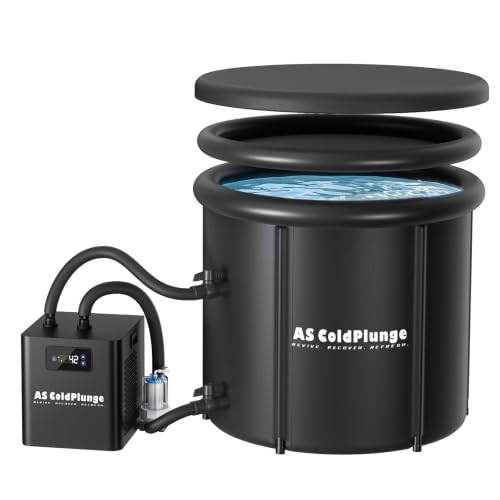
For most home users who already own a tub, a dedicated cold-therapy chiller such as the Penguin 3/4 HP unit is the most frequently recommended starting point, a plunge-specific all-in-one tub with a built-in chiller suits people who want a single appliance, and an insulated barrel with added ice suits those who want to try cold exposure cheaply before committing. Which option fits depends on your tub size, how often you plunge, your target temperature, power supply and budget tier.
Our top picks



As an Amazon Associate we earn from qualifying purchases at no extra cost to you.
Health Note First
Cold water immersion places stress on the heart and circulation and can cause cold shock, breathing changes and loss of coordination. People with heart or blood-pressure conditions, Raynaud’s, nerve problems, pregnancy, or other medical issues should speak to a doctor before starting. Never plunge alone if you are new, never plunge after alcohol, and exit if you feel dizzy, numb or unwell. Makers generally recommend short sessions at moderate temperatures first. Nothing here is medical advice, and benefit claims should be treated with caution.
Chillers and Options at a Glance
| Option | Best for | Key stated specs (per reviewers or makers) | Limits |
|---|---|---|---|
| Penguin Cold Therapy Chiller (3/4 HP) | Chilling a tub you already own; frequent plunging | Plunge Junkies lists it as reaching about 40 degrees Fahrenheit; The Home Plunge lists a 37 degree Fahrenheit rating for the Penguin chiller line | Bulkhead fittings go through the tub wall (reviewers say 1/4 inch or thinner); the maker warns against use with an ozone venturi; mid-to-premium tier |
| Penguin 1/2 HP HE chiller | DIY builds and smaller tubs | Reviewers list about 40 degrees Fahrenheit; no built-in pump | Needs an external pump and plumbing know-how |
| Ice Barrel Chiller | Ice Barrel owners wanting Wi-Fi control | Reviewers list 37 degrees Fahrenheit and Wi-Fi control | Premium tier; prices differ between sources |
| The Pod Chiller (Cold Pod) | Cold Pod and inflatable barrel owners on a budget | Reviewers list about 41 degrees Fahrenheit and a smart app; the maker says it works with its own barrel | Slightly warmer floor temperature; inflatable barrels have limits on volume |
| Edge Tub Pro | A built-in chiller and ozone filtration in one unit | One reviewer rates it as mid-tier value among all-in-one tubs | All-in-one means less flexibility; costlier than a chiller alone |
| Ice Barrel (no chiller) | Users who add ice and want a simple setup | Insulated barrel, made in the USA, with a lifetime barrel warranty per reviewer reports | Ice cost can add up if you plunge several times a week, according to one reviewer |
Many comparison sites are run by retailers or by brands that sell competing products, so chiller temperatures and prices should be confirmed with the maker.
Key Buying Factors
Cooling power and water volume
Chillers are rated in horsepower (such as 1/4, 1/2 or 3/4 HP) and sized to a particular water volume. A larger tub, a hot climate or warm tap water needs more cooling power. Makers publish how fast a chiller can lower temperature; a small unit on a large tub may take many hours.
Target temperature
Typical consumer chillers aim for roughly 37 to 41 degrees Fahrenheit at the lower end, but many users plunge at warmer settings. Check the stated minimum temperature and the ambient temperature range for the unit.
Filtration and sanitation
Chillers keep water cold but do not always clean it. Many setups add a filter, a UV system or ozone. The Penguin maker warns against using the chiller with an ozone venturi, so check compatibility between components before buying. Follow the water-treatment guidance in each maker’s manual, and change the water on the schedule they advise.
Power and electrical safety
Chillers draw significant power, and outdoor wet environments raise the risk of electric shock. Use a dedicated GFCI-protected circuit or the outlet type the maker specifies, avoid extension cords unless the manual allows them, and consult a licensed electrician for installation. Never modify the unit’s safety features.
Plumbing compatibility
Tub-wall fittings, hose sizes, bulkheads and flow rates all differ. Confirm the tub material and wall thickness before drilling. Some inflatable or rotomoulded tubs are not designed for through-wall fittings, so ask the maker or the tub’s manufacturer.
Noise and placement
Compressors and pumps make noise, so placement away from bedrooms and neighbours is sensible. Keep the chiller ventilated, level and sheltered from rain and direct sun as the manual directs.
Smart control and lids
Wi-Fi apps help schedule cooling so the tub is ready when you are. A tight insulated lid reduces the cooling load and keeps debris out, and is often as important as the chiller itself.
Cost of Ownership
A chiller costs more upfront than a barrel and ice, but ice costs recur. One reviewer estimates that for three to five sessions per week, ice becomes a meaningful monthly expense and can exceed the chiller route over two to three years. Add filters, water treatment, electricity and lid replacements to the total. If you plunge only occasionally, ice may remain the cheaper route.
Budget Tiers
Budget tier: An inflatable insulated barrel such as the Cold Pod with ice, or a basic chest freezer conversion (with electrical safety caution). Mid-range tier: A smaller dedicated chiller or matched pod chiller, plus a filter. Premium tier: A full cold-therapy chiller with a filtration system, a purpose-built tub and app control, or an all-in-one tub.
Pick X If You Want Y
| Pick this | If you need |
|---|---|
| Penguin 3/4 HP chiller | Reliable cooling for a tub you already own |
| Penguin 1/2 HP HE | A DIY chiller for a smaller tub and a lower budget |
| Pod Chiller with Cold Pod | An entry-level chilled setup with app control |
| Ice Barrel Chiller | Wi-Fi control with an Ice Barrel |
| Edge Tub Pro or similar all-in-one | One appliance with a built-in chiller and filtration |
| Ice Barrel with ice | A low-tech start with no electrics near the tub |
Alternatives
- Cold showers: a gentler way to try cold exposure with no equipment.
- Chest-freezer conversions: a popular DIY route, but they involve electrical safety, hygiene and warranty issues, so check the freezer maker’s guidance and use a professional for any wiring changes.
- Public or gym cold plunges: trial the experience before buying.
- Stock tank plus ice: the cheapest entry, with ice running costs.
Setup and Maintenance Checklist
Before the first plunge, confirm that the tub is level, the chiller sits on a stable, ventilated surface, and hoses are clamped and free of kinks. Run the system briefly and check for leaks before filling completely. Use a cover whenever the tub is not in use to keep out debris and reduce cooling load. Clean filters on the schedule given in the manual, and drain and refill the water at the interval the maker suggests, or sooner if it looks cloudy or smells.
In winter, follow the maker’s guidance on freeze protection and storage, since water left in pumps and lines can crack components. Keep the area around the chiller dry and free from leaves, and have a non-slip mat at the tub entry. Keep towels, a warm layer and a timer within reach, and let someone know you are plunging. Warranty terms can depend on correct installation and water treatment, so keep the manual and receipts.
Frequently Asked Questions
What size chiller do I need for a home ice bath?
It depends on the water volume, the starting water temperature and your target. Makers publish recommended gallon ranges for each horsepower rating, so match them to your tub. When in doubt, choose the larger unit, especially in a hot climate.
Is a chiller better than ice?
A chiller gives consistent temperature and no ice runs, but costs more upfront and needs electricity and maintenance. Ice is cheap to start and simple, yet ongoing cost and inconsistent temperature can be drawbacks for frequent users. The better option depends on how often you plunge.
What temperature should a cold plunge be?
Many people choose a range from the 40s to the 50s Fahrenheit, with colder settings used by experienced plungers. Start warmer and shorter, and increase gradually. Ask a doctor if you have any health concerns, and stop if you feel unwell.
Do I need a filter or sanitiser?
Standing water grows bacteria, so most owners add filtration, sanitising or regular water changes. Follow the maker’s guidance on which system is compatible, because some chillers advise against certain ozone setups. Clean the tub and replace water on the schedule recommended.
Can I plug a chiller into a regular outlet?
Maker instructions differ. Many require a dedicated GFCI-protected circuit, and outdoor installations have extra rules. Ask a licensed electrician to confirm the supply and the installation, and never use damaged cords or bypass the safety devices.
Can I add a chiller to any tub?
Not always. The tub material, wall thickness and fittings must suit the chiller kit. One reviewer notes that the Penguin kit’s bulkhead fittings require tub walls of about 1/4 inch or thinner. Check compatibility with both the chiller maker and the tub maker.
More from Amazon
Programs that pair well with the guide above. Offers and eligibility are set by Amazon and may change.
Set up recurring deliveries of everyday items on eligible products. Terms and savings are set by Amazon.
Explore Subscribe & SaveCollect the home and kitchen items you want in one registry that guests can shop from.
Create a wedding registryFree shipping on eligible items, Prime Video and more. Eligible new members can start with a free trial.
Start a Prime free trialAudiobooks and podcasts to listen to on the go. Eligible new members can start with a free trial.
Try Audible freeAs an Amazon Associate we earn from qualifying purchases.