Key takeaways
- De’Longhi Dedica: Narrow and easy to fit under cabinets. Reviewers note a basic manual wand and less temperature stability.
- De’Longhi Magnifica Evo: A bean-to-cup machine for push-button convenience.
- Budget 20-bar machines (for example AMZCHEF): Lowest tier, but pressure figures on the box are not a quality guarantee, and results vary.
For most beginners the Breville Bambino Plus is the easiest real espresso machine to start with because it heats fast and handles milk automatically, the Gaggia Classic Pro is the better choice if you want to learn traditional technique and enjoy upgrading, and the Breville Barista Express suits anyone who wants a built-in grinder in the same box. Whichever machine you choose, reviewers and home-barista communities agree on one point: the grinder matters at least as much as the machine, so budget for a good one if the espresso maker does not include it.
Our top picks

As an Amazon Associate we earn from qualifying purchases at no extra cost to you.
What beginners should look for
Semi-automatic versus super-automatic
Semi-automatic machines use a portafilter that you fill, tamp and lock in yourself, giving you control but demanding practice. Super-automatic machines, such as the De’Longhi Magnifica Evo, grind, tamp and brew at the push of a button. They remove technique from the equation, which suits people who value convenience, but they offer less control over the cup.
Heating and temperature stability
Breville states that the Bambino heats in about three seconds using its ThermoJet system, which means no long wait in the morning. The Gaggia Classic Pro has no PID temperature controller, so reviewers describe a need to “temperature surf” and allow 15 to 20 minutes of warm-up for the machine to stabilize. Neither is a flaw; they are different learning paths.
Milk steaming
Milk is where many beginners get frustrated. The Bambino Plus has automatic milk texturing in addition to a manual wand, while the Gaggia has a commercial-style manual steam wand that rewards practice. If you mostly drink americanos or straight shots, steaming matters less.
Portafilter size and accessories
The Bambino uses a 54 mm portafilter, while the Gaggia Classic Pro uses a commercial-style 58 mm one, which opens more aftermarket baskets, tampers and tools. A bigger accessory ecosystem helps if you plan to tinker.
At a glance: beginner espresso machines compared
| Model | Tier | Best for | Key stated features | Limits |
|---|---|---|---|---|
| Breville Bambino Plus | Mid-range | Beginners who want milk drinks fast | About 3-second heat-up per the maker, 54 mm portafilter, automatic milk texturing | No built-in grinder; fewer upgrade options |
| Breville Bambino (base) | Entry | Compact, lower-tier budget | Same compact size, skips the automatic frother per reviewers | Manual steaming only; no grinder |
| Gaggia Classic Pro (E24) | Mid-range | Learners who like to tinker | Italian-made steel housing, 58 mm portafilter, manual steam wand | No PID; longer warm-up; no grinder; steeper learning curve |
| Breville Barista Express | Mid to upper | All-in-one with grinder | Built-in conical burr grinder, 54 mm portafilter, thermocoil heating | Larger footprint; grinder is a compromise at this level |
| De’Longhi Dedica | Entry | Small kitchens | Narrow body, manual steam wand | No grinder; less stable temperatures per some reviewers |
| De’Longhi Magnifica Evo | Mid-range | People who want push-button simplicity | Built-in grinder, automated brewing | Less control and less true espresso character than semi-automatics |
Breville Bambino Plus: the easy on-ramp
Most 2026 beginner guides name the Bambino Plus as the usual top pick. It is compact, heats quickly, and uses a standard 54 mm portafilter so you still learn dosing and tamping. The automatic milk texturing removes a skill barrier that often discourages new owners. The compromise is that it has no grinder, and its plastic-forward build and smaller accessory ecosystem make it less appealing to people who want to modify their machine over time. The base Bambino skips the automatic frother and sits at a lower tier.
Gaggia Classic Pro: the learner’s workhorse
The Classic Pro is a manual machine with a steel housing, made in Italy according to the maker. It has a commercial-style 58 mm portafilter and a commercial-style steam wand, and community support is deep, with many available upgrades such as PID kits and pressure adjustments. Beginners must accept a longer warm-up and the need to manage temperature by timing shots after flushing water. If you enjoy the process, the Gaggia teaches more than the Bambino; if you want a quick latte before work, it will feel slower.
Breville Barista Express: machine and grinder in one
The Barista Express integrates a conical burr grinder with a semi-automatic machine, so you can go from beans to a shot without buying separate gear. Roundups describe it as a safe, forgiving recommendation with strong community support. Guides disagree on its number of grind settings, so confirm with the maker. The trade-off is counter space, and the integrated grinder is generally a step behind what a separate dedicated grinder at the same budget can offer.
Compact and simplified alternatives
- De’Longhi Dedica: Narrow and easy to fit under cabinets. Reviewers note a basic manual wand and less temperature stability.
- De’Longhi Magnifica Evo: A bean-to-cup machine for push-button convenience.
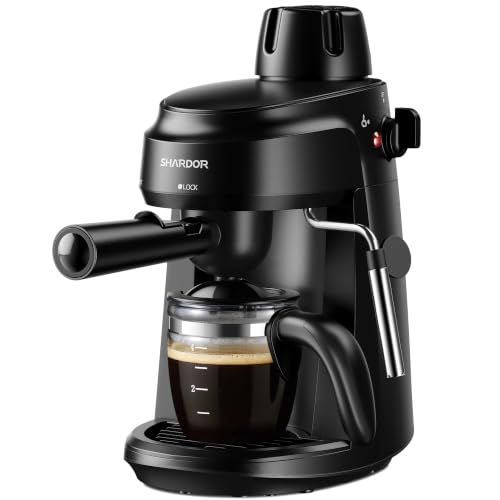
- Budget 20-bar machines (for example AMZCHEF): Lowest tier, but pressure figures on the box are not a quality guarantee, and results vary.
Budget for a grinder
If you pick a machine without a grinder, such as the Bambino or the Gaggia, plan to buy a burr grinder with fine adjustment. Blade grinders produce uneven particles, which makes dialing in difficult. Community advice repeated across guides is to prioritize the grinder over upgrading the machine. Also consider a scale, a tamper that fits your basket, a knock box and a milk pitcher.
Care and safety notes
- Descale on the schedule the maker lists, using a descaler approved for your model.
- Backflush or clean the group head as the manual directs.
- Steam wands and portafilters get very hot; purge steam carefully and keep hands clear.
- Use filtered or suitable water as the maker advises; hard water speeds scale buildup.
- Follow the manual for electrical use and plug directly into a grounded outlet.
Pick X if…
| If you… | Pick | Why |
|---|---|---|
| Mostly drink lattes and want less fuss | Breville Bambino Plus | Fast heat-up and automatic milk |
| Want to learn technique and upgrade over time | Gaggia Classic Pro | 58 mm ecosystem and modification options |
| Want one box with a grinder | Breville Barista Express | Built-in grinder |
| Have limited counter space | De’Longhi Dedica | Narrow body |
| Want zero technique | De’Longhi Magnifica Evo | Automated |
A realistic first-month plan
Beginners get better results by changing one variable at a time. Start with fresh beans roasted within the last few weeks, weigh the dose in grams, and aim for a consistent ratio of ground coffee in to liquid espresso out. Many home-barista guides suggest starting near one part coffee to two parts liquid and adjusting the grind finer if the shot runs fast and sour, or coarser if it runs slow and bitter. Write down the dose, grind setting and time for each shot so that you can repeat the good ones.
Expect the first dozen shots to be inconsistent regardless of machine. Using a machine with pressurized baskets, which some makers include for beginners, forgives grind errors but limits the ceiling of quality. When you are comfortable, switch to non-pressurized baskets and a better grinder. Keep the water tank filled with suitable water, purge the steam wand after every use and wipe it with a damp cloth to prevent dried milk from clogging the tip.
Counter space and kitchen fit
Measure width, depth and the height needed to lift the water tank and portafilter. The Bambino and Dedica are narrow, the Gaggia is deeper, and the Barista Express needs the most room because of its hopper and tank. Leave space for a grinder, a knock box and a drip tray cleanup area.
Frequently Asked Questions
Do I need a separate grinder as a beginner?
If your machine has no built-in grinder, yes. Fresh, evenly ground beans make a larger difference to taste than almost any other change. A burr grinder with fine adjustment is the usual advice.
Is the Bambino Plus or Gaggia Classic Pro better for a first machine?
The Bambino Plus is easier and faster, especially for milk drinks. The Gaggia teaches more traditional skills but asks for patience. Choose based on whether you want convenience or a hobby.
What does PID mean and do I need it?
PID is a temperature controller that keeps water at a steady set point. The Gaggia Classic Pro does not include one, so users manage temperature manually or add a kit. Beginners can succeed without it, but PID makes shots more repeatable.
Why does the pressure number on the box not matter much?
Machines often advertise 15 or 20 bar pump pressure, but espresso extraction is generally discussed around nine bar at the puck. A higher label is not a measure of quality.
How often should I descale?
It depends on your water hardness and the maker’s guidance. Follow the manual and use the recommended descaler to avoid damaging internal parts.
Can I use pre-ground coffee?
You can, but it is usually harder to get consistent shots, especially with pressurized baskets removed. Freshly ground beans from a burr grinder give more control.
More from Amazon
Programs that pair well with the guide above. Offers and eligibility are set by Amazon and may change.
Set up recurring deliveries of everyday items on eligible products. Terms and savings are set by Amazon.
Explore Subscribe & SaveCollect the home and kitchen items you want in one registry that guests can shop from.
Create a wedding registryFree shipping on eligible items, Prime Video and more. Eligible new members can start with a free trial.
Start a Prime free trialAudiobooks and podcasts to listen to on the go. Eligible new members can start with a free trial.
Try Audible freeAs an Amazon Associate we earn from qualifying purchases.