Key takeaways
- Tracking speed (IPS). Higher IPS keeps tracking during fast swipes. Current flagships list 750 to 930 IPS, well beyond what most hands produce.
- Acceleration tolerance (G). Another ceiling. Values like 70G to 90G are comfortably high.
- Polling rate. 1,000 Hz is standard; 4,000 and 8,000 Hz modes reduce input delay on supporting systems but increase CPU load and battery drain and sometimes need a separate dongle.
- Weight and shape. Often the deciding factor in comfort and aim.
- Software. Check that onboard profiles work if you travel or play on several PCs.
- Lift-off distance. Adjustable lift-off helps reduce stray cursor movement when repositioning.
If you want the highest stated DPI ceiling, the Logitech G PRO X Superlight 2 and Superstrike (HERO 2, up to 44,000 DPI) and the Razer Viper V4 Pro (reported at 50,000 DPI) lead the field, but the practical advice is to choose a mouse on shape, weight and sensor quality, because most players use only a few hundred to about 1,600 DPI.
Our top picks


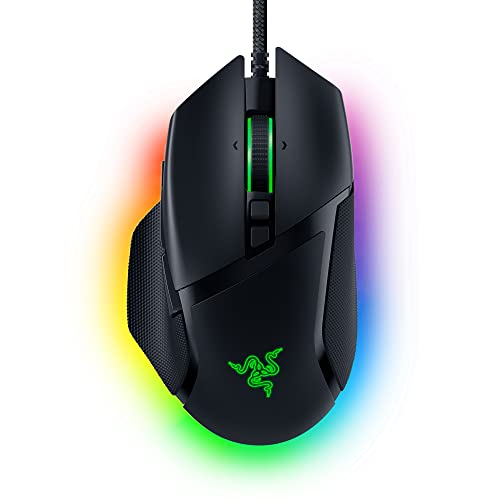
As an Amazon Associate we earn from qualifying purchases at no extra cost to you.
What a high DPI rating means
DPI, or counts per inch, describes how many movement counts the sensor reports for each inch you move the mouse. A higher setting makes the cursor travel farther for the same hand movement. Modern sensors can be configured up to tens of thousands of DPI, but the number is a ceiling, not a quality score. A sensor that reaches 30,000 DPI can still track poorly if the firmware is weak, and a 12,000 DPI sensor can be perfectly accurate at the settings people really use.
Review sites that discuss 2026 mice repeat the same point: competitive players commonly run roughly 400 to 1,600 DPI, and high ceilings mostly help on very large or high-resolution displays, or for people who prefer very small hand movements. Other specs matter more for day-to-day feel: maximum tracking speed in inches per second, acceleration tolerance, polling rate, lift-off distance and consistency.
At a glance
| Model | Best for | Key stated specs | Limits |
|---|---|---|---|
| Logitech G PRO X Superlight 2 | All-round competitive play | Maker lists 60 g, HERO 2 sensor up to 44,000 DPI, over 888 IPS, up to 8 kHz polling | Premium tier |
| Logitech G Pro X2 Superstrike | Players who want tunable switches | Roundups cite the same 44,000 DPI HERO 2 sensor, magnetic analog switches and 8 kHz polling | Premium tier, new click system |
| Razer Viper V4 Pro | Lightest high-spec wireless | Roundups report 49 g and a 50,000 DPI Focus Pro sensor with 930 IPS | Premium tier; figures come from reviewers |
| Razer DeathAdder V4 Pro | Ergonomic and high spec | Roundups report a 45,000 DPI sensor and 900 IPS | Right-handed ergonomic only |
| Razer Viper V3 Pro | Claw and fingertip grips | Maker lists 54 g, 35,000 DPI, 750 IPS, 8,000 Hz with the HyperPolling dongle, up to 95 hours | Premium tier |
| ASUS ROG Harpe Ace / Corsair Sabre V2 Pro | Mid-to-premium alternatives | Roundups cite up to 36,000 and 33,000 DPI respectively, with tri-mode connectivity on the Corsair | Shape and weight differ; check fit |
| Endgame Gear OP1 8K | Wired competitive | Roundups cite a PixArt 3950 sensor rated at 30,000 DPI and 8 kHz polling | Wired only |
The top of the DPI range
Logitech G PRO X Superlight 2 and Superstrike
Logitech’s own specification lists the Superlight 2 with the HERO 2 sensor at up to 44,000 DPI and over 888 IPS tracking, 60 grams, polling up to 8 kHz over Lightspeed and hybrid switches rated for 70 million clicks. One review table lists a different DPI figure, but the maker and most other roundups agree on 44,000. The Superstrike keeps the same sensor class but swaps in magnetic analog switches that allow adjustable actuation and what reviewers call rapid-trigger behavior.
Razer Viper V4 Pro and DeathAdder V4 Pro
Roundups put the Viper V4 Pro at about 49 grams with a Focus Pro 50K Gen-3 sensor, and the DeathAdder V4 Pro at a 45,000 DPI sensor with 900 IPS. These are the figures to compare if you want the highest-listed numbers in the Razer lineup. They come from review sites rather than the maker pages, so treat them as reported.
The sweet spot: roughly 30,000 to 36,000 DPI
Several excellent mice sit just below the headline numbers. The Razer Viper V3 Pro lists a 35,000 DPI Focus Pro Gen-2 sensor with 99.8 percent resolution accuracy, 750 IPS and 70G acceleration, at 54 grams and up to 95 hours of battery. The Razer DeathAdder V3 Pro lists a 30,000 DPI sensor at 64 grams with up to 90 hours. Reviewers also name the ASUS ROG Harpe Ace (up to 36,000 DPI), the Corsair Sabre V2 Pro (up to 33,000 DPI) and the wired Endgame Gear OP1 8K (30,000 DPI, 8 kHz).
In practice there is little to separate these from the 44,000 DPI class unless you specifically need the headroom. The shape and weight differences between these models are much larger than any real-world sensor difference.
Features that matter more than the DPI ceiling
- Tracking speed (IPS). Higher IPS keeps tracking during fast swipes. Current flagships list 750 to 930 IPS, well beyond what most hands produce.
- Acceleration tolerance (G). Another ceiling. Values like 70G to 90G are comfortably high.
- Polling rate. 1,000 Hz is standard; 4,000 and 8,000 Hz modes reduce input delay on supporting systems but increase CPU load and battery drain and sometimes need a separate dongle.
- Weight and shape. Often the deciding factor in comfort and aim.
- Software. Check that onboard profiles work if you travel or play on several PCs.
- Lift-off distance. Adjustable lift-off helps reduce stray cursor movement when repositioning.
How to choose a DPI setting
Start in the 800 to 1,600 range and adjust in game with your sensitivity slider. If you play on a 1440p or 4K display with a small mouse pad, higher DPI may feel smoother for desktop movement. Keep the mouse sensitivity at a level where the hand can aim without strain, and change one setting at a time so you can tell which change helped.
Pick X if…
| If you… | Pick | Why |
|---|---|---|
| Want the highest listed sensor ceiling from a maker | Logitech Superlight 2 or Superstrike | 44,000 DPI, 8 kHz |
| Want the lightest high-spec wireless | Razer Viper V4 Pro | Reported 49 g and 50,000 DPI |
| Prefer an ergonomic shell | Razer DeathAdder V3 Pro or V4 Pro | High-spec sensor in a palm-friendly shape |
| Want strong specs at a slightly lower tier | Razer Viper V3 Pro, ROG Harpe Ace or Corsair Sabre V2 Pro | 30,000 to 36,000 DPI with similar real-world performance |
| Want wired and fast | Endgame Gear OP1 8K | 8 kHz polling without battery concerns |
Alternatives
- Logitech G305 Lightspeed. A budget wireless mouse listed with a 12,000 DPI HERO sensor; lower ceiling but plenty for everyday use.
- Razer DeathAdder V3. A wired lineup member with a 30,000 DPI listing in several roundups.
- Razer Viper V3 HyperSpeed. A lower-tier Viper for those who want a similar shape with a simpler spec sheet.
Care and use notes
Use a clean, consistent mouse surface because sensor performance depends on the pad. Wipe the sensor window gently and follow the manual for charging. If you try 4,000 or 8,000 Hz polling, watch battery life and CPU use and drop back to a lower setting if you notice stutter.
Understanding the rest of the spec sheet
When comparing mice, look past the DPI figure to what makers call resolution accuracy. Razer lists 99.8 percent resolution accuracy for its Focus Pro sensors, which describes how close the actual counts are to the selected setting. Logitech emphasizes tracking speed and acceleration tolerance for HERO 2. Reviewers also look at smoothing, angle snapping and lift-off distance, which affect how natural the cursor feels. Because makers measure and report these differently, treat the numbers as a rough guide.
Software and onboard memory
Most high-spec mice use software such as Logitech G HUB or Razer Synapse to change DPI stages, polling rate and lift-off. Onboard memory lets you save profiles to the mouse so they follow it to a friend’s PC or a tournament machine. If you dislike background apps, look for a model that stores settings internally and lets you close the software after setup.
Display resolution and desk space
On a 4K display or an ultrawide, a slightly higher DPI can make the cursor feel less sluggish on the desktop, while in games you can lower the in-game sensitivity to compensate. If your desk space is small, a higher DPI lets you cover the screen with less hand movement, though it reduces fine aiming control, so adjust gradually.
Frequently Asked Questions
Is 44,000 DPI better than 30,000 DPI?
Not in any way most players will notice. Both are far above the 400 to 1,600 DPI range that most competitive players use. Tracking quality, weight and shape matter more than the maximum number.
What DPI should I use for gaming?
Many players use between 400 and 1,600 DPI and fine-tune with in-game sensitivity. Start in the middle of that range and adjust until aiming feels controlled.
Does higher polling rate help?
It can reduce input delay and make cursor movement smoother on systems that support it. The trade-offs are higher CPU use and faster battery drain, and some mice need a separate dongle to reach 8,000 Hz.
Can a high DPI mouse hurt accuracy?
Running at very high DPI can make the cursor jumpy and harder to control because small hand movements become large pointer movements. You can use a high-DPI mouse at lower settings without any problem.
Are DPI numbers from different brands comparable?
Roughly, but brands measure and report differently, and some use CPI interchangeably. Look at measured accuracy where reviewers publish it rather than relying on one headline figure.
Do I need a wired mouse for the best performance?
No. Current flagship wireless mice from Logitech and Razer list the same top-tier sensors and polling options as wired models. A wired mouse simply removes the need to charge.
More from Amazon
Programs that pair well with the guide above. Offers and eligibility are set by Amazon and may change.
Set up recurring deliveries of everyday items on eligible products. Terms and savings are set by Amazon.
Explore Subscribe & SaveCollect the home and kitchen items you want in one registry that guests can shop from.
Create a wedding registryFree shipping on eligible items, Prime Video and more. Eligible new members can start with a free trial.
Start a Prime free trialAudiobooks and podcasts to listen to on the go. Eligible new members can start with a free trial.
Try Audible freeAs an Amazon Associate we earn from qualifying purchases.