Key takeaways
- Felt or polyester fiber panels: light, tackable, and mildly sound-absorbing; the usual choice for desktop sets.
- Fabric-wrapped board: sturdier and more office-like; heavier to move.
- Steel or powder-coated metal: durable and easy to wipe, but reflective, so it blocks sight without absorbing sound.
- Wood or MDF folding screens: good looks for home offices; limited acoustic benefit.
- Acoustic fill panels: heavier and more expensive; the most credible choice if noise is the main complaint.
For most shared workspaces, a clamp-on or freestanding desk panel is the right place to start, while a folding floor-standing screen suits people who need to divide a room rather than just a desk. The best office partition is the one that matches your actual problem: visual distraction, background chatter, or a bit of both. This guide sorts the common styles, names the models that outlets keep returning to, and explains the trade-offs so you can match a partition to your space without overbuying.
Our top picks


As an Amazon Associate we earn from qualifying purchases at no extra cost to you.
Quick answer: which partition type fits which buyer
Partitions fall into three families. Desk-mounted panels clip to the edge of a desk and mostly block sight lines. Freestanding desktop panels, often made of felt or fabric-wrapped board, sit on the desk and can be rearranged. Floor-standing folding screens or wheeled acoustic partitions divide a corner of a room and are the only type that works for several desks at once. Review roundups published in 2026 mention the same handful of brands repeatedly, including VIVO, Kisston, Eorbow, DECOLAB, FDW and SUNALLY, and most of those roundups are affiliate-style, so treat any ranking as a starting point rather than a verdict. None of the guides found offered independent lab measurements of sound reduction.
At a glance: partitions compared
| Type / example | Best for | Key stated features | Limits |
|---|---|---|---|
| VIVO clamp-on desk privacy panel (about 60 by 24 in as listed) | Single desks along a wall or in a row | Clamps to the desk edge, saves floor space, fabric-style surface | Desk thickness must fit the clamp range; not freestanding |
| Kisston and Eorbow felt desktop panel sets (24 by 24 in and 24 by 16 in as listed) | Students, classrooms, shared tables | Multi-panel packs, felt surface, folds or connects into a U shape | Light; blocks sight lines more than it stops sound |
| DECOLAB steel desktop panel (about 48 by 18 in as listed) | Mid-range permanent desk privacy | Rigid panel, sits on the desk surface | Takes up desk depth; steel adds weight |
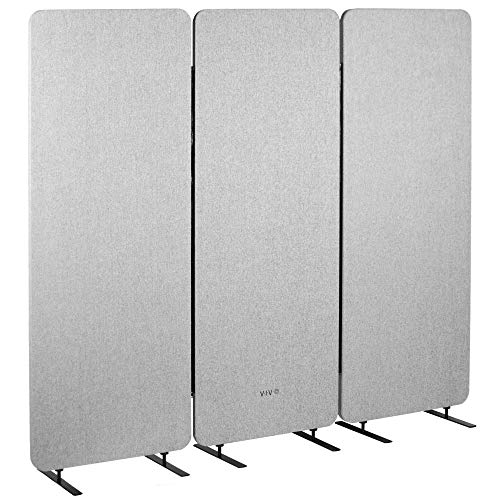
| VIVO 3-panel folding divider (about 72 by 66 in as listed) | Dividing a corner or a home-office zone | Hinged panels, freestanding, tall | Needs floor space; not a fixed wall |
| FDW and SUNALLY 4-panel folding screens | Offices that rezone often | Folds flat for storage, furniture-like look | Mostly visual privacy, modest sound control |
| Wheeled acoustic partitions (roughly 70 by 63 in as listed by retailers) | Shared offices needing quick, movable privacy | Casters, acoustic-style fill | Bulky; casters on soft carpet can be awkward |
Desk-mounted panels: the lowest-footprint option
A clamp-on panel is the simplest way to cut visual distraction when your desk faces a walkway or a neighbor. The maker of the widely listed VIVO clamp-on model describes a fabric-covered panel that attaches with clamps and leaves the desk surface free. The main compatibility question is desk thickness and edge shape: clamp ranges are limited, and one reviewer specifically advises skipping this style if your desk top is too thick or you prefer something freestanding. Desks with a lip, a cable tray or a thick butcher-block top may need a different mounting style.
Check the weight rating if you plan to hang accessories from the panel, and tighten clamps evenly to avoid marking the desk edge. If you share a height-adjustable desk, make sure the panel does not collide with a wall or cable management when you raise the desk. Sit-stand users should also consider that a panel mounted at one height will block different sight lines when standing, so a taller panel is often more useful than a wider one.
Freestanding desktop panels: flexible and often budget-friendly
Felt panel sets such as those from Kisston and Eorbow appear near the top of several 2026 roundups. They typically come as a pack of panels that connect or fold into a U shape around a monitor or a study area. Because they are light, they are easy to move between a desk and a kitchen table, which is why they get recommended for students and for people who work from several locations. The trade-off is that thin felt does little for low-frequency sound such as voices through a wall. Think of these as a visual shield with a small dampening effect, not as a soundproofing product.
A rigid steel panel like the DECOLAB listing is a step up in stability. It is harder to knock over and suits a permanent setup, but it consumes desk depth and may reflect rather than absorb sound. If you use two monitors, measure the usable width before buying; a panel that sits behind the monitors rather than around them is usually the better fit.
Floor-standing and wheeled partitions
If the problem is a whole area rather than one desk, look at folding screens and wheeled partitions. The VIVO three-panel divider, listed at roughly six feet tall, is one of the models that keeps appearing in modular-wall roundups. The FDW four-panel design is described by one reviewer as folding flat and looking like furniture, while the SUNALLY four-panel is described as a sensible buy for offices that rezone frequently. Wheeled acoustic partitions of around 70 inches by 63 inches are positioned as quick-deploy privacy for shared offices.
All freestanding screens share a few constraints. They need floor space on both sides to remain stable, they should not block exits, walkways or emergency signage, and they are not a substitute for a fixed wall. In a commercial building, ask your facility manager whether partitions need to meet local fire-code or sprinkler-clearance rules before buying a large batch; fabric and foam materials can be treated differently from rigid panels. Read the maker’s material and flame-resistance statements rather than assuming a rating.
Materials and what they do
- Felt or polyester fiber panels: light, tackable, and mildly sound-absorbing; the usual choice for desktop sets.
- Fabric-wrapped board: sturdier and more office-like; heavier to move.
- Steel or powder-coated metal: durable and easy to wipe, but reflective, so it blocks sight without absorbing sound.
- Wood or MDF folding screens: good looks for home offices; limited acoustic benefit.
- Acoustic fill panels: heavier and more expensive; the most credible choice if noise is the main complaint.
Budget tiers
Budget: multi-panel felt sets and basic clamp-on panels. They do the visual job well and give a mild dampening effect. Mid-range: rigid steel desktop panels and standard three- or four-panel folding screens. These tend to be sturdier and look more finished. Premium: wheeled acoustic partitions and systems marketed as modular walls, such as the VERSARE one-wall system that one roundup rated as its top pick. These cost noticeably more and are only worthwhile when you need dedicated, repeatable acoustic separation.
Pick X if…
| Pick this | If you… |
|---|---|
| Clamp-on desk panel | have a standard-thickness desk, face a walkway, and want to keep floor space free |
| Felt desktop panel set | move between locations, study at a shared table, or want the cheapest effective visual screen |
| Rigid steel desktop panel | want something permanent and stable that will not tip |
| Folding floor screen | need to hide a work corner or divide a room, and have clear floor space |
| Wheeled acoustic partition | reconfigure a shared office often and care about chatter |
| Acoustic wall system | have a persistent noise problem that lighter screens did not solve |
Fit, size and safety notes
- Measure your desk depth, thickness and the clearance behind it before you choose a clamp or a stand.
- A panel taller than about 24 inches above the desk blocks most seated sight lines; taller screens are needed to separate people who stand.
- Keep partitions out of walkways, away from heaters, and clear of emergency exits and sprinkler heads. Follow your building’s rules.
- Wipe fabric with a lint roller or soft brush; follow the maker’s care label for spot cleaning.
- Check the weight limit before hanging shelves, cable organizers or monitor arms from a panel.
Alternatives to a partition
If a partition feels like too much, consider other routes. Acoustic wall panels or a thick rug address echo in an open room without separating people. A white noise machine or noise-cancelling headphones attack sound directly and cost less than most large screens. Bookshelves or tall plants can double as soft dividers in a home office. For a long-term fix, rearranging desks so no one faces a high-traffic aisle can do more than any panel.
Frequently Asked Questions
Do office partitions actually reduce noise?
Most reduce high-frequency sound a little and block sight lines a lot. Thin felt or fabric panels will not stop conversations; heavier acoustic-fill partitions do better. None of the 2026 roundups reviewed offered independent lab measurements, so treat sound claims as marketing unless the maker publishes a rating.
How tall should a desk partition be?
For seated privacy, about 18 to 24 inches above the desk surface blocks most direct sight lines. If colleagues stand or you share a sit-stand desk, a taller panel or a floor screen is the better option.
Will a clamp-on panel damage my desk?
Clamps can mark soft or veneered edges if over-tightened. Use the included pads, or add a thin piece of felt under the clamp, and check that your desk thickness is within the range the maker lists.
Are folding screens suitable for a home office?
Yes, they are a common choice for hiding a work corner in a bedroom or living room. They fold flat for storage, though they offer mainly visual privacy and limited sound control.
Do partitions need to meet fire rules?
In commercial buildings, local fire and building codes can apply to partitions, especially fabric or foam types. Ask your facility manager or landlord, and follow the maker’s material statements.
Which is better for a shared table: felt panels or a rigid panel?
Felt sets are lighter, cheaper and easier to carry, which suits shared or temporary spots. A rigid panel is steadier for a permanent desk but takes more space and is harder to move.
More from Amazon
Programs that pair well with the guide above. Offers and eligibility are set by Amazon and may change.
Set up recurring deliveries of everyday items on eligible products. Terms and savings are set by Amazon.
Explore Subscribe & SaveCollect the home and kitchen items you want in one registry that guests can shop from.
Create a wedding registryFree shipping on eligible items, Prime Video and more. Eligible new members can start with a free trial.
Start a Prime free trialAudiobooks and podcasts to listen to on the go. Eligible new members can start with a free trial.
Try Audible freeAs an Amazon Associate we earn from qualifying purchases.