For most households, a small thermoelectric countertop cooler such as the Cuisinart CWC-800 series suits a handful of bottles for the next few weeks, while a compressor-based dual-zone unit from brands like Wine Enthusiast, Ivation or Antarctic Star suits anyone who wants steady temperatures, a larger collection or a warm room. The right pick depends on how many bottles you keep, how long you keep them, and how loud a cabinet you can tolerate in the room it sits in.
Our top picks
 EUHOMY 25 bottle Wine Cooler Refrigerator
- 【Temp Control & Advanced Compressor】This wine fridge equipped…
- 【Adaptable Storage for 25 Bottles】Measuring 18.7"D x 17.5"W…
- 【Double-Layer Glass Door】Mini fridge glass door with double-pane…
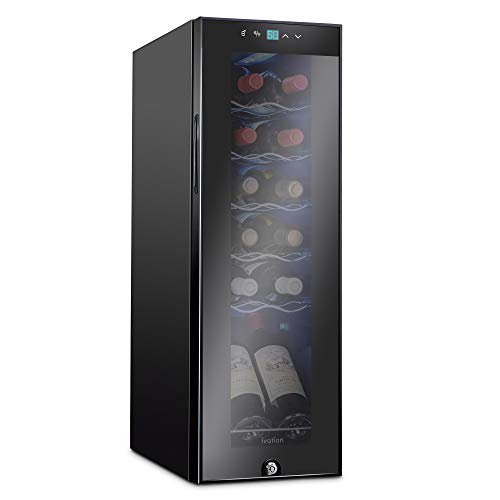 Ivation 12 Bottle Compressor Wine Cooler
- Ivation wine coolers’ compressor technology ensures temperature is…
- PRESERVE WINE’S FULLEST FLAVOR & AROMA - Set…
- A double-paned glass door not only keeps the…
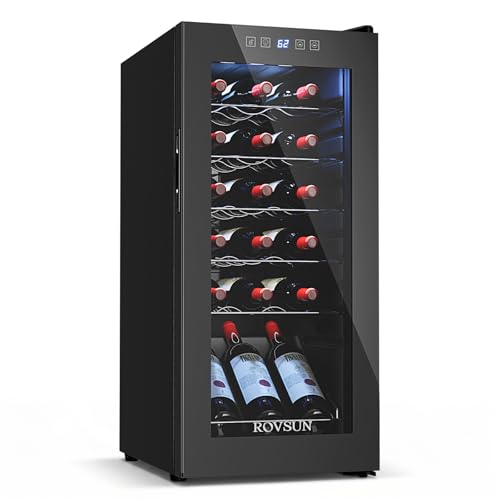 ROVSUN 18 Bottle Wine Fridge
- ★ COMPRESSOR WINE COOLER ★ This freestanding wine…
- ★ Large Capacity with Durable Shelves ★ Equipped…
- ★ Powerful & Quiet Performance ★ Our vertical…
| Product | Key specs | |
|---|---|---|
| EUHOMY 25 bottle Wine Cooler Refrigerator | 【Temp Control & Advanced Compressor】This wine fridge equipped… 【Adaptable Storage for 25 Bottles】Measuring 18.7"D x 17.5"W… 【Double-Layer Glass Door】Mini fridge glass door with double-pane… | Check price |
| Ivation 12 Bottle Compressor Wine Cooler | Ivation wine coolers’ compressor technology ensures temperature is… PRESERVE WINE’S FULLEST FLAVOR & AROMA - Set… A double-paned glass door not only keeps the… | Check price |
| ROVSUN 18 Bottle Wine Fridge | ★ COMPRESSOR WINE COOLER ★ This freestanding wine… ★ Large Capacity with Durable Shelves ★ Equipped… ★ Powerful & Quiet Performance ★ Our vertical… | Check price |
 Hamilton Beach HBWF4303 | Check price |
As an Amazon Associate we earn from qualifying purchases at no extra cost to you.
Wine Coolers at a Glance
| Type / Example | Best for | Key points reviewers and makers state | Limits |
|---|---|---|---|
| Cuisinart CWC-800 series (thermoelectric) | Small counters, a few bottles | Eight-bottle capacity; frequently named best countertop or best overall in small-cooler roundups; backed by a multi-year warranty according to reviewers | Thermoelectric cooling has a ceiling in hot rooms |
| BLACK+DECKER BD-series (thermoelectric) | Budget buyers with few bottles | Compact twelve-bottle class; listed as a value choice in several roundups | Limited temperature range; slim shelf spacing |
| Koolatron WC-series (thermoelectric) | Mid-size collections up to about twenty bottles | Dual-zone versions exist; reviewers list it as a premium thermoelectric option | Still depends on a cool room |
| Ivation compressor models | Buyers wanting compressor cooling at a moderate size | Offered in roughly a dozen to a few dozen bottle sizes; reviewers cite steadier temperatures than thermoelectric | Slight compressor hum and cycling noise |
| Antarctic Star 26-bottle (compressor) | Everyday drinkers who want one cabinet for reds and whites | Ranked top overall in at least one 2026 roundup | Needs clear space around the back and sides for airflow |
| Wine Enthusiast dual-zone units | Collectors who want separate red and white temperatures | Frequently named best overall or best small in major outlet lists | Larger footprint and a higher budget tier |
| Whynter BWR-1002SD (compressor) | Large collections | The maker lists a capacity near one hundred bottles | Heavy; needs a dedicated spot and floor space |
Thermoelectric or Compressor
This is the first decision and it removes half the options. A thermoelectric cooler uses a solid-state module with no moving compressor, so reviewers describe it as quiet and free of vibration. The trade-off is that it cools to a fixed difference below the surrounding air. In a warm kitchen or a sunny corner, it may struggle to hold a cellar-like temperature. Roundups generally steer thermoelectric toward small, quiet, low-vibration setups of roughly six to twenty bottles in a climate-controlled room.
A compressor cooler works like a small refrigerator. Reviewers say it holds a set temperature more steadily, copes better with summer heat and scales to larger capacities. You get a faint hum and the occasional click when it cycles on and off. If the cooler will sit in a living room or bedroom, listen for a quiet-running rating on the maker’s specification page, though decibel figures are not standardised between brands.
Capacity: Buy One Size Up
Makers publish bottle counts based on standard Bordeaux-shaped bottles. Wide-shouldered Burgundy, sparkling and large-format bottles take up more room, and many shelves hold fewer than the headline number when you mix shapes. Plan for a cooler one size larger than your current stash if you buy by the case. A single-zone unit with a fixed temperature setting is fine if you mostly drink one style. A dual-zone unit lets you keep whites and sparkling colder than reds, which is what most people mean when they say they want a proper wine cooler.
Budget Tiers
Budget
Entry-level thermoelectric models from Cuisinart, BLACK+DECKER and similar makers cover six to twelve bottles. They are light, plug into a standard outlet and are easy to move. Expect modest temperature range and basic shelving. For a first cooler, or a gift for someone who drinks a bottle or two a week, they do the job.
Mid-range
This is where compressor units from Ivation, Antarctic Star and Kalamera appear in roundups. Capacities of roughly twenty to fifty bottles, digital temperature controls, a glass door and in some cases dual zones are common. For most people buying a first serious cooler, this tier offers the best balance of capacity and stable temperatures.
Premium
Wine Enthusiast, Whynter, EuroCave and similar brands cover large capacities, dual-zone control, wood shelving and in some cases humidity management. Forbes and other outlets single out EuroCave for collectors who plan to age wine for years. If you only drink within weeks of buying, this tier is more than you need.
Fit, Placement and Care
- Ventilation: Follow the manual’s clearance figures for the back, sides and top. Built-in models are designed to vent through the front; freestanding ones usually are not and must not be enclosed in cabinetry.
- Power: Plug the unit directly into a grounded outlet unless the maker’s manual states otherwise. Avoid extension cords and adaptors. If the outlet or cord looks damaged, ask a qualified electrician.
- Level and stable: Place it on a flat, solid surface. Compressor units should stand upright for a period after moving, as the manual specifies, before being switched on.
- Light and vibration: Tinted or UV-resistant glass doors help protect labels and wine from light. Keep the cooler away from washing machines and speakers.
- Cleaning: Unplug, empty and wipe the interior with mild soap and water. Leave the door ajar to air-dry. Dust the vents or coils as the manual directs.
- Door seal: A worn or sticky gasket lets in warm air and makes the unit run longer. Wipe it clean periodically.
Pick X If
| Pick this | If you |
|---|---|
| Small thermoelectric (Cuisinart, BLACK+DECKER) | Drink a few bottles a week, have a cool room and want near-silent running |
| Mid-size thermoelectric (Koolatron) | Want more shelf space without paying for a compressor and keep the room temperate |
| Single-zone compressor (Antarctic Star, Ivation) | Need dependable temperatures all year in a normal living space |
| Dual-zone compressor (Wine Enthusiast, Kalamera) | Store reds and whites at different temperatures |
| High-capacity cabinet (Whynter, EuroCave) | Hold a growing collection or age bottles over years |
Alternatives to Consider
- Wine and beverage center: Models such as the GE wine and beverage center, named in Forbes and Food Network lists, combine bottle racks with can storage. Good if the cooler doubles as a drinks fridge.
- Built-in under-counter wine fridge: Front-venting units are designed to sit flush in cabinetry. They cost more but suit a kitchen renovation.
- Insulated chiller sleeves and ice buckets: If you only need to chill a bottle for a dinner, a sleeve or bucket avoids owning another appliance.
Common Mistakes When Buying
The most frequent complaint in buyer discussions is a cooler that is too small within a year. A second is putting a thermoelectric unit in a warm room and finding it cannot reach the target temperature. A third is ignoring door swing: if the door opens toward a wall or appliance, loading becomes awkward, and some models allow a reversible hinge while others do not. Finally, many people forget to measure the path to the room, since a heavier compressor cabinet needs clear doorways and a second person to carry it.
Reading a Specification Sheet
Look for the stated temperature range, the ambient operating range, the number of shelves, the type of door glass, the interior light type and the power draw. A range that bottoms out around the mid-forties Fahrenheit is enough for white wine and sparkling. If the sheet lists a thermoelectric module, note any text about the temperature difference from room air, since that is the real limit on performance. Warranty length and what it covers, such as the compressor versus the whole unit, tell you how much confidence the maker has in the design. Cuisinart, for instance, is described by reviewers as offering a multi-year warranty on its small countertop coolers, but terms differ by model.
Running Costs and Noise
Small thermoelectric units draw modest power but run nearly continuously, while compressor units cycle on and off. Neither is likely to dominate a household energy bill, but the manual’s stated wattage or energy rating gives a rough guide. For noise, a living room placement tolerates a faint hum, whereas a bedroom or studio may favour thermoelectric. Soft feet or a stable surface reduce rattling.
Sourcing Note
Many online wine cooler roundups are affiliate-style pages that disagree on a winner, and some are dated. Treat capacity and temperature range as the maker’s stated figures, and read the specification sheet and manual for the exact model before buying.
Frequently Asked Questions
What is the ideal temperature for a wine cooler?
Makers and sommelier groups commonly suggest roughly 45 to 50 degrees Fahrenheit for whites and sparkling and 55 to 65 for reds, with a steady 55 often cited for storage. Your cooler’s range depends on the model, so confirm the stated minimum and maximum before you buy. Avoid frequent swings, which matter more than a degree either way.
Is a thermoelectric wine cooler good enough?
For a small collection in a cool, stable room, reviewers say yes. It is quiet and vibration-free. In a hot room it may not reach or hold the temperature you set, so a compressor model is the safer choice there.
Can I use a wine cooler as a regular fridge?
Not usually. Wine coolers hold warmer temperatures than a food refrigerator and are not designed to keep perishable food safe. Use a normal refrigerator for food and a wine cooler for wine, unless the maker describes a combination model.
How much space does it need around it?
Follow the manual. Many freestanding models ask for several inches behind and beside the cabinet so heat can escape. Built-in models are designed for flush installation and vent differently, so do not place a freestanding unit inside a closed cabinet.
Why does my cooler make a noise?
Compressor units hum and click when cycling, and thermoelectric units have a small fan. A new rattling or buzzing may point to an unlevel surface or loose items touching the cabinet. If a loud or burning smell appears, unplug it and contact the maker or a qualified technician.
How long can wine be kept in a cooler?
That depends on the wine and the cooler. Thermoelectric units suit short-term storage. Reviewers recommend compressor units with stable temperatures, and humidity control where offered, for aging bottles over years.
More from Amazon
Programs that pair well with the guide above. Offers and eligibility are set by Amazon and may change.
Set up recurring deliveries of everyday items on eligible products. Terms and savings are set by Amazon.
Explore Subscribe & SaveCollect the home and kitchen items you want in one registry that guests can shop from.
Create a wedding registryFree shipping on eligible items, Prime Video and more. Eligible new members can start with a free trial.
Start a Prime free trialAudiobooks and podcasts to listen to on the go. Eligible new members can start with a free trial.
Try Audible freeAs an Amazon Associate we earn from qualifying purchases.