Our Top Picks


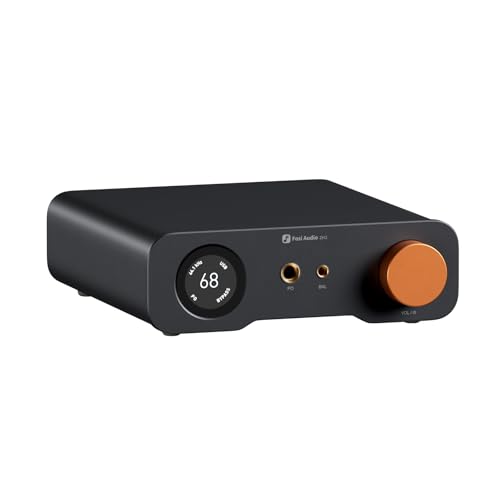


The best premium desktop headphone amplifier and DAC combo for most people in 2026 is the TOPPING DX5 II: it puts a dual ES9039Q2M converter, an X-Hybrid amplifier stage, a 10-band parametric EQ, LDAC Bluetooth and both 6.35 mm and 4.4 mm headphone outputs in one chassis that also feeds powered speakers through XLR or RCA line outputs. It suits the listener who wants one box on the desk that handles every headphone they own and every source they own, and who would rather pay once than stack three devices. If your budget is tighter, the Fosi Audio SK02 delivers USB-C and optical inputs plus a 4.4 mm balanced output for a fraction of the cost. If you want the most over-built, buy-once desktop unit in this group, the Grace Design M900 is the pro-audio answer, and the HIFIMAN EF499 is the pick for R2R tonality with XLR line outputs.
Top 3 Picks
Best overall: TOPPING DX5 II. Nothing else here combines a modern dual-DAC architecture, a genuinely high-power amplifier stage, onboard parametric EQ and LDAC Bluetooth in a single desktop footprint. It is the pick for anyone who wants their headphone rig and their speaker rig fed from the same box, and who values being able to tune headphone response without software on the computer.
Best budget: Fosi Audio SK02. The SK02 is the cheapest way into a proper desktop setup rather than a dongle hanging off a laptop port. USB-C and optical inputs cover a PC and a TV or console, and the 4.4 mm balanced output means you are not locked out of balanced cables when you upgrade headphones later. It suits a first desktop rig or a second desk.
Best premium: Grace Design M900. A compact, machined-aluminium desktop DAC and headphone amplifier from a company whose main business is studio monitoring hardware. It is single-ended only and it does not chase output-power headline numbers, so it suits the listener with efficient-to-moderate headphones who wants a unit they will still be using in a decade.
Quick Comparison
| Product | Best for | Key specs (as listed) | Price tier |
|---|---|---|---|
| Fosi Audio K7 | Console and PC gaming desks | PCM 384 kHz/32-bit; 2100 mW output claim; USB to gaming PC, PS5, Switch | Mid-range |
| TOPPING DX5 II | A single do-everything desktop hub | Dual ES9039Q2M, X-Hybrid amp stage, 10-band PEQ, LDAC Bluetooth, 6.35 mm + 4.4 mm headphone outs, XLR/RCA line outs | Premium |
| Fosi Audio ZH3 | Balanced preamp and headphone duty in one box | AKM4493SEQ DAC, XMOS XU316 USB interface, PCM 768 kHz, fully balanced architecture | Mid-range |
| Fosi Audio SK02 | First desktop DAC/amp on a tight budget | USB-C and optical inputs, 4.4 mm balanced output, compact desktop footprint | Budget |
| HIFIMAN EF499 | R2R tonality plus XLR line output to powered speakers | R2R ladder architecture, XLR/RCA line outputs, 6.35 mm headphone output | Premium |
| Grace Design M900 | Buy-once desktop reference on a small desk | Compact machined chassis, USB input, single-ended headphone output, studio-audio build | Premium |
| FiiO/JadeAudio KA13 | Phone and laptop listening away from the desk | USB-C dongle, 3.5 mm + 4.4 mm outputs, Android/iOS compatible | Budget |
| Shanling EH1 | Minimal-footprint desk that still wants balanced out | Compact desktop DAC/amp, USB and S/PDIF-family digital inputs, 3.5 mm + 4.4 mm headphone outs | Premium |
| FiiO K5 Pro | Desktop all-rounder with a large volume knob | 768 kHz/32-bit, native DSD512, 6.35 mm output, USB/optical/coaxial inputs | Mid-range |
| Soundavo HP-DAC1 | Older PCs, CD transports and TVs with optical or coaxial output | USB, S/PDIF (optical and coaxial) and line inputs, RCA line output, 6.35 mm headphone output | Budget |
| EYTSE USB-C Mini DAC Amp | A cheap dongle that still has a balanced jack | USB-C, 3.5 mm + 4.4 mm outputs, 32-bit/384 kHz class decoding | Budget |
| HIFI WALKER D20 DAC512 | Budget hi-res playback from a phone or tablet | USB dongle, 4.4 mm balanced + 3.5 mm outputs, DSD512-class decoding per the model name | Budget |
How We Chose
This roundup is built from published specifications and category knowledge, not from bench testing. Every unit below was assessed on four things. First, the converter and amplifier architecture named in the listing: DAC chip family, USB interface chip, supported sample rates and whether the amplifier stage is single-ended or fully balanced. Second, input and output inventory, because the number of jacks on the back panel usually decides whether a box fits your desk at all. Third, power and impedance behaviour relative to the headphones people actually own in 2026 — efficient planars, 300-ohm dynamics, and low-impedance IEMs that hiss on a noisy amp. Fourth, upgrade path and ownership: does the unit have line outputs so it can become a preamp later, does it accept a balanced cable, and is it built by a company with a track record of long product lifecycles.
We deliberately kept the list mixed rather than uniform. A roundup of nothing but premium desktop boxes would ignore the reader who is not sure they want a desktop box yet, so the list includes USB dongles that solve the same problem in a different shape. Price is expressed only as a tier — budget, mid-range, premium — because listing prices move constantly and a specific figure would be stale within weeks.
1. Fosi Audio K7 – Best for console and PC gaming desks
As an Amazon Associate we earn from qualifying purchases at no extra cost to you.

The K7 is the one product in this list that was clearly designed around a games console rather than around a CD transport. The listing names gaming PC, PS5 and Switch as sources, which matters more than it sounds: plenty of desktop DAC/amps will accept a USB signal from a computer but will not be recognised by a console at all, leaving you to run an optical cable from the TV instead. If your desk is really a gaming setup and your headphones double as your headset, the K7 is the shortest path to better sound on all three platforms.
The headline number is the 2100 mW output claim, paired with PCM 384 kHz/32-bit decoding. That combination puts it squarely in mid-range desktop territory: enough current to move a planar magnetic headphone that would sound flat and compressed from a controller or a motherboard jack, and a converter specification that will not be the limiting factor in the chain for a long time.
Key specs
- Decoding: PCM 384 kHz / 32-bit per the listing
- Output power: 2100 mW claim (load and distortion conditions not specified in the listing name)
- Sources named: gaming PC, PlayStation 5, Nintendo Switch
- Form factor: desktop chassis with front-panel headphone output
- Price tier: mid-range
Strengths
Console compatibility is the whole story here, and it is genuinely uncommon. Most desktop DAC/amps are computer-first devices, and the workaround — TV optical out into the DAC — works but adds a cable run and often caps the sample rate. A unit that the console recognises directly removes a failure point from the chain. The 2100 mW claim also gives you headroom that budget desktop units simply do not have, which is the difference between a planar headphone sounding acceptable and sounding dynamic. And because it is a desktop chassis rather than a dongle, you get a proper volume control you can find without looking, which matters when you are wearing a headset and mid-game.
Pros
- Named console compatibility is rare in this category and hard to retrofit
- 2100 mW output claim is high for the mid-range tier
- 384 kHz/32-bit decoding covers every streaming and local file format most people use
- Single-box solution for gaming, music and video from the same desk
- Desktop form means real knobs and no cable strain on a phone port
Cons
- The listing does not break down the power figure by load impedance, so it tells you less than it appears to
- No Bluetooth, so phone listening needs a separate dongle
- Gaming-first design language may not suit a shared living space
- Fosi Audio’s desktop line changes quickly, so long-term firmware support is a question mark
How it compares
The nearest alternative in this list is the FiiO K5 Pro. The K5 Pro is the more mature desktop device: a longer-established design, 768 kHz/32-bit and native DSD512 support, and a big analogue volume knob that many people prefer to a smaller control. What the K5 Pro does not offer is the console-first positioning — it is built for a computer at the centre of the system. If your source list is PC plus PS5 plus Switch, the K7 solves a problem the K5 Pro does not. If your source list is a PC and a disc player, the K5 Pro is the more traditional and more proven pick, and it is the one to choose when DSD playback matters to you.
2. TOPPING DX5 II – Best for a single do-everything desktop hub

If you want one box that ends the conversation, this is it. The DX5 II pairs two ES9039Q2M converter chips with TOPPING’s X-Hybrid amplifier stage, adds a 10-band parametric EQ, and includes LDAC Bluetooth 5-series reception. That is an unusually complete feature set for a desktop chassis, and it is the reason this unit takes the overall pick: it does not ask you to choose between a headphone rig and a speaker rig, or between wired and wireless sources.
TOPPING has spent the last several years building a reputation for measurement-led desktop electronics, and the DX5 II reads as the mature version of that formula. The dual-converter arrangement is a genuine architectural choice rather than a marketing line: two chips give better channel separation and lower noise per channel than a single converter handling both.
Key specs
- DAC: dual ES9039Q2M converters
- Amplifier: X-Hybrid output stage
- DSP: 10-band parametric EQ onboard
- Wireless: LDAC Bluetooth (Bluetooth 5-series)
- Headphone outputs: 6.35 mm single-ended and 4.4 mm balanced
- Line outputs: XLR balanced and RCA single-ended
- Price tier: premium
Strengths
The output inventory is the strongest argument. You get a 6.35 mm jack for the dynamic headphones you already own and a 4.4 mm balanced jack for the ones you will buy next, plus XLR and RCA line outputs to feed powered monitors or a separate power amplifier. That means the DX5 II can sit at the centre of a desk system that grows over five years without being replaced.
The 10-band parametric EQ is the second argument, and it is the one most competitors do not answer. Being able to correct a headphone’s response in hardware, without installing software or routing audio through a virtual device, is a meaningful quality-of-life difference — especially on a work machine where you cannot install drivers. LDAC Bluetooth is the third: it lets a phone or tablet feed the same amplifier without a dongle, at a bitrate that is transparent enough for casual listening.
Pros
- Dual ES9039Q2M converters and a balanced-capable amplifier in one chassis
- Both 6.35 mm and 4.4 mm headphone outputs, so no adapter shopping
- XLR and RCA line outputs make it a genuine system hub
- Onboard 10-band PEQ works without computer software
- LDAC Bluetooth removes the need for a separate streaming path
Cons
- Premium tier pricing, and the feature set is only worth it if you use most of it
- More menu-driven than a purely analogue amplifier, which some listeners dislike
- Bluetooth codecs other than LDAC vary in quality depending on the sending device
- Overkill for a single pair of efficient IEMs used for video calls
How it compares
The Fosi Audio ZH3 is the natural challenger. The ZH3 uses an AKM4493SEQ converter with an XMOS XU316 USB interface at PCM 768 kHz and is also fully balanced, so it matches the DX5 II on the architectural talking points. Where the DX5 II pulls ahead is breadth: onboard parametric EQ, LDAC Bluetooth, and a headphone output set that covers both single-ended and balanced without adapters. The ZH3’s argument is focus — a balanced preamp with a strong converter chain at a mid-range tier. Choose the ZH3 if you mainly need a clean balanced DAC and preamp and already own a headphone amplifier you like. Choose the DX5 II if you want the amplification, the EQ and the wireless input handled inside one enclosure.
3. Fosi Audio ZH3 – Best for balanced preamp duty into powered monitors
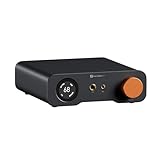
The ZH3 is the most technically interesting thing Fosi Audio sells in this category. It pairs an AKM4493SEQ converter with an XMOS XU316 USB interface and supports PCM 768 kHz, and it is described as a fully balanced preamp. That last phrase is the important one: this is not a headphone amplifier with a balanced output bolted on, it is a balanced line-level device that also drives headphones.
That makes it a different product from everything else in this list. If your desk has a pair of powered studio monitors on it and a headphone amplifier you already like, the ZH3 slots in as the converter and preamp, giving you balanced XLR line outputs and a real volume control. If your desk has neither, it is still a competent headphone amp — but you are paying for preamp capability you may not use.
Key specs
- DAC: AKM4493SEQ
- USB interface: XMOS XU316
- Resolution: PCM up to 768 kHz per the listing
- Architecture: fully balanced preamp design
- Intended use: feeding amplifiers and active speakers as well as headphones
- Price tier: mid-range
Strengths
Balanced line output is the feature that matters most, and it is the one that costs the most to add later. Running a balanced connection from a preamp to powered monitors reduces the chance of ground-loop hum and lets you use longer cable runs without picking up noise. On a desk where the monitors sit a metre away, that is a marginal benefit; in a room where the speakers sit across the desk from the electronics, it is a real one.
The XMOS XU316 interface is the other meaningful component. XMOS USB receivers are the de facto standard in desktop audio because they handle asynchronous USB transfer well and are widely supported by operating systems without special drivers at moderate sample rates. Combined with the AKM converter, the ZH3’s digital chain is built from parts that have a long track record rather than from a no-name chipset.
The mid-range tier also means the ZH3 sits below the DX5 II in cost while matching it on balanced architecture, which is exactly the trade a lot of buyers want to make.
Pros
- Fully balanced design at a mid-range tier
- AKM4493SEQ and XMOS XU316 are well-understood, well-supported parts
- PCM 768 kHz support exceeds what almost any source material needs
- Doubles as a preamp for powered monitors or a power amplifier
- Small enough to sit under a monitor riser
Cons
- No Bluetooth, so phone listening needs a separate dongle
- Balanced line outputs are wasted if your speakers are single-ended RCA only
- Fewer convenience features than the DX5 II at a similar architectural level
- Menu and control layout is less refined than the premium-tier competition
How it compares
Against the TOPPING DX5 II, the ZH3 is the specialist and the DX5 II is the generalist. The DX5 II adds onboard parametric EQ, LDAC Bluetooth and a 4.4 mm headphone output; the ZH3 counters with a lower price tier and a design that is unambiguously centred on balanced line-level output. If you already own a headphone amplifier and need a converter and preamp to sit in front of it, the ZH3 is the more sensible allocation of money. If you are starting from nothing and want the headphone output, the line output and the wireless input all handled, the DX5 II justifies its premium tier. Against the Fosi Audio SK02, the ZH3 is the same brand’s more serious product: the SK02 gets you in the door with USB-C and optical inputs, the ZH3 gives you the balanced architecture and the converter chain you will not outgrow.
4. Fosi Audio SK02 – Best budget desktop entry point

The SK02 is the cheapest way in this list to get a real desktop box rather than something dangling off a laptop port. It offers USB-C and optical inputs and a 4.4 mm balanced output, which is a surprising specification for the budget tier. For a first desktop rig, or for a second desk where you do not want to move your main stack, it is the obvious starting point.
The optical input is the detail worth pausing on. A budget desktop DAC/amp with optical in can take a feed from a TV, a games console or an older CD or DVD player — sources that have no USB audio output at all. That single connector extends the life of the device well beyond PC listening.
Key specs
- Inputs: USB-C and optical (S/PDIF)
- Outputs: 4.4 mm balanced headphone output
- Function: DAC, headphone amplifier and preamp
- Form factor: compact desktop chassis
- Price tier: budget
Strengths
The balanced 4.4 mm output is the headline. Balanced headphone connections are usually a premium-tier feature, and having one at the budget tier means you can buy a balanced cable for your headphones and use it, rather than waiting until you upgrade the amplifier. Balanced output typically means more voltage swing for a given supply, which helps with higher-impedance dynamic headphones, and it usually lowers the noise floor on sensitive IEMs.
USB-C is the correct modern choice for the primary input. It is the connector every laptop made in the last several years uses, it carries enough power to run a small desktop device, and it does not require the awkward USB-B cable that older desktop DACs still demand. The optical input is the bonus that makes the SK02 a small system hub rather than a computer accessory.
At the budget tier, the SK02 also functions as a preamp, which means it can feed powered speakers later. That gives the device an upgrade path that most budget electronics lack.
Pros
- 4.4 mm balanced output at a budget price tier
- Optical input accepts TVs, consoles and disc players
- USB-C rather than legacy USB-B
- Works as a preamp for powered speakers
- Small footprint leaves desk space for the headphones themselves
Cons
- Output power is modest compared with the mid-range and premium units here
- No Bluetooth
- Controls are basic, with no EQ or display features
- Budget-tier build means the chassis and knob will not feel like a premium unit
How it compares
The Soundavo HP-DAC1 is the closest budget-tier competitor, and the two solve different problems. The HP-DAC1 is built around legacy connectivity: USB plus S/PDIF optical and coaxial, plus line inputs and RCA line outputs, with a 6.35 mm headphone jack. It is the right choice if you have a CD transport, a TV with coaxial output, or a stack of analogue sources. The SK02 is the right choice if you have a modern laptop, want USB-C, and want a balanced headphone output. Neither is objectively better; the connector list on your desk decides it. Against the Fosi Audio ZH3, the SK02 is the same brand’s entry product — the ZH3 buys you the AKM converter, the XMOS USB interface and a fully balanced architecture, and it is worth the step up if your headphones are hard to drive.
5. HIFIMAN EF499 – Best for R2R tonality and XLR line output

The EF499 is the odd one out in the best possible way. It uses R2R ladder architecture rather than the delta-sigma converters that dominate this category, and it offers XLR and RCA line outputs alongside a 6.35 mm headphone output. R2R converters are the traditional resistor-ladder approach to digital-to-analogue conversion, and the reason people still seek them out is tonal character rather than measured perfection.
HIFIMAN is best known for planar magnetic headphones, and the company has spent years building source electronics to pair with them. The EF499 is aimed at a home system: a headphone rig that also feeds a speaker amplifier or active monitors through XLR.
Key specs
- Conversion: R2R ladder architecture
- Line outputs: XLR balanced and RCA single-ended
- Headphone output: 6.35 mm
- Intended setting: desktop and home hi-fi systems
- Price tier: premium
Strengths
R2R is the reason to buy this unit and the reason not to. A ladder converter produces a different distortion and noise profile from a delta-sigma chip, and many listeners describe the result as denser or more organically textured, particularly in the midrange. If you have spent time with delta-sigma DACs and found them slightly clinical, an R2R unit is the standard alternative to try. The trade is that R2R designs typically measure worse on conventional bench metrics — higher noise floor, worse channel separation — which is exactly why the approach persists among listeners who trust their ears over a specification sheet.
The XLR line outputs are the practical strength. Feeding a power amplifier or powered monitors from a balanced output is the cleanest way to move a line-level signal across a desk or a room, and it means the EF499 can anchor a full system rather than just a headphone setup. HIFIMAN’s brand position in planar headphones also makes this a natural pairing for hard-to-drive planar models.
The 6.35 mm headphone output is single-ended, so if you already own a 4.4 mm or XLR-terminated headphone cable, you will need an adapter or a different cable.
Pros
- R2R ladder conversion offers a genuinely different tonal presentation
- XLR balanced line outputs for powered speakers and power amplifiers
- Natural pairing with planar magnetic headphones
- Established hi-fi brand with a track record in headphone electronics
- Functions as a home-system hub, not just a desktop accessory
Cons
- Premium tier price for a narrower feature set than the DX5 II
- Headphone output is 6.35 mm only, with no balanced headphone jack
- No Bluetooth or onboard EQ
- R2R designs measure worse than delta-sigma on conventional metrics
How it compares
Against the TOPPING DX5 II, the EF499 gives up features and gains character. The DX5 II offers dual ES9039Q2M converters, 10-band PEQ, LDAC Bluetooth and both 6.35 mm and 4.4 mm headphone outputs; the EF499 offers R2R conversion, XLR and RCA line outputs, and a single 6.35 mm jack. If you want the most capable single box, the DX5 II wins on every count. If you have already decided you prefer ladder conversion or you want to feed a power amplifier, the EF499 is the one. Against the Grace Design M900, the EF499 is the more system-oriented device — it has balanced line outputs and the M900 does not — while the M900 counters with studio-grade build quality and a much smaller footprint. Buy the EF499 to feed speakers; buy the M900 to keep a headphone-only rig on a small desk.
6. Grace Design M900 – Best buy-once desktop reference

Grace Design builds monitoring equipment for recording studios, and the M900 is that sensibility shrunk to a desktop footprint. It is a compact DAC and headphone amplifier in a machined chassis, and it has been on the market long enough to have a settled reputation rather than a launch-window one. If your priority is a unit you will still be using in ten years rather than one that tops a specification table today, this is the pick.
It is also the most opinionated product here, because it makes a deliberate choice that most competitors avoid: it is single-ended only. There is no 4.4 mm balanced headphone output and no XLR line output. What you get instead is a very small, very solid box with a USB input and a headphone output, built to studio tolerances.
Key specs
- Type: desktop DAC and headphone amplifier
- Input: USB
- Outputs: single-ended headphone output
- Chassis: compact machined metal enclosure
- Maker: Grace Design, a professional monitoring equipment manufacturer
- Price tier: premium
Strengths
The build quality is the point. Professional audio hardware is specified for rack life — long duty cycles, physical knobs that survive thousands of rotations, connectors rated for repeated insertion. A desktop amplifier from that tradition is likely to outlast several generations of consumer electronics, which changes the ownership maths considerably. Spending at the premium tier once is often cheaper than spending at the budget tier three times.
The small footprint is the second advantage, and it is underrated. A desk with a monitor, a keyboard, a laptop and a pair of headphones does not have room for a full-width component with a large display. A compact box that sits behind the keyboard or under the monitor riser disappears from the layout, which means you actually use it rather than working around it.
Third, single-ended-only design means the amplifier stage is not compromised to accommodate a balanced output. Whether that matters audibly is debatable, but the engineering argument is real: fewer output devices, a simpler signal path, and a shorter one.
Pros
- Studio-grade build quality and long product lifecycle
- Very compact footprint for a premium desktop unit
- Simple, unfussy feature set that will not date
- Established manufacturer with a professional reputation
- Strong resale and long-term support prospects relative to consumer brands
Cons
- No balanced headphone output and no balanced line output
- No Bluetooth, no onboard EQ, no display
- Premium tier pricing for a deliberately narrow feature set
- Modest output power by the standards of the premium desktop category
How it compares
The nearest alternative is the TOPPING DX5 II, and the comparison is a clean statement of priorities. The DX5 II offers far more: dual converters, a high-power amplifier stage, 10-band PEQ, LDAC Bluetooth, balanced headphone and line outputs. The M900 offers far less of all of that and counters with build quality, longevity and a footprint roughly the size of a paperback. If you change headphones often, want to experiment with EQ, and need to drive planar magnetics, the DX5 II is the better use of premium-tier money. If you have one pair of headphones you like, a small desk, and no interest in re-buying the same component twice, the M900 is the more rational purchase. Against the Shanling EH1, the M900 wins on build heritage while the EH1 wins on connectivity and balanced outputs.
7. FiiO/JadeAudio KA13 – Best for phone and laptop listening away from the desk

The KA13 is a USB-C dongle rather than a desktop box, and it belongs in this list because a lot of people shopping for a desktop DAC/amp have not yet decided that they want one. JadeAudio is FiiO’s value-focused sub-brand, and the KA13 carries the two features that matter in a dongle: a 3.5 mm single-ended output and a 4.4 mm balanced output, with compatibility across Android and iOS devices.
The case for a dongle is simple. It travels, it costs a fraction of a desktop unit, and for most efficient headphones it delivers the majority of the audible improvement you would get from a desktop amplifier — mainly because it replaces a noisy, current-limited headphone jack with a dedicated converter and amplifier.
Key specs
- Type: USB-C portable DAC and headphone amplifier dongle
- Outputs: 3.5 mm single-ended and 4.4 mm balanced
- Compatibility: Android and iOS systems
- Brand: FiiO / JadeAudio
- Price tier: budget
Strengths
The balanced output is the differentiator among budget dongles. Most inexpensive dongles give you a 3.5 mm jack and nothing else, which means you can never use a balanced cable. The KA13’s 4.4 mm output lets you run a balanced cable from a phone, and balanced output in a dongle typically translates into more voltage swing, which matters most with higher-impedance dynamic headphones. In practice this is the difference between a dongle that drives efficient IEMs well and a dongle that can also handle a 250- or 300-ohm dynamic headphone acceptably.
FiiO’s ecosystem is the second strength. FiiO has been making portable audio hardware for a long time, and its devices tend to be well supported on both mobile platforms, with sensible power management and no driver requirements. JadeAudio as a sub-brand brings the same engineering to a lower price tier.
The third strength is simply that it is the correct first purchase for someone unsure about the desktop route. If you buy the KA13 and find you listen almost exclusively at your desk, you have learned that you want a desktop unit. If you find you listen on the train, you have saved yourself the cost of a box that would sit unused.
Pros
- Balanced 4.4 mm output is unusual at the budget tier
- Works with both Android and iOS devices
- FiiO engineering and support behind a value sub-brand
- Pocketable and requires no separate power supply
- Low-risk way to find out whether you want a desktop system
Cons
- Drains phone battery, since it draws power from the host device
- No optical or coaxial input, so it cannot take a TV or console feed
- Cable strain on the phone port is a real long-term failure point
- Output power is far below any desktop unit in this list
How it compares
Against the EYTSE USB-C Mini DAC Amp, the KA13 is the safer buy. The two dongles offer the same basic configuration — USB-C in, 3.5 mm and 4.4 mm out — but FiiO is an established portable audio manufacturer with a support history, while EYTSE is a low-cost brand with limited track record. The EYTSE unit may be cheaper, and for a spare dongle that lives in a bag, that may be enough. Against the HIFI WALKER D20 DAC512, the KA13 competes on brand reliability while the D20 competes on price and its stated DSD512-class decoding. Against the Fosi Audio SK02, the comparison is about shape rather than quality: the SK02 is a desktop box with optical input and a proper volume control; the KA13 is a travel device. Buy both if you listen in both places.
8. Shanling EH1 – Best compact premium desktop DAC and amp

The EH1 is for the listener who wants premium-tier sound from a box small enough to disappear. Shanling has built its reputation on compact portable players and desktop electronics, and the EH1 is a desktop DAC and headphone amplifier that takes the compact philosophy seriously: it offers both 3.5 mm single-ended and 4.4 mm balanced headphone outputs in a chassis far smaller than the DX5 II or the EF499.
The connectivity covers USB and S/PDIF-family digital inputs, which means it can take a feed from a computer, a TV, or a disc transport. That combination — small footprint, balanced headphone output, multiple digital inputs — is a specific niche that very few products fill.
Key specs
- Type: compact desktop DAC and headphone amplifier
- Digital inputs: USB plus S/PDIF-family optical and coaxial connections
- Headphone outputs: 3.5 mm single-ended and 4.4 mm balanced
- Brand: Shanling
- Price tier: premium
Strengths
The footprint is the reason to buy it. On a desk that already holds a monitor, a laptop, a keyboard and a mouse, a full-width component is a genuine problem, and the workaround — stacking devices — creates its own heat and cable-management issues. The EH1 takes up roughly the space of a large phone and still provides a balanced headphone output and multiple digital inputs.
The input set is the second strength. USB alone would make it a computer accessory; adding optical and coaxial makes it a small system hub that can accept a TV, a console or an older disc player. That matters because the devices with the worst built-in headphone outputs in a house are usually the television and the games console, not the computer.
Shanling’s tuning philosophy is the third point. The brand has a long history in portable players and tends to voice its electronics on the slightly warm, easy-listening side rather than the analytical side. If you have found measurement-first desktop units fatiguing over long sessions, a Shanling unit is the natural alternative to try.
Pros
- Very small footprint for a premium desktop DAC and amplifier
- Both 3.5 mm and 4.4 mm headphone outputs
- USB plus optical and coaxial digital inputs
- Shanling’s established house sound and brand support
- Ideal for a secondary desk or a small apartment system
Cons
- Premium tier pricing for a small device
- Output power is below the larger premium desktop units
- No Bluetooth and no onboard EQ
- Small controls can be fiddly if you adjust volume frequently
How it compares
Against the Grace Design M900, the EH1 wins on connectivity and loses on build heritage. The M900 has a studio-audio pedigree and a chassis built for a long service life, but it is single-ended only and its input set is limited to USB. The EH1 gives you balanced headphone output plus optical and coaxial inputs, which makes it the more flexible device for a household with a TV and a console in the mix. Against the Fosi Audio SK02, the EH1 is the premium version of the same idea: the SK02 offers USB-C and optical with a 4.4 mm output at the budget tier, while the EH1 adds a coaxial input, a 3.5 mm output, and premium-tier build and tuning. If the SK02 is your first desktop unit, the EH1 is the one you graduate to when you want the same small footprint with better internals.
9. FiiO K5 Pro – Best mid-range desktop all-rounder

The K5 Pro is the veteran of this list. It supports 768 kHz/32-bit PCM and native DSD512, has USB, optical and coaxial inputs, a 6.35 mm headphone output, and one of the largest and most satisfying volume knobs you will find on a desktop amplifier. It is not the newest design here, and that is largely the point: it is a known quantity with years of user experience behind it.
It sits at the mid-range tier and behaves like a small integrated amplifier for headphones. If you want a device that does the basics extremely well, without menus or apps, this is the traditional answer.
Key specs
- Resolution: 768 kHz/32-bit PCM and native DSD512
- Inputs: USB, optical and coaxial
- Headphone output: 6.35 mm single-ended
- Controls: large analogue volume knob with input selection
- Price tier: mid-range
Strengths
Native DSD512 support is more than most people need, but it is a genuine capability difference: some DACs convert DSD to PCM internally, and native DSD playback avoids that step. If you have a library of DSD files, this is one of the more affordable ways to play them properly.
The input set is comprehensive for the price tier. USB, optical and coaxial covers a computer, a TV or console, and a disc transport, so the K5 Pro can sit at the centre of a mixed system without adapters. The 6.35 mm output suits the vast majority of full-size headphones, which are still most commonly terminated in a quarter-inch plug.
The large volume knob deserves specific mention because it changes daily use more than any specification. A big, well-damped analogue control lets you set levels precisely and find the knob without looking. Devices with small digital encoders or push-button volume are measurably worse to live with.
Pros
- Native DSD512 and 768 kHz/32-bit PCM support
- USB, optical and coaxial inputs cover nearly every source
- Large analogue volume knob is excellent in daily use
- Long-established design with a settled reputation
- Mid-range pricing for a genuinely complete desktop device
Cons
- No balanced headphone output
- No Bluetooth and no onboard EQ
- Older design language and a larger footprint than current competitors
- Older USB implementations may need driver installation on some systems
How it compares
Against the Fosi Audio K7, the K5 Pro is the more traditional and more proven device, with DSD512 support and a better volume control, while the K7 is the one built for consoles. If you need your PlayStation 5 or Switch recognised directly over USB, the K7 solves a problem the K5 Pro does not; if your sources are a computer and a disc player, the K5 Pro is the stronger choice. Against the Fosi Audio SK02, the K5 Pro is a clear step up in inputs, decoding capability and controls, and worth the difference in tier if your headphones are demanding or your source list is long. Against the TOPPING DX5 II, the K5 Pro gives up balanced outputs, Bluetooth and EQ but keeps the essential function at a lower tier.
10. Soundavo HP-DAC1 – Best for legacy sources and older PCs

The HP-DAC1 is the connectivity specialist of the budget tier. It takes USB, S/PDIF optical and coaxial, and line-level analogue inputs, and it provides RCA line outputs and a 6.35 mm headphone output. If your desk is built around a CD transport, a DVD player, a TV with coaxial out, or a desktop computer old enough that USB audio is unreliable, this is the unit that will accept everything you own.
It is also the only budget-tier product in this list that combines a coaxial digital input with analogue line inputs. That makes it a small preamp and source switcher, not just a headphone amplifier.
Key specs
- Digital inputs: USB and S/PDIF (optical and coaxial)
- Analogue inputs: line level
- Outputs: RCA line output
Affiliate disclosure. As an Amazon Associate we earn from qualifying purchases at no extra cost to you. Prices accurate as of the date shown.Best Premium Desktop Headphone Amp & DAC CombosCheck price on Amazon