
Our Top Picks


The best premium smart rowing machine with an HD touchscreen for most homes is the Hydrow Wave. Its 16-inch touchscreen, near-silent electromagnetic drag system and upright folding storage make it the most livable premium pick for a spare bedroom or the corner of a living room, and its coached, on-the-water-style sessions suit complete beginners and experienced rowers alike. If the biggest screen and the widest class library matter most, the Echelon Row-S with its 22-inch rotating HD touchscreen is the strongest premium alternative. If the budget is the binding constraint, the Sunny Health & Fitness Smart Magnetic Rower gives you a dual-rail magnetic platform and app connectivity for a fraction of the outlay — you simply bring your own screen. This guide compares seven current machines on the things that actually decide whether you keep rowing past month three: screen size and software quality, resistance type and feel, storage footprint, rail length and user fit, noise, and what the subscription really costs over three years.
Top 3 Picks
Best overall: Hydrow Wave
The Wave is the compact sibling of Hydrow’s original rower, trading the 22-inch screen for a 16-inch one and a lighter, shorter frame that folds and can be stood upright against a wall with the optional storage kit. The electromagnetic drag system is quiet enough for an apartment, the resistance curve is designed to mimic the feel of moving a boat through water, and the membership unlocks the most polished coached rowing content of any platform here. It suits the reader who wants one machine, one subscription and a genuinely small footprint.
Best budget: Sunny Health & Fitness Smart Magnetic Rower
This is the value pick for anyone who already owns a tablet and does not want to pay for a built-in display. Dual-rail magnetic resistance is the quietest and lowest-maintenance configuration in the category, and the Bluetooth console pairs with the brand’s SunnyFit app for guided rows, metric tracking and workout history. You give up screen size, class production quality and live leaderboards; you keep a stable, compact, nearly silent platform at the lowest tier of the market.
Best premium: Echelon Row-S
The Row-S is the pick when the screen is the product. A 22-inch HD touchscreen rotates through roughly 180 degrees, so it doubles as a display for floor workouts when the rower is folded away, and the magnetic resistance offers a deep, electronically controlled level range for interval work. Echelon’s membership library leans studio-style — instructor-led classes, scenic rides and off-machine strength and mobility content — which makes it the better fit for readers who want a full connected-fitness hub rather than a rowing-specific trainer.
Quick Comparison
| Product | Best for | Screen & software | Resistance | Storage & footprint | Price tier |
|---|---|---|---|---|---|
| Merach Q1S Aura | Screen mirroring value | 15.6″ HD display, screen mirroring to a TV, MERACH app | Magnetic, multi-level | Folds; mid-size footprint | Mid-range |
| Echelon Row-S | Large rotating screen, studio classes | 22″ HD rotating touchscreen, Echelon membership app | Magnetic, 32 levels | Folds; largest stored footprint of the group | Premium |
| Hydrow Wave | Coached on-water sessions in a small room | 16″ HD touchscreen, Hydrow membership app | Magnetic electromagnetic drag | Folds and stores upright with kit; smallest premium footprint | Premium |
| Sunny Health & Fitness Smart Magnetic Rower | Budget dual-rail with app tracking | No built-in screen; Bluetooth console + SunnyFit app | Magnetic, dual-rail | Compact, light, easy to move | Budget |
| Stamina ATS Air Rower | Authentic air-resistance feel on a budget | No built-in screen; smart app via your phone or tablet | Air (flywheel fan) | Folds; longer footprint in use | Budget |
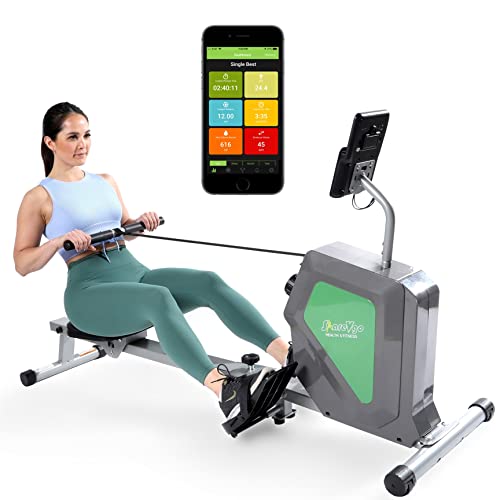
| ShareVgo Smart Home Rowing Machine | Tight spaces and lighter users | No built-in screen; Bluetooth + companion app | Magnetic | Compact foldable; 285 lb stated max weight | Budget |
| Wenoker Water Rowing Machine | Water feel with furniture-grade looks | Smart electronic knob + app integration | Water (tank and paddle) | Wooden frame; stands upright | Mid-range |
How We Chose
This roundup was assembled from published manufacturer specifications, product documentation, the way each brand structures its software and membership, and category-wide patterns that hold across magnetic, air and water rowers. No machine here was physically used, benchmarked or owned by the writer, and no claims below rest on personal experience — where an exact figure is not publicly documented, the machine is described by spec class rather than with an invented number.
Five filters did the work. First, category fit: does the machine genuinely belong in a premium smart-rowing shortlist, meaning it either has a built-in HD touchscreen or connects to software that effectively replaces one? Second, resistance system, because that single choice determines noise, maintenance burden and how the stroke feels. Third, fit and footprint — rail length, stated weight capacity and how much floor the machine takes up when it is folded and parked. Fourth, software depth and subscription structure, including whether the machine is usable without paying monthly. Fifth, upgrade path: whether a machine makes sense as a first rower that a household will keep, or whether it is a stopgap. Every product below is currently listed and currently sold; the ordering reflects how well each one answers a distinct reader situation rather than a single ranking.
1. Merach Q1S Aura Rowing Machine – Best for Screen Mirroring Value
As an Amazon Associate we earn from qualifying purchases at no extra cost to you.

The Merach Q1S Aura is the machine for the reader who wants a real built-in display without stepping into premium-platform pricing. Its 15.6-inch HD screen is roughly three-quarters the diagonal of the biggest panel in this roundup, which in practice means you can follow a class, read split and stroke-rate data and still see the instructor’s form cues without leaning forward. The feature that separates it from other mid-range screens is screen mirroring: you can cast the display or your own content to a television, which turns a rower in a garage or spare room into something closer to a full-size training station.
Key specs at a glance
- Display: 15.6-inch HD touchscreen with screen mirroring to a TV
- Resistance: magnetic, multi-level, adjusted from the console or a dial
- Frame: foldable rail design intended for regular stowing
- Connectivity: Bluetooth, MERACH app for guided rows and metric history
- Software model: app is free to use; no premium platform membership is required to row
- Fit: mid-size rail length typical of the category; taller rowers should confirm rail and inseam clearance before buying
Why it earns a place
The strongest argument for the Q1S Aura is arithmetic. A premium connected rower plus a premium membership runs a household into four figures in the first year; the Merach approach puts most of the visible experience — a large screen, guided content, live metrics — into the hardware price and leaves the software effectively free. For a reader who is honest about their habits and knows they will row three times a week for twenty minutes rather than chase leaderboards, that is the correct trade. The magnetic resistance also keeps it apartment-friendly: magnetic rowers sit in the quietest category, so an early-morning session is unlikely to be the thing that ends a downstairs-neighbour truce.
Screen mirroring is more useful than it first sounds. Rowing form is hard to self-assess from a seat, and a mirrored display on a wall-mounted television puts the instructor at eye level instead of below your chin. It also future-proofs the machine: if the built-in panel ever feels dated, the rower still works with whatever you cast to it. The foldable frame matters for the same reason — a rower that cannot be put away is a rower that becomes a clothes rack.
The trade-offs are the usual mid-range ones. There is no rotating screen, so floor workouts on the machine’s display are awkward compared with the Echelon Row-S. The class library is thinner and less produced than Hydrow’s or Echelon’s, and there is no live or leaderboard layer. Build materials sit a class below the premium frames, which shows up in the smaller details — console finish, strap hardware, the feel of the seat rollers — rather than in the structural frame itself. None of that changes whether the machine rows; it changes how premium the machine feels while it does.
Pros
- 15.6-inch HD touchscreen at a mid-range price — the largest screen you can get without entering the premium tier
- Screen mirroring to a TV, which no other mid-range pick here offers
- Magnetic resistance keeps noise low and maintenance minimal
- No mandatory subscription to access guided content
- Folds for storage in a room that has to serve another purpose
Cons
- Screen does not rotate, so off-rower workouts are less comfortable to follow
- Class library and production quality are a step below the premium platforms
- Fit is mid-category — very tall rowers should verify rail length first
- Frame and console materials feel less substantial than premium machines
How it compares with the nearest alternative
Against the Sunny Health & Fitness Smart Magnetic Rower, the Merach is the same resistance philosophy with a screen bolted on and a higher price. If you already own a tablet and a television, the Sunny does 80% of the job for a fraction of the cost; if you want a self-contained machine that does not depend on your phone being charged, the Merach is the better buy. Against the Echelon Row-S, the Merach loses on screen size, screen articulation and class volume, but it wins decisively on total cost of ownership because the software does not require a monthly premium membership. Choose the Merach if you want the screen experience without the subscription; choose the Echelon if the screen is the reason you are buying.
2. Echelon Row-S Smart Rower – Best for a Large Rotating Screen and Studio Classes

The Echelon Row-S exists to answer one question: what if the screen were the best part of the machine? Its 22-inch HD touchscreen is the largest in this roundup, and it rotates through a wide arc so it can face you when you are on the rower and swing away when you are doing strength or mobility work on the floor beside it. For a reader who wants a single connected-fitness device that handles more than rowing, this is the most versatile machine here.
Key specs at a glance
- Display: 22-inch HD rotating touchscreen
- Resistance: magnetic, 32 electronically controlled levels
- Frame: foldable rail, dual-rail seat carriage
- Software: Echelon membership app with studio-style rowing classes plus off-machine strength, mobility and scenic content
- Connectivity: Bluetooth for heart-rate straps and audio
- Fit: full-size rail designed for a broad range of adult heights; verify rail length if you are at the extremes
Why it earns a place
The 32-level magnetic resistance range is the practical headline for anyone who trains rather than just moves. Magnetic resistance is quiet and smooth, but its weakness is that low levels can feel light and high levels can feel like dragging a brake — the fix is granularity, and 32 steps gives you enough resolution to build a warm-up, a threshold interval block and a recovery paddle without jumping between vague settings. That matters for structured work: a ten-by-one-minute interval session needs levels you can hit repeatably, not a knob you guess at.
The rotating screen changes how the machine gets used. On a fixed-screen rower, off-machine content is technically available but physically annoying to follow. On the Row-S, you fold the rail, swing the screen toward the mat and the machine becomes a general-purpose training station. Households where two people train differently — one rows, one does mobility work — get far more value from that articulation than from any spec on the resistance system. It also means the rower does not have to be your only piece of equipment; it can absorb the jobs a small home gym would otherwise need a second machine for.
The costs are honest ones. The stored footprint is the largest of the group, because a 22-inch screen has to be protected when the machine is folded and the rail is full length. The membership is a genuine premium subscription with a monthly cost in the same band as the other big platform, and while the hardware works without it, the screen is much less interesting without the class library. And the machine is heavy enough that moving it between rooms is a two-person job rather than a spur-of-the-moment decision.
Pros
- 22-inch HD touchscreen — the largest display in this comparison
- Rotating screen makes off-rower strength and mobility work genuinely usable
- 32 magnetic resistance levels give fine control for interval training
- Broad class library spanning rowing, strength, mobility and scenic content
- Folds for storage and looks purposeful in a home gym
Cons
- Largest stored footprint of the machines here
- Premium membership cost is a real ongoing commitment
- Heavy and awkward to relocate alone
- Overkill if you only ever want twenty minutes of steady rowing
How it compares with the nearest alternative
Against the Hydrow Wave, the choice comes down to screen philosophy. The Row-S gives you 22 inches that rotate; the Wave gives you 16 inches that do not, in exchange for a lighter frame, a smaller footprint and a coaching style built around replicating the feel and rhythm of rowing on water rather than studio production. Readers who want a general-purpose connected fitness hub should take the Echelon. Readers who want the most convincing rowing-specific coaching in the smallest premium package should take the Wave. Against the Merach Q1S Aura, the Echelon is bigger, better built and more capable — and roughly a tier more expensive to own once the membership is counted.
3. Hydrow Wave Rowing Machine – Best for Coached On-Water Sessions in a Small Space

The Hydrow Wave is the compact version of Hydrow’s original rower: a shorter, lighter frame, a 16-inch touchscreen instead of 22 inches, and the same electromagnetic drag system and coached-content philosophy. It is the machine for a reader who wants premium build and premium coaching but does not have a dedicated gym room to give it.
Key specs at a glance
- Display: 16-inch HD touchscreen built into the frame
- Resistance: electromagnetic drag designed to mimic the feel of moving a boat through water
- Frame: foldable, with an optional upright storage kit that lets the machine stand vertically against a wall
- Weight class: substantially lighter than Hydrow’s original full-size rower, which is the main reason it suits apartments and shared rooms
- Software: Hydrow membership with coached rows filmed on water, plus off-rower content
- Fit: rail length is shorter than the original Hydrow, so very tall rowers should check leg extension before committing
Why it earns a place
The electromagnetic drag system is the differentiator. Magnetic rowers are quiet and smooth, but the resistance often feels abstract — you pull harder and the flywheel simply resists more. Hydrow’s system is engineered to reproduce the inertial feel of a boat: the catch has weight to it, the drive accelerates, and the recovery has a glide that encourages the right rhythm rather than a mechanical return. For a beginner, that feel is a teaching tool; for an experienced rower, it is the difference between a machine that rewards technique and one that ignores it.
The upright storage kit deserves more attention than it usually gets. Most foldable rowers fold in half but still lie flat, occupying roughly the footprint of a small sofa. Standing the Wave vertically against a wall reduces the parked footprint to something closer to a coat rack, which is the single most common reason people say a rower will not fit. Combined with the lighter frame, that makes this the most realistic premium rower for a bedroom, a shared office or a narrow hallway.
The 16-inch screen is the compromise. It is comfortably large enough to follow a class and read stroke-rate and split data, but it is not a cinema, and it does not rotate. If you want the screen to serve floor workouts, the Echelon Row-S is the better answer. The membership is also a genuine premium subscription, and while the machine functions without it, the coached on-water content is the reason to buy this rower in the first place — so budget for the monthly cost as part of the purchase, not as an optional extra.
Pros
- Electromagnetic drag that mimics on-water feel better than standard magnetic resistance
- Upright storage option gives it the smallest premium footprint here
- Lighter than the full-size Hydrow, so it is manageable for one person to move
- Best-in-class coached rowing content, filmed on water
- 16-inch HD touchscreen is large enough for classes and live metrics
Cons
- Screen is smaller than the Echelon Row-S and does not rotate
- Shorter rail than the original Hydrow — tall rowers should verify fit
- Premium membership is effectively part of the ownership cost
- Less useful as a general-purpose home-gym hub than the Echelon
How it compares with the nearest alternative
Against the Echelon Row-S, the Wave wins on footprint, weight and rowing-specific coaching, and loses on screen size, screen articulation and content breadth. If your training is 90% rowing and your space is tight, take the Wave. If your training is mixed and your space is not, take the Row-S. Against the Merach Q1S Aura, the Wave is a tier up in build, resistance feel and coaching quality, at a premium price plus a subscription — a fair trade for anyone who intends to row for years rather than months.
4. Sunny Health & Fitness Smart Magnetic Rower – Best Budget Dual-Rail Magnetic Rower
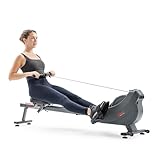
Sunny Health & Fitness has been a fixture of the budget home-fitness market for years, and this dual-rail smart magnetic rower is the value proposition in its purest form: a stable two-rail platform, quiet magnetic resistance, Bluetooth connectivity and an app for guided rows and history, with no screen and no subscription gate. It is the pick for a reader who owns a tablet and would rather spend the difference on something else.
Key specs at a glance
- Resistance: magnetic, with a manual or console-controlled level selector
- Frame: dual-rail design — two seat rails rather than one central beam
- Display: no built-in touchscreen; a console shows basic metrics and pairs by Bluetooth
- Software: SunnyFit app for guided workouts, metric tracking and workout history
- Storage: compact and light for its class, designed to be moved and stood up
- Fit: entry-to-mid range rail length; larger rowers should check the stated user height and weight limits
Why it earns a place
Dual-rail construction is the detail worth understanding. On a single-rail rower, the seat carriage rides on one central beam; on a dual-rail machine, it rides on two parallel rails. The practical difference is lateral stability — dual-rail machines feel planted, especially when you row at higher effort or when a heavier user is on board — and the seat tends to track straighter over time. At the budget tier, that stability is the thing most often sacrificed, and Sunny keeps it.
Magnetic resistance is the second reason. It is the quietest category, requires no water changes and no flywheel cleaning, and its maintenance profile is essentially “wipe the rails and check the bolts”. For a household where the rower lives in a living room or a bedroom and gets used before work, that matters more than a bigger screen. The absence of a built-in display is not really a weakness in 2026 — a tablet on a floor stand costs a fraction of the screen premium and gives you access to whatever app you prefer, including the free tiers of the major platforms.
The honest limitations are the ones you would expect. There is no premium class library, no leaderboards and no form feedback. The build uses more plastic and lighter-gauge metal than the premium frames, and the resistance ceiling is lower, so a strong rower doing hard intervals will run out of machine before they run out of effort. For steady-state sessions, interval work at moderate intensity and general conditioning, it is entirely sufficient — and it is the machine most likely to still be in use in three years, because it costs little enough that it never becomes a guilt object.
Pros
- Lowest entry cost of the machines here, with no required subscription
- Dual-rail frame gives noticeably better lateral stability than single-rail budget rowers
- Magnetic resistance is quiet, clean and low-maintenance
- Bluetooth and app connectivity cover guided workouts and progress tracking
- Compact and light enough to move and store without help
Cons
- No built-in screen — you supply the display
- Lower resistance ceiling than premium machines
- App content is functional rather than cinematic
- Materials and finish sit clearly in the budget tier
How it compares with the nearest alternative
Against the Merach Q1S Aura, the Sunny is the same resistance concept minus the 15.6-inch screen, at a meaningfully lower price. If you already own a tablet and a TV, the Sunny is the smarter buy and the money saved will cover years of any subscription you choose. Against the ShareVgo Smart Home Rowing Machine, the Sunny offers a dual-rail frame and a longer-established brand support network, while the ShareVgo is the more compact option for genuinely tight spaces. Against the Stamina ATS Air Rower, the Sunny is quieter and cleaner, but the Stamina delivers the air-resistance feel that some rowers consider non-negotiable.
5. Stamina ATS Air Rower – Best Budget Air Rower for Authentic Feel
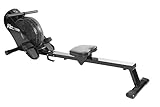
Stamina’s ATS Air Rower is the budget machine for the reader who cares about how rowing feels rather than how it looks on a screen. Air resistance is the oldest and most honest system in the category: a fan flywheel at the front of the machine pushes back harder the harder you pull, with no settings to choose and no electronics in the resistance path. Pair it with the brand’s smart workout app on your own phone or tablet and you have a complete training setup for the price of a mid-range set of dumbbells.
Key specs at a glance
- Resistance: air — a flywheel fan that self-adjusts to effort
- Frame: foldable, designed to be stowed between sessions
- Display: no built-in touchscreen; a basic monitor shows time, distance, strokes and calories
- Software: smart workout app access via your own device
- Drive: pull-cord and bungee return system, the classic air-rower configuration
- Fit: full-length rail typical of air rowers, which tend to suit a wide range of heights
Why it earns a place
Air resistance has one property no other system replicates: the resistance curve is set by you. Pull gently and the machine is easy; pull hard and it gets hard immediately, with no lag and no level to select. That makes it the best choice for interval training and for anyone who wants the physical sensation of effort to be the feedback rather than a number on a screen. It is also the closest budget approximation of the on-water feel that premium electromagnetic machines like the Hydrow Wave work hard to engineer.
The mechanical simplicity is a real ownership advantage. There is no motor, no electronics in the resistance path, no water tank to treat and no magnetic brake to wear. What you maintain is the pull cord, the bungee return and the seat rollers — all cheap, all replaceable, all straightforward. For a reader who wants a machine that will still work in a decade and can be fixed with basic tools, air is the safest long-term bet in the category.
The trade-off is noise. Air rowers are the loudest configuration, and the fan noise rises with effort, which is exactly when you want to row hardest. In a detached house or a garage, that is irrelevant. In a thin-walled apartment with a bedroom above or below, it is the single reason to choose magnetic instead. Air rowers also tend to be longer in use than compact magnetic machines, so measure the room before buying — a foldable air rower still needs its full rail length during every session.
Pros
- Air resistance gives the most authentic, self-adjusting effort curve at a budget price
- No motors, no water tank and no electronics in the resistance path
- Straightforward maintenance: cord, bungee and seat rollers are the wear items
- Full-length rail suits a wide range of user heights
- Folds for storage between sessions
Cons
- Loudest resistance type — a genuine problem in apartments
- No built-in screen; you rely on your own device for guided content
- Fan noise scales with effort, so hard intervals are the noisiest moments
- Longer in-use footprint than compact magnetic rowers
How it compares with the nearest alternative
Against the Sunny Health & Fitness Smart Magnetic Rower, the Stamina trades silence for feel. The Sunny is the better apartment machine and the better choice for steady, quiet sessions; the Stamina is the better training machine for intervals and the better long-term mechanical bet. Against the Wenoker Water Rowing Machine, both deliver a tactile, non-magnetic stroke, but the water rower is quieter, looks considerably better in a living space and costs a tier more — plus it needs periodic water treatment. If noise rules out air, the Wenoker is the natural upgrade.
6. ShareVgo Smart Home Rowing Machine – Best for Tight Spaces and Lighter Users

The ShareVgo is the smallest machine in this roundup and the most explicit about who it is for: a compact, foldable magnetic rower with a stated maximum user weight of 285 lb, Bluetooth connectivity and a companion fitness app. It is the pick for a reader in a studio flat, a converted attic or any space where every square foot is contested, and for lighter users who do not need the heavier frame and higher resistance ceiling of a full-size machine.
Key specs at a glance
- Resistance: magnetic, multi-level, adjusted from the console
- Frame: compact and foldable, designed to be stowed vertically or against a wall
- Stated max user weight: 285 lb
- Display: no built-in touchscreen; console plus Bluetooth pairing
- Software: companion fitness app for guided workouts and metric tracking
- Fit: shortest rail in this comparison — best for users of average height; taller rowers should measure leg extension carefully
Why it earns a place
Space is the constraint most people underestimate. A full-size rower needs roughly the length of a small sofa during use, and even a foldable machine occupies real floor when parked. The ShareVgo attacks that problem directly with a shorter rail and a lighter frame, which means it can live in places a full-size rower cannot — beside a bed, behind a door, in the gap between a wardrobe and a wall. For renters who move every year or two, that portability is worth more than any spec on a resistance chart.
The 285 lb stated capacity is honest and specific, which is more than many budget listings manage. It also defines the machine’s audience: this is not a rower built for a 300 lb powerlifter doing max-effort intervals. It is a rower for general conditioning, steady-state work and daily movement, used by a household of average build. Within that brief, magnetic resistance keeps it quiet, the app covers guided sessions and progress history, and the compact frame means the machine is more likely to be used than a bigger one that never gets unfolded.
The compromises follow directly from the size. A shorter rail means less leg extension at the catch, so taller rowers — particularly those over roughly six feet — should verify the geometry before buying, because a cramped catch makes good technique almost impossible. The resistance ceiling is lower than a mid-range machine’s, so hard interval work will feel limited. And the build is deliberately light, which is an advantage when moving it and a disadvantage when you want the planted feel of a dual-rail frame.
Pros
- Smallest folded footprint of any machine in this roundup
- Light enough for one person to move and stow daily
- Magnetic resistance is quiet and needs almost no maintenance
- Clear 285 lb stated maximum user weight
- Bluetooth and app support cover guided workouts and tracking
Cons
- Shortest rail here — not suitable for taller rowers
- Lower resistance ceiling than mid-range or premium machines
- Light frame feels less planted at high effort
- No built-in screen or premium class library









