Key takeaways
- Budget: Omcan, Avantco, and similar value brands. Lower cost, lighter duty cycles, check warranty terms and parts availability.
- Mid-range: Globe S13 and G12. Strong all-around for restaurants and small delis.
- Premium: Berkel and Hobart. Higher cost, heavy-duty build, best for long daily hours.
For a restaurant or small deli that slices a few hours a day, a 12-inch or 13-inch gravity-feed slicer from Globe or Berkel is the sensible middle path; for a busy deli counter or grocery that slices all shift, a premium Hobart is the usual benchmark; and for a tight budget or light use, a value brand such as Omcan or Avantco can work if you accept shorter service life under heavy load. The right choice follows your daily slicing hours, product mix, and kitchen safety routine.
Our top picks

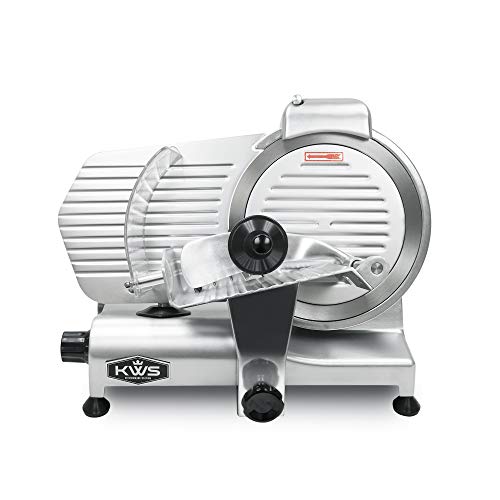

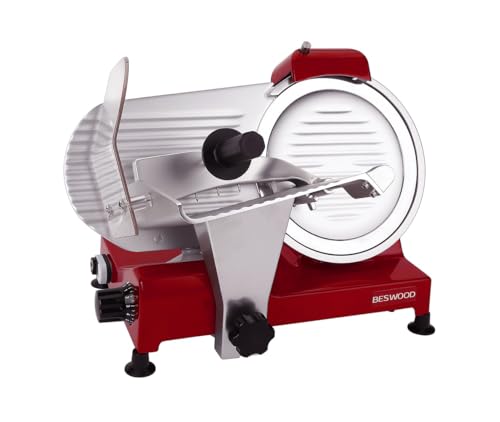
As an Amazon Associate we earn from qualifying purchases at no extra cost to you.
Commercial Deli Slicers at a Glance
| Brand and model family | Best for | Reviewers say | Limits |
|---|---|---|---|
| Hobart (EDGE13, HS series) | High-volume delis and grocery counters | Robust and long-lived; the premium benchmark in several 2026 roundups | Highest cost tier; heavy |
| Berkel (827E, X13A) | Restaurants and delis wanting precision | Named best overall by RestaurantLaunchpad (827E); praised for consistent slices | Premium pricing; heavy |
| Globe (S13, G12) | Light to medium daily use, smaller deli counters | Named best value (S13) by RestaurantLaunchpad; G12 named best mid-tier by a restaurant-supply retailer | Not built for all-day, all-shift runs |
| Omcan | Budget-conscious kitchens | Described as cost-effective and dependable | Fewer long-term reports from heavy users |
| Avantco (SL713MAN) | Entry-level commercial use | Named best overall by a restaurant-supply retailer, the retailer’s own brand | Retailer-sourced ranking; cross-check against independent sources |
Model names and outlet picks come from review roundups published in 2025 and 2026. Always confirm a model is still sold, because makers change lineups.
What “Commercial” Means for a Slicer
A commercial slicer is built for longer duty cycles than a home appliance. Look for a belt-driven or gear-driven blade, a motor sized for the blade diameter, an anodized aluminum or stainless body, and a blade guard and ring guard that protect the operator. Many makers list NSF/ANSI certification for food-contact design on their commercial lines. If your jurisdiction or health inspector expects NSF-listed equipment, confirm the specific model carries that listing in the maker’s documentation.
Blade size is the first decision. Reviewers commonly point to 12-inch and 13-inch blades as the standard for deli meat and cheese, while 9-inch and 10-inch models fit light-duty prep or small cafes. A bigger blade handles bigger logs of meat and cheese, but it also takes up more counter space and weighs more.
Hobart: the Premium Benchmark
Hobart is the name reviewers reach for when a deli slices all day. RestaurantLaunchpad calls the EDGE13 its pick for high-volume operations, a restaurant-supply retailer names the HS7-1 as a premium choice, and one grocery-focused guide picks the HS9 for busy stores. The common thread is endurance and consistent slicing under heavy load. The trade-off is cost, which is the highest in this category, and weight, because the base is built to stay put.
Best for: delis, supermarket service counters, and any operation where the slicer runs for much of the shift and downtime hurts.
Berkel: Precision and Durability
Berkel slicers have a reputation for precision and durability. RestaurantLaunchpad names the Berkel 827E its best overall commercial slicer, and a grocery guide picks the X13A for slice consistency. Reviewers describe Berkel as a strong choice when thin, uniform shaved slices of prosciutto, roast beef, or cheese matter to the product.
Best for: restaurants and delis that want high accuracy and good build quality without necessarily running all day.
Globe: Value in the Middle
Globe slicers are used in delis, restaurants, supermarkets, and food-processing settings. The S13 is named best value by RestaurantLaunchpad, and a restaurant-supply retailer calls the G12 its best mid-tier pick. A marketplace guide also points to the G12 for smaller deli counters. Reviewers advise Globe or Berkel for restaurants that slice roughly one to three hours a day, not for all-shift deli service.
Best for: restaurants, sandwich shops, and small delis that want commercial build and safety features without moving into the top tier.
Omcan and Avantco: Budget Commercial
Omcan is described by reviewers as cost-effective and dependable, and Avantco is a retailer brand that a restaurant-supply retailer ranks first in its own roundup. Treat that last ranking with care, because a retailer naturally highlights its own line. Forum users warn that cheaper slicers can wear out quickly if used heavily. If your volume is modest, these can be a reasonable way to get a commercial-style machine, but plan for a shorter service life than a Hobart or Berkel.
Best for: low-volume kitchens, food trucks with space, and operators testing a new menu item before committing to a larger purchase.
Budget Tiers
- Budget: Omcan, Avantco, and similar value brands. Lower cost, lighter duty cycles, check warranty terms and parts availability.
- Mid-range: Globe S13 and G12. Strong all-around for restaurants and small delis.
- Premium: Berkel and Hobart. Higher cost, heavy-duty build, best for long daily hours.
Pick X If… Decision Table
| Pick this | If your situation is… |
|---|---|
| Hobart EDGE13 or HS series | Slicing for most of the shift at a deli or grocery counter |
| Berkel 827E or X13A | Precise, consistent slices matter and you want premium build |
| Globe S13 or G12 | One to three hours of slicing a day in a restaurant or small deli |
| Omcan or Avantco | Tight budget and light, occasional use |
| Used or reconditioned unit | You can inspect it, confirm guards and sharpener are present, and check parts support |
Fit, Safety and Care Notes
- Weight and footprint: Commercial slicers are very heavy. Measure counter depth, clearance for the carriage travel, and the strength of the surface before buying.
- Safety: A commercial slicer has an exposed, razor-sharp blade. Use only with the guards the maker supplies, keep a cut-resistant glove for cleaning, and never defeat or remove a guard or interlock. Train every operator and follow the manual and local rules for who may operate the machine.
- Cleaning: Unplug before cleaning, use the maker’s cleaning procedure, and sanitize food-contact surfaces. Removable blades and carriage parts make deep cleaning easier.
- Sharpening: Many models include a built-in sharpener. Forum users note replacement sharpeners can be costly, so check what comes with a used unit.
- Power: Confirm voltage, motor horsepower, and plug type match your circuit. Have an electrician assess any installation question.
- Gravity-feed versus vertical: Gravity-feed slicers use the weight of the product against the blade and suit meats and cheeses. Vertical styles suit different workflows, so match the design to what you slice.
Alternatives
- Light-duty or home-style slicer: Fine for occasional use, but not rated for commercial duty and may not meet inspection requirements.
- Used or refurbished Hobart or Berkel: Forum users report good used commercial units can be found well below new cost. Inspect guards, blade condition, and the sharpener, and ask about parts support.
- Pre-sliced supplier service: If slicing volume is low or staffing is thin, buying pre-sliced product avoids both the purchase and the safety exposure.
Choosing by Product Mix
What you slice affects the best machine. Boneless deli meats and firm cheeses are the typical workload for 12-inch and 13-inch gravity-feed models. Very soft cheeses, sticky products, or frozen items can stress the blade and motor, so check whether the maker lists limits. Operations that slice large volumes of cured meats, such as a charcuterie program, benefit from a model known for consistent thin slices and a reliable sharpening system.
Think about thickness range too. Most commercial slicers offer a variable thickness dial that runs from paper-thin to roughly an inch or more. Confirm the maximum slice thickness in the maker’s specs if your menu includes thick-cut items.
Frequently Asked Questions
What blade size should I choose?
For most delis and restaurants, a 12-inch or 13-inch blade is the standard choice because it handles full logs of meat and cheese. Smaller 9-inch or 10-inch blades suit light prep and tight counters. Pick the largest blade your space and workload justify.
How often does a commercial slicer need sharpening?
It depends on volume and product, and the maker’s manual gives the schedule. Many models include a built-in sharpener, and users generally sharpen when slices start to tear or look ragged. Keep the blade clean, since residue dulls the edge.
Is a used commercial slicer a good idea?
It can be, since a used unit from a respected brand can outlast a new budget machine. Inspect the blade, guards, carriage, and sharpener, confirm the motor runs smoothly, and ask whether parts are still available. Walk away if safety guards are missing.
What safety features should I look for?
Look for a fixed ring guard around the blade, a blade-edge guard, a gauge plate that closes when the dial is at zero, and a hand guard on the carriage. Some models add a lockable on/off switch or a no-volt release. Never operate with guards removed, and follow the maker’s cleaning instructions exactly.
Do I need NSF certification?
Many health departments expect food-service equipment to carry NSF or equivalent certification. Check your local requirements and look for the certification in the maker’s documentation for the specific model. When in doubt, ask your inspector before buying.
How much counter space does a commercial slicer need?
Plan for the machine’s footprint plus clearance for the carriage to travel and for the operator to work safely. A 12-inch or 13-inch model typically needs a sturdy, level counter and room behind it for the carriage. The maker’s spec sheet lists dimensions and weight, and you should compare them with your counter before ordering.
More from Amazon
Programs that pair well with the guide above. Offers and eligibility are set by Amazon and may change.
Set up recurring deliveries of everyday items on eligible products. Terms and savings are set by Amazon.
Explore Subscribe & SaveCollect the home and kitchen items you want in one registry that guests can shop from.
Create a wedding registryFree shipping on eligible items, Prime Video and more. Eligible new members can start with a free trial.
Start a Prime free trialAudiobooks and podcasts to listen to on the go. Eligible new members can start with a free trial.
Try Audible freeAs an Amazon Associate we earn from qualifying purchases.