Key takeaways
- Center height: Many guides put the center of the piece at 57 to 60 inches above the floor, which is roughly eye level.
- Over furniture: Leave about 6 to 10 inches between the top of the furniture and the bottom of the art. Above a desk, one source suggests 8 to 12 inches above the desk surface so it clears monitors.
- Seated rooms: Where people mostly sit, drop the center to around 54 to 57 inches.
- High ceilings: With ceilings of 10 feet or more, you can go to about 60 to 62 inches.
- Video calls: Leave 6 to 10 inches of wall visible above your head on camera so the art does not appear to sprout from your head.
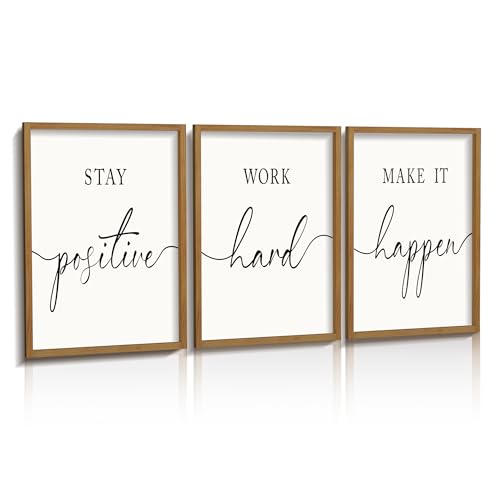
The best framed wall art for a home office is a single large abstract or landscape piece behind the desk if you take video calls, a three-frame set of matching vertical prints if the wall is narrow, and a gallery arrangement of mixed small frames if you have a long blank wall. In every case, size and hanging height matter more than the subject: aim for art about two-thirds the width of the furniture beneath it and hang it with its center roughly 57 to 60 inches from the floor.
Our top picks


As an Amazon Associate we earn from qualifying purchases at no extra cost to you.
What decides a good pick
Because this is a category of décor rather than one specific product line, the useful comparison is between formats. Each has strengths for a work-from-home setting: how it looks on camera, how much glare it produces, how easy it is to hang and how well it fits the wall you actually have.
At a glance: framed art formats compared
| Format | Best for | Typical sizes cited by guides | Strengths | Limits |
|---|---|---|---|---|
| Single large framed print | Backdrop behind the desk, video calls | About 30 to 42 inches wide over a 48 to 60 inch desk | Clean look, one focal point, easy to center | Large pieces are heavier and need secure anchors |
| Set of three vertical frames | Small offices and narrow walls | Three 16 by 24 inch frames, per one guide | Adds height and rhythm | Needs careful spacing |
| Gallery wall of mixed frames | Long blank walls, personality | 2 to 3 inches between frames | Flexible, can grow over time | Busier on camera; more planning |
| Framed canvas print | Low-glare, textured look | Medium art about 25 to 32 inches | Often needs no glass, so less reflection | Less crisp than a matted print for fine detail |
| Matte-glass or acrylic framed photograph | Rooms with windows or lamps | 20 by 24 inches suits a small office per one guide | Matte finishes reduce glare | Quality varies by maker |
| Framed line art or botanical print | Calm, neutral rooms | Small to medium | Quiet, professional look | Can feel sparse on large walls |
Sizing: avoid the common mistake
Design guides agree that undersized art is the most common error. Aim for artwork or a grouping that spans about 60 to 75 percent of the width of the furniture below. For a 48 to 60 inch desk, one guide suggests a gallery arrangement about 30 to 42 inches wide. On an empty wall with no furniture, one rule of thumb is to multiply the wall height by about 0.65 to find the art height. For small offices, a single 20 by 24 inch piece or a set of three 16 by 24 inch frames is typical. If in doubt, go slightly larger.
Hanging height and placement
- Center height: Many guides put the center of the piece at 57 to 60 inches above the floor, which is roughly eye level.
- Over furniture: Leave about 6 to 10 inches between the top of the furniture and the bottom of the art. Above a desk, one source suggests 8 to 12 inches above the desk surface so it clears monitors.
- Seated rooms: Where people mostly sit, drop the center to around 54 to 57 inches.
- High ceilings: With ceilings of 10 feet or more, you can go to about 60 to 62 inches.
- Video calls: Leave 6 to 10 inches of wall visible above your head on camera so the art does not appear to sprout from your head.
Choosing a style that works for focus
Trend roundups for 2026 describe minimal abstraction, large-scale nature photography and restrained palettes with one accent color as popular for offices. Other guides suggest warm neutral abstracts, black and white line art, calm landscapes and vintage botanicals. If your wall is behind you on camera, consider calmer imagery and avoid high-contrast, busy patterns that look noisy on video. If the art faces you across the room, choose images you will not tire of; landscapes with depth can give your eyes a place to rest during screen breaks.
Frames, mats and glazing
Frame material
Wood frames offer warmth, black metal offers a modern look and thin metal frames keep the focus on the image. Match finishes to existing furniture, such as the desk legs or shelving, for a coherent room.
Mats
A mat adds breathing space and makes small prints look intentional. A wider mat works well for a more formal office.
Glass, acrylic and glare
Matte finishes reduce glare, which matters if the wall sits opposite a window or has lamps nearby. Acrylic is lighter than glass and less prone to shattering, which is useful for large pieces. Canvas without glass avoids reflections entirely. Check the maker’s description of glazing and any UV-protection claims.
Hanging safely
Large frames can be heavy. Use hardware rated for the stated weight, find studs or use proper wall anchors for drywall, and level the piece before finishing. Avoid hanging heavy art directly above where you sit if the hardware cannot be confirmed. Follow the frame maker’s instructions, and use two hooks on wider pieces to keep them level. Renters can consider adhesive systems that the maker rates for the weight, following their instructions carefully.
Gallery wall planning
- Cut paper templates for each frame and tape them to the wall.
- Arrange them with 2 to 3 inches between frames.
- Keep the overall group centered on the desk or furniture rather than the room, if it hangs above it.
- Start with the largest piece, then add smaller ones around it.
- Mark nail positions through the templates and hang.
Care
Dust frames with a dry microfiber cloth. Clean glass with a lens-safe cleaner sprayed on the cloth, not on the frame. Keep art away from direct sun to reduce fading, and avoid hanging near heat sources or humid areas.
Pick X if…
| If you… | Pick | Why |
|---|---|---|
| Take frequent video calls | Single large calm abstract or landscape | Clean backdrop, easy to frame on camera |
| Have a narrow wall | Set of three vertical frames | Adds height |
| Have a long blank wall | Gallery grouping | Fills width, flexible |
| Face a window or lamp | Matte glass or canvas | Reduces glare |
| Want a quiet, professional look | Line art or botanical prints | Understated |
Alternatives
- Floating shelves with leaning frames: Easy to change and no extra holes.
- Fabric or tapestry panels: Soften sound and add texture.
- Pinboards or magnetic boards: Combine decoration with function.
- Mirrors: Brighten a dim room, though avoid placing them where they reflect your screen on camera.
Color, mood and the work you do
Color influences how a room feels, though responses differ from person to person. Cool blues and greens in landscapes or abstracts are often chosen for focus-heavy rooms, while warm neutrals and earthy tones make a space feel inviting. If the room has dark furniture, lighter mats and frames add contrast; if the walls are pale, a bolder frame can anchor the art. Tie one or two colors in the artwork to objects already in the room, such as a rug, a lamp or books, to make the wall look planned rather than random.
Budget tiers and where to spend
Ready-made framed prints from home-goods retailers occupy the budget tier, while custom framing services and limited-edition prints from independent artists sit in the premium tier. A mid-range approach is to buy quality prints and have them framed with a mat. Spend more on the largest, most visible piece, and use simple frames for supporting pieces. Check the listing for print material, frame material and what hardware is included.
Frequently Asked Questions
How high should I hang art above my desk?
Many guides suggest leaving about 8 to 12 inches between the desk surface and the bottom edge of the art, ensuring it clears monitors. Overall, aim for a center height around 57 to 60 inches from the floor.
What size art fits above a 60-inch desk?
A grouping about 30 to 42 inches wide is a typical suggestion, roughly two-thirds the desk width. A single 36-inch piece or a set of three medium frames works well.
Will framed art look good on video calls?
Yes, if it is calm and centered, with some wall visible above your head. High-contrast patterns can look noisy, so a muted abstract or landscape is a safer choice.
Should I choose glass or canvas?
Canvas avoids reflections, while matte glass gives crisper detail and a more formal look. If your room has strong light sources, lean toward matte or canvas.
How do I hang heavy frames securely?
Use hardware rated for the weight, hit a stud or use appropriate wall anchors, and follow the frame maker’s instructions. When in doubt, ask a professional installer.
How many pieces make a good gallery wall?
Three to seven is common for a home office. Keep spacing consistent, usually 2 to 3 inches, and center the group over your desk or furniture.
More from Amazon
Programs that pair well with the guide above. Offers and eligibility are set by Amazon and may change.
Set up recurring deliveries of everyday items on eligible products. Terms and savings are set by Amazon.
Explore Subscribe & SaveCollect the home and kitchen items you want in one registry that guests can shop from.
Create a wedding registryFree shipping on eligible items, Prime Video and more. Eligible new members can start with a free trial.
Start a Prime free trialAudiobooks and podcasts to listen to on the go. Eligible new members can start with a free trial.
Try Audible freeAs an Amazon Associate we earn from qualifying purchases.